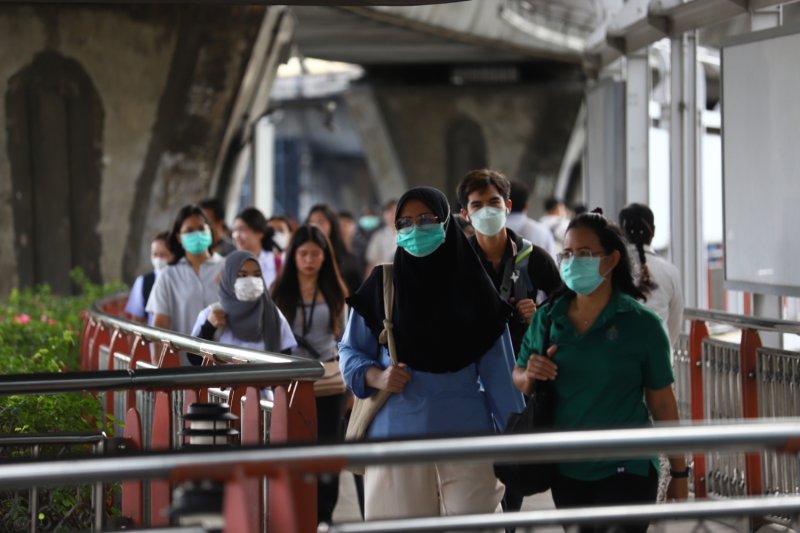
Thailand is unlikely to face a significant impact from the current Covid-19 surge in Singapore, as the dominant strain driving infections there has already circulated widely in the country, a leading virologist says.
However, authorities should remain alert to a possible rise in cases as schools reopen, with students expected to play a key role in transmission.
Prof Dr Yong Poovorawan, head of the Centre of Excellence in Clinical Virology at the Department of Paediatrics, Faculty of Medicine, Chulalongkorn University, said the outbreak in Singapore, largely driven by the NB.1.8.1 variant, should not cause major concerns for Thailand.
Posting on Facebook, Dr Yong noted that the same variant spread extensively in Thailand last year, from shortly after Songkran through the rainy season, before subsiding towards the end of the year.
He said it was therefore surprising to see Singapore experiencing a surge linked to NB.1.8.1, given that Covid-19 variants globally have evolved significantly, particularly into newer R lineages such as RV.1.
Nevertheless, he said variants are now less significant because they have not been associated with increased severity, and most populations already possess prior immunity. Singapore's outbreak, he added, appears to follow a seasonal pattern, with higher transmission typically seen at this time of year.
In Thailand, Covid-19 waves over the past two years have tended to emerge after Songkran, peaking between May and June before gradually easing by August. This year, however, no major outbreak followed the festival despite widespread participation.
Dr Yong said infections have only recently begun to rise and are expected to increase further during the school term, with students likely to accelerate transmission alongside other respiratory illnesses such as influenza and the common cold.