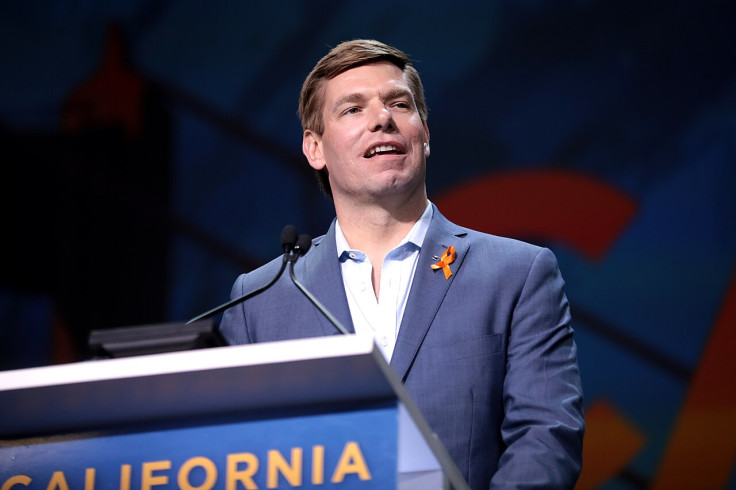
Two of the women who have accused California Representative Eric Swalwell of sexual misconduct have revealed why they felt they had to come forward and share their stories.
Swalwell has dropped out of the race for governor and has announced that he will be resigning from Congress. Rumors regarding potential sexual misconduct by Swalwell had been swirling for weeks before a series of news reports this weekend.
A former staff member of Swalwell's told the San Francisco Chronicle that he sexually assaulted her in a hotel room following an event in 2024. Then CNN reported on the accusations of four women who described various accusations of sexual misconduct, including Swalwell sending unsolicited explicit messages or nude images.
"For me, justice won't be until he can't ever harm a woman ever again, and he has faced the consequences for the women that he has harmed," Annika Albrecht, one of Swalwell's accusers, told CBS News. The report marks the first time that Albrecht has spoken publicly.
Before the stories surfaced, Swalwell was polling as the top Democratic candidate in the race for governor, meaning that withdrawal leaves the June primary wide open. Following his dropping out and planned resignation from Congress, Ally Sammarco, whose account was first reported by CNN, also spoke with CBS News.
"He was pushed into a corner, essentially, because they were planning to expel him ... soIi think he did that to save face a little," Sammarco told the network. "But I also felt very vindicated that he realized it was over for him."
Albrecht told CBS News that she initially reached out to Cheyenne Hunt, a former Capitol Hill staffer and a political media personality who now runs a youth political group called Gen-Z for Change. On March 31 Hunt posted a video on Facebook in which she discussed some of the messages she had received regarding Swalwell.
She told the outlet that she felt she needed to do something because she felt "physically sick and nauseous" about the Swalwell campaign for governor, given what had happened.
"Eleven days is how long it took from when I reached out to [Cheyenne] to make the video to when the dam broke, and all the articles were published," she told CBS News. She called them "the longest 11 days of our lives."