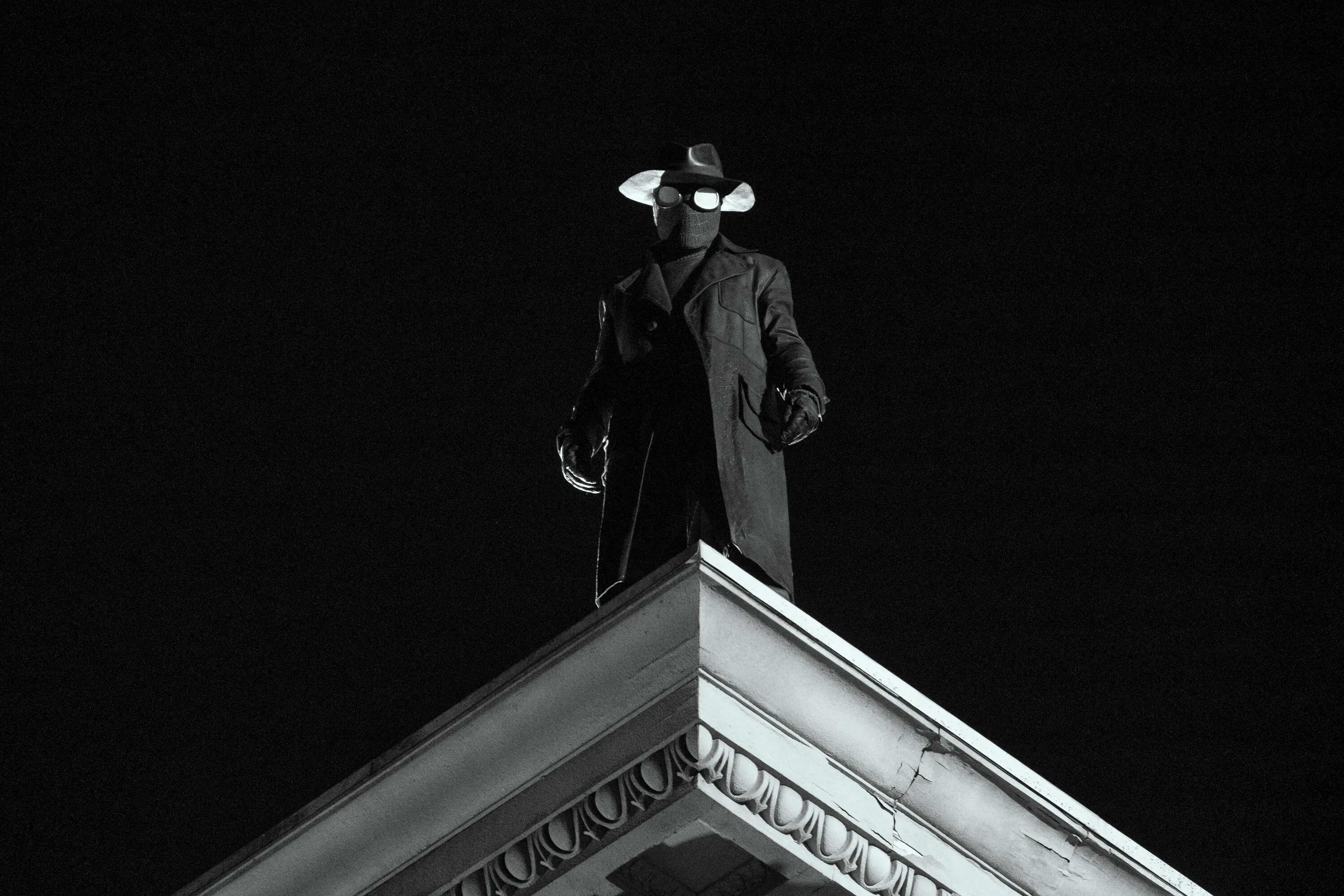
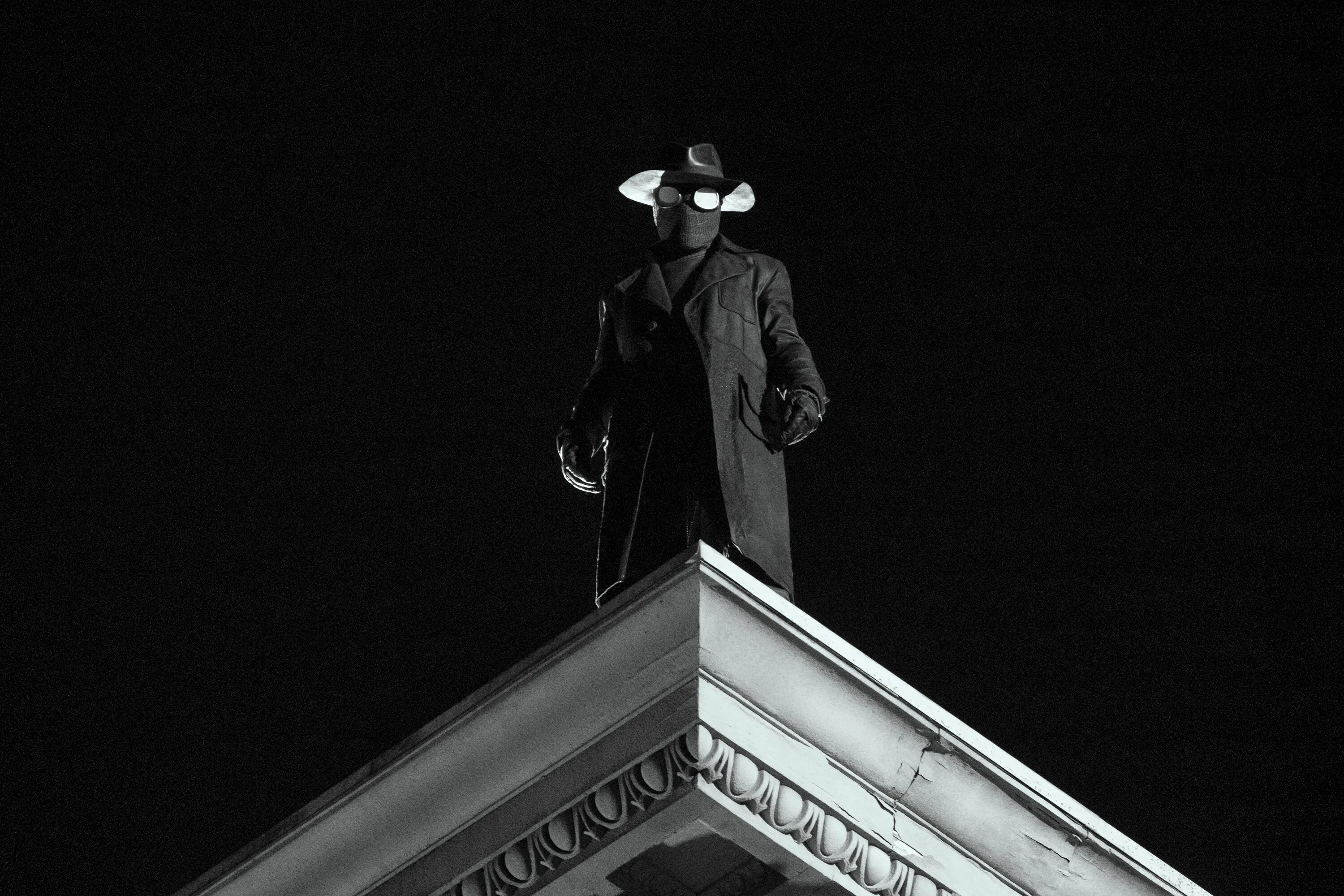
When Spider-Man Noir first appeared in 2018’s Into the Spider-Verse, he was little more than a gimmick. The noir variant of Spider-Man, voiced by Nicolas Cage, was a hardboiled private eye who, in his words, likes “to drink egg creams, and to fight Nazis. A lot.” He hailed from a black-and-white world modeled after the film noir, the stylish crime genre populated by morally gray heroes and alluring femme fatales. He sometimes let matches burn down to his fingertips just to feel something. His dark trenchcoat was perpetually flapping in the wind, and the wind…smelled like rain.
That’s it — that’s all Spider-Man Noir really was: a collection of stereotypes about noir protagonists that was played for laughs, especially when this grim Spider-variant became enchanted by the Rubik's Cube. Even in the 2009 comic in which Spider-Man Noir was introduced, the premise is mostly a fun novelty, eventually running its course after 14 issues. So could a live-action TV show about Spider-Man Noir work? Would they even have enough material? Thankfully, the answer given by Spider-Noir, Prime Video’s new superhero show, is a full-throated yes.
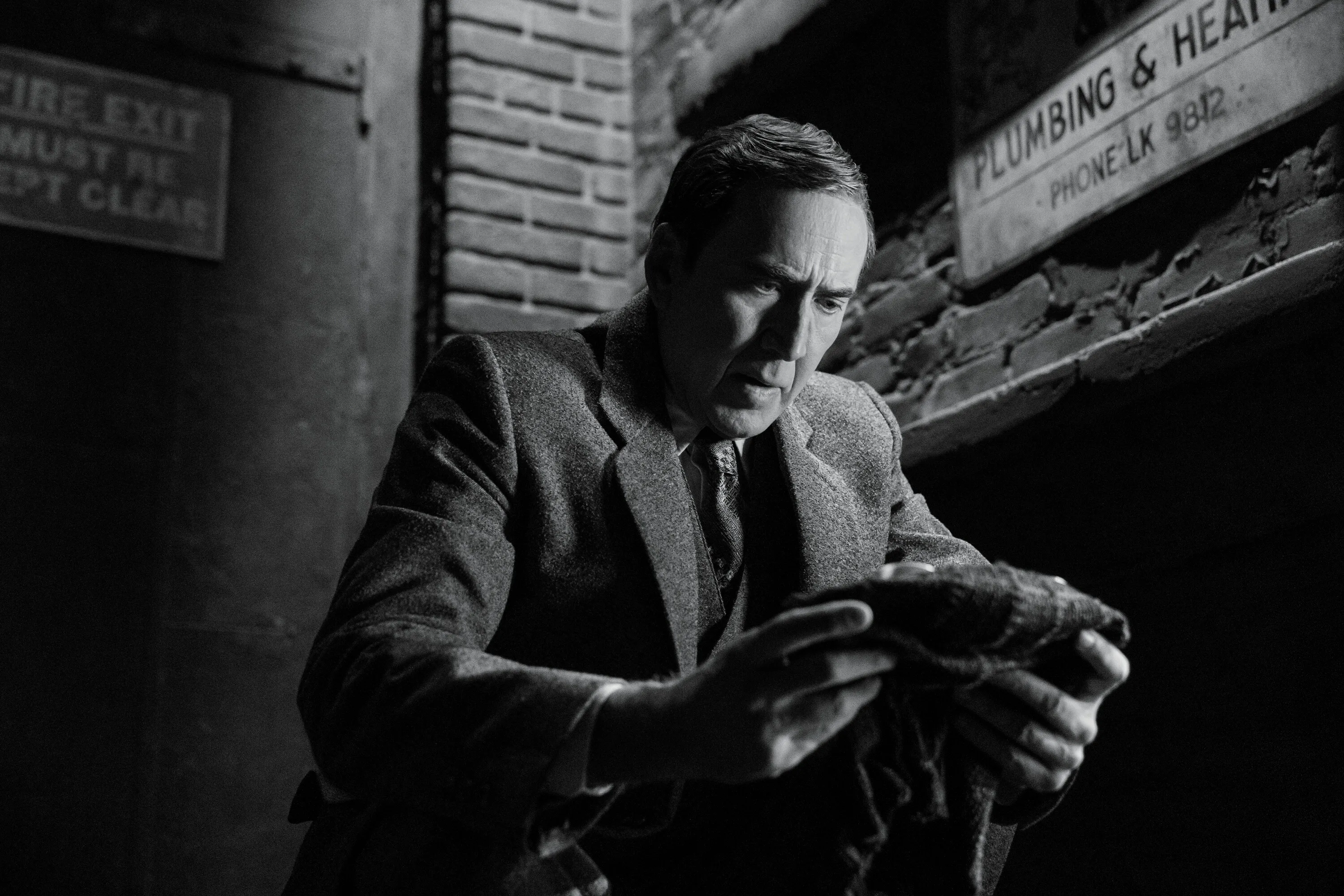
The series introduces Ben Reilly (played once again by Nicolas Cage), Oren Uziel and Steve Lightfoot’s riff on the character introduced in Into the Spider-Verse. And because this is not Peter Parker, and everything about this world is a tiny bit off, the touchstones feel familiar enough, but not overdone. And yes, the noir thing is a gimmick, but Spider-Noir wholeheartedly embraces that gimmick, loading up the series with the sinister shadowy dread of a Raymond Chandler novel, making the series feel like it’s in on the joke and not the butt of it. It’s an unapologetically stylish, wildly fun love letter to film noir that features Cage at his scenery-chewing best. What more can you ask for?
Spider-Noir opens in 1930s New York, where Ben Reilly has long retired as “The Spider,” a name that’s a clear nod to the pulp hero that partially inspired Stan Lee’s creation of Spider-Man. But what else can drag him back into the life of crimefighting but the sultry Cat Hardy (Lee Jun Li, always a marvel to watch), this show’s resident femme fatale? A beautiful nightclub singer under the palm of crime lord Silvermane (Brendan Gleeson), she comes to Reilly to ask him for help finding Flint Marko (Jack Huston), Silvermane’s bodyguard and her secret lover. But when Reilly takes the case, he discovers that Marko and a handful of other men have developed mutating superpowers. As he pulls on that thread, Reilly discovers it’s just part of a complicated web of conspiracies, secret German experiments, and criminal corruption that goes all the way to the top.
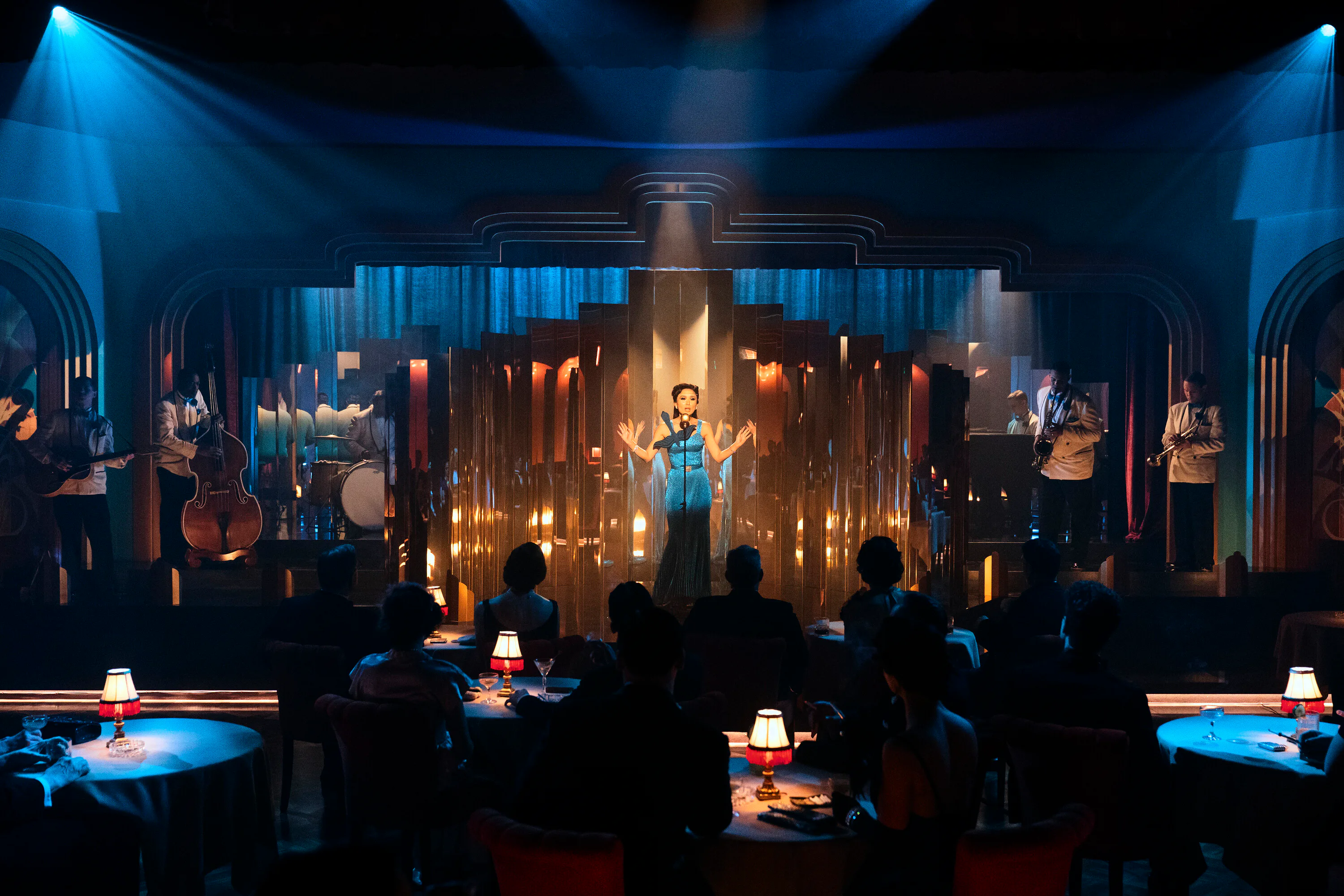
The story of Spider-Noir is, admittedly, a little thin. It takes a little while for the eight-episode series to get going, and by the time it does, its mystery is more or less resolved by a series of flashbacks. But while Spider-Noir doesn’t quite have the complex tangle of enigmas that classic film noir generally have, what it does have is an avid enthusiasm for the genre’s style.
The series was notably shot in both color and black-and-white, with the color version (described as “True-Hue”) meant to ape the saturated Technicolor style of classic Hollywood. This critic only watched the black-and-white version, to stay true to the original vision of Spider-Noir, but the fact that it looks so good in both versions is a testament to cinematographer Darran Tiernan’s keen awareness of what the series calls for: deep shadows, high contrast, and tons of Dutch angles and split diopters. You can practically see the laundry list of influences in every frame: a little bit of The Maltese Falcon there, a touch of Double Indemnity there, a dash of The Big Sleep here. One particularly striking sequence plays almost like a shot-for-shot homage to The Lady from Shanghai, but it’s so unlike anything you see on the grey landscape of streaming TV these days that watching it feels positively electric.
It’s clear the cast is having a blast getting to live out their film noir dreams as well. Nicolas Cage brings that same world-weary tone that he delivered in Into the Spider-Verse, but with a physical performance to match; this Spider is older, heavier, and moves more slowly and cautiously. Though his gravelly performance feels trapped by the limitations of the character, and thus a little one-note at first, the series allows him to gradually loosen up and unleash a little of the unhinged physicality and disarming humor that Cage is known for.
Li and Gleeson are up there with Cage in understanding the assignment, breaking through the noir stereotypes — the femme fatale and the evil crime lord, respectively — to deliver surprisingly nuanced, intensely magnetic performances. The rest of the cast — particularly Huston as the mutating Sandman, Lamorne Morris as Reilly’s reporter friend Robbie Robertson, and Karen Rodriguez as Reilly’s Girl Friday Janet — are fun to watch, but a handful of them are wearing the noir tropes more like costumes than characteristics, going a little too hard on the Transatlantic accent or the showboating.
But when a show looks as good as this, it’s hard to get mad at it. Is it, at best, a gimmick on top of a gimmick, and at best, a showy style exercise? Yes, but that doesn’t mean we can’t have fun with it.