With the world cup bringing fans from all over the globe to America, folks are quickly learning that binge-watching the Office isn’t necessarily enough to understand every regional dialect or proper Americanism.
So one Scottish X account ended up going viral for providing a helpful (to some) guide on how Americans use certain English-language terms. Get comfortable as you scroll through, if you’re not American, consider taking notes, upvote your favorites and be sure to share your own experiences in the comments down below.
More info: X
#1
© Photo: Scottish Banter
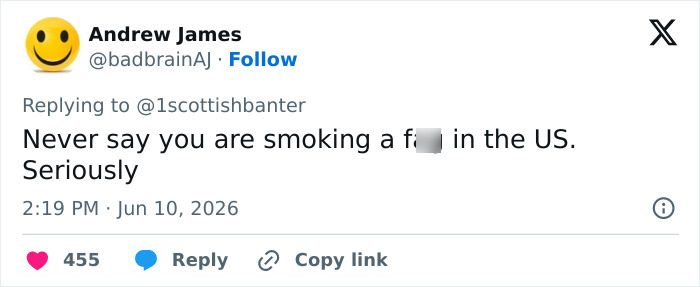
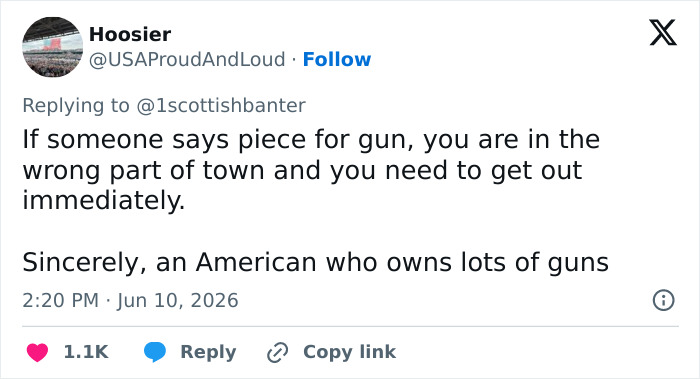
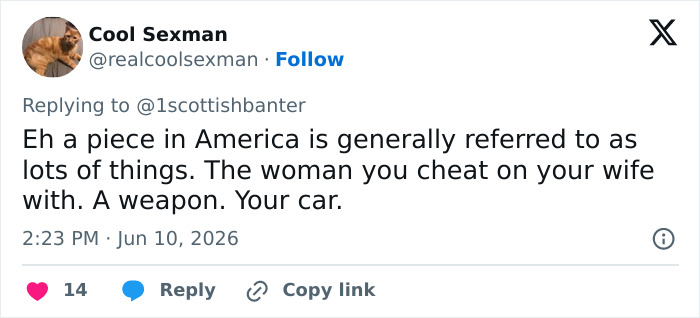
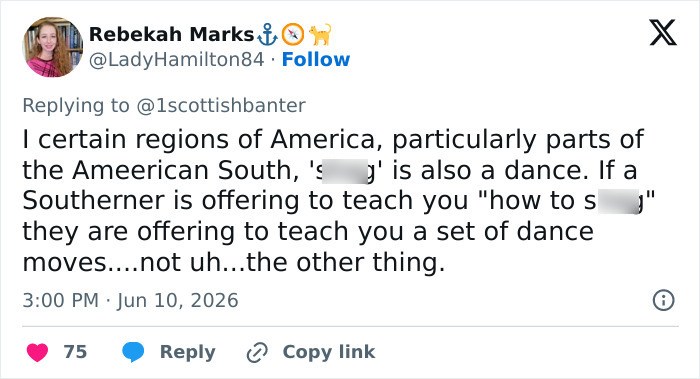
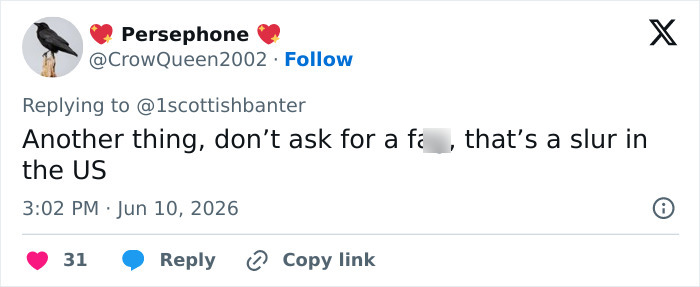
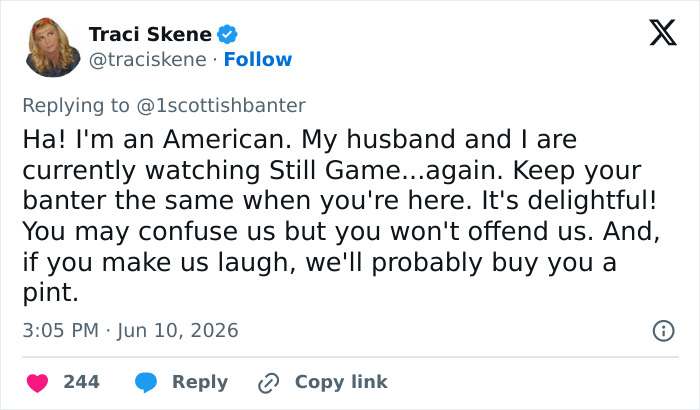
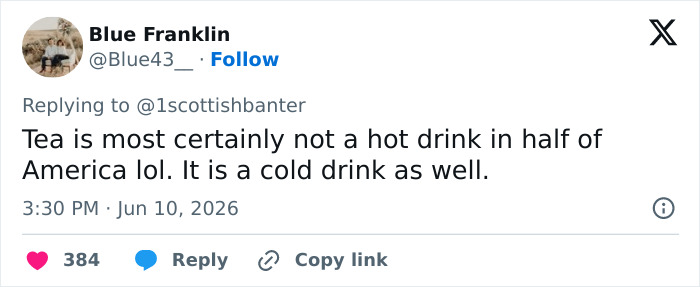
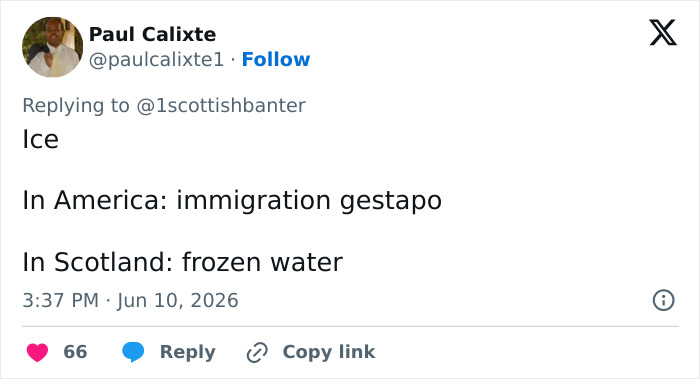
#2
© Photo: Scottish Banter
#3
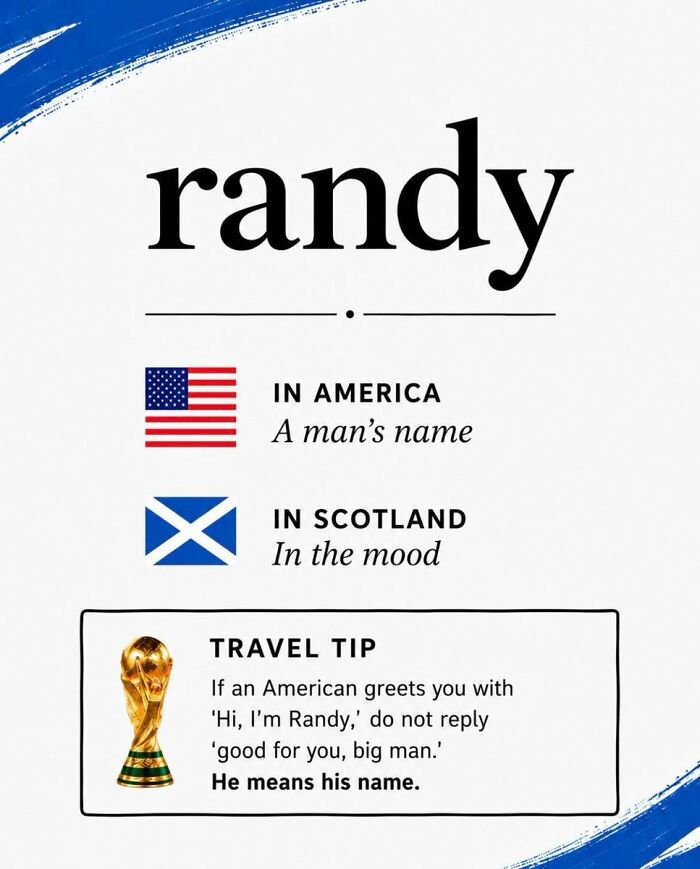
© Photo: Scottish Banter
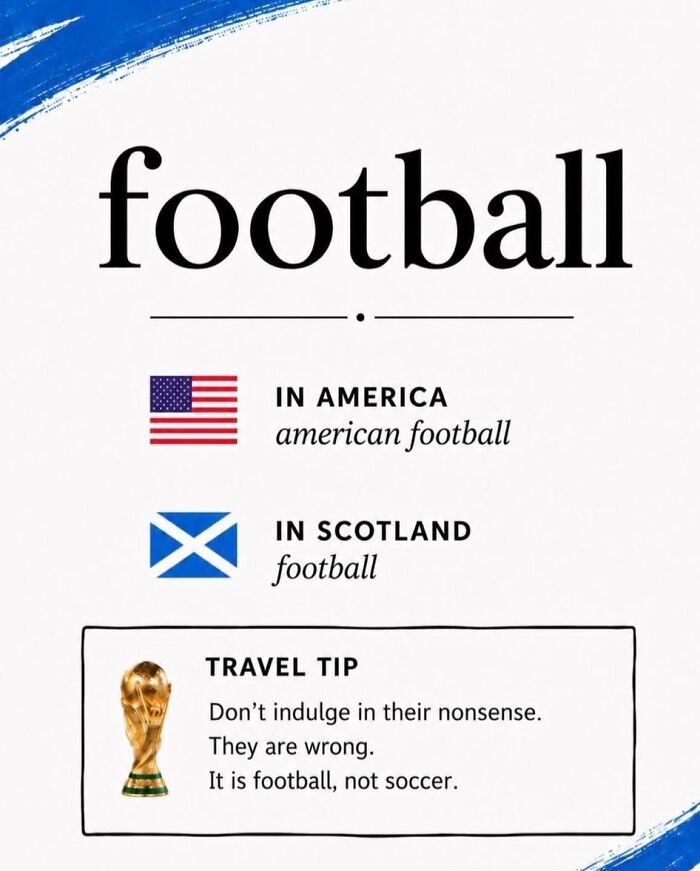
Before you even think about buying a ticket, get ready to hear your sport called "soccer" for the entire trip. The maddening part is that Americans aren't technically wrong. The word was coined in Britain in the late 19th century by university students who shortened "association football" into "assoc," which eventually became "soccer."
Americans kept using it after Brits quietly dropped it, and the more the word became associated with the US, the more British fans recoiled. Stefan Szymanski, a professor at the University of Michigan who has studied the word's history in depth, argues that "soccer" is about as British in origin as cricket. So the next time someone in a New York sports bar says it, maybe let that one go.
#4
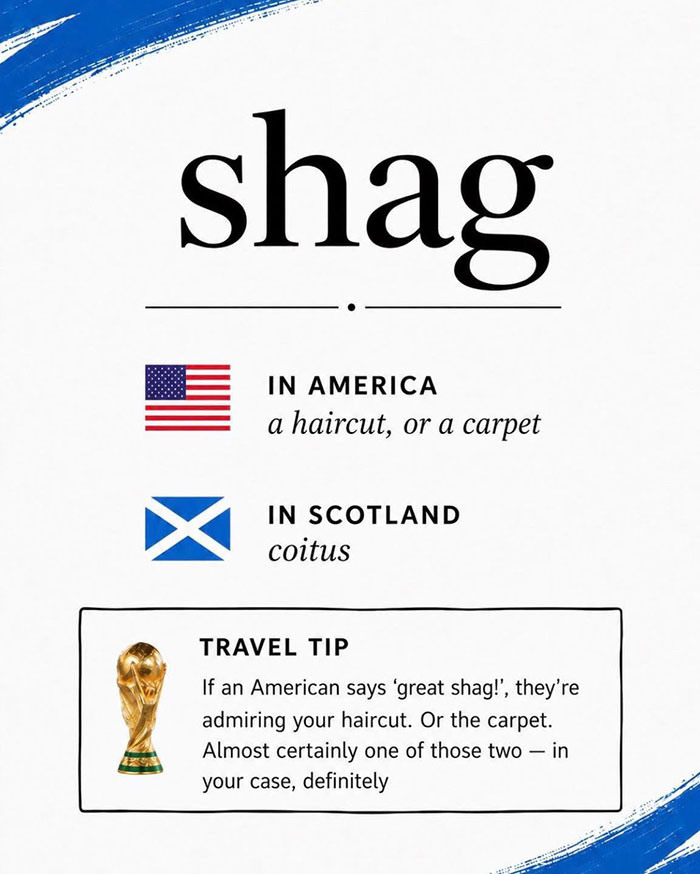
© Photo: Scottish Banter
#5
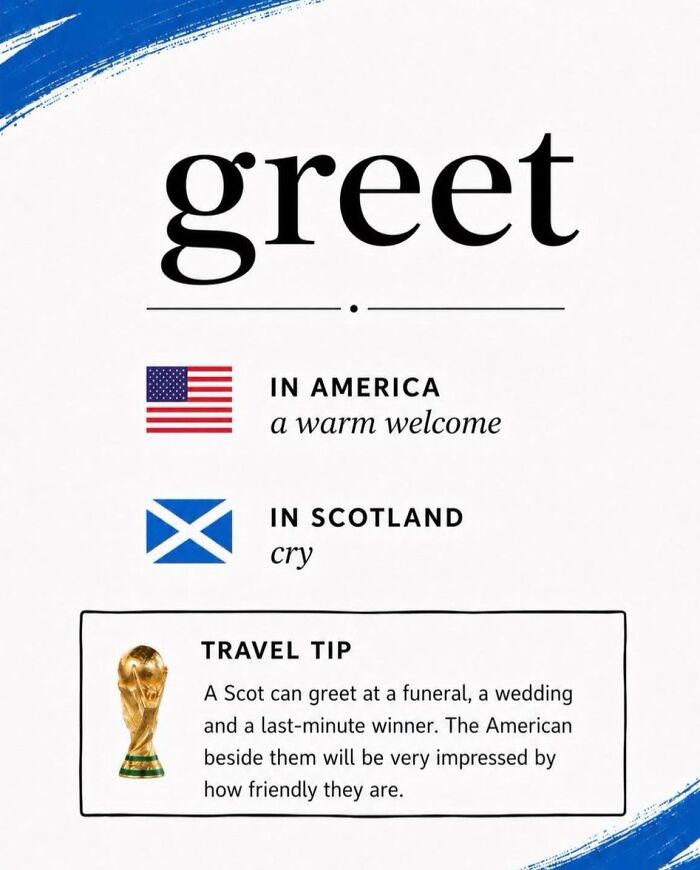
© Photo: Scottish Banter
#6
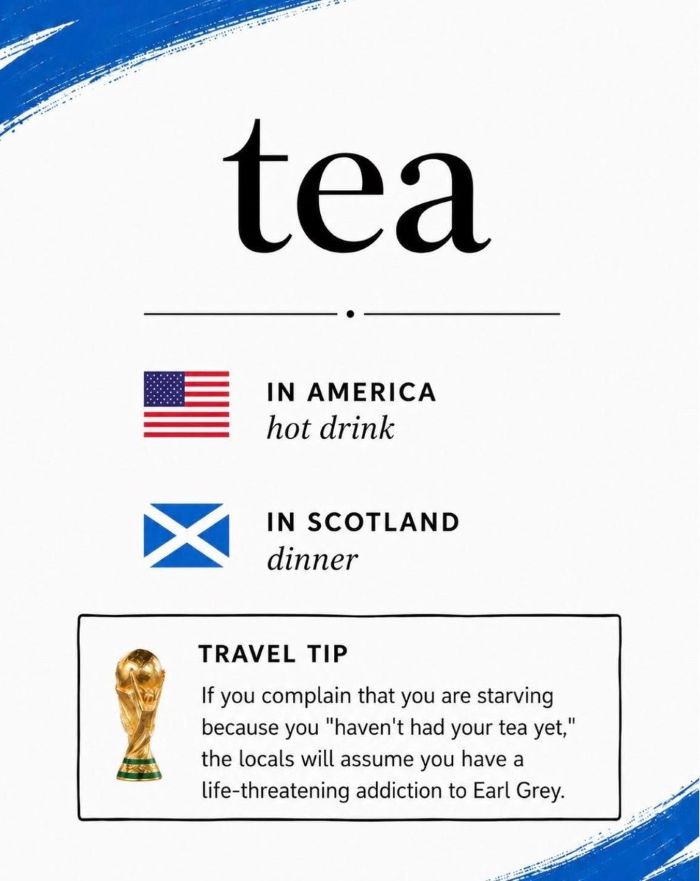
© Photo: Scottish Banter
Food is where things get genuinely confusing. Walk into any American diner and order chips, and you'll be handed a bag of what you'd call crisps. What you actually want are fries, or more precisely "french fries," even if nobody at the table has any particular feelings about France.
#7
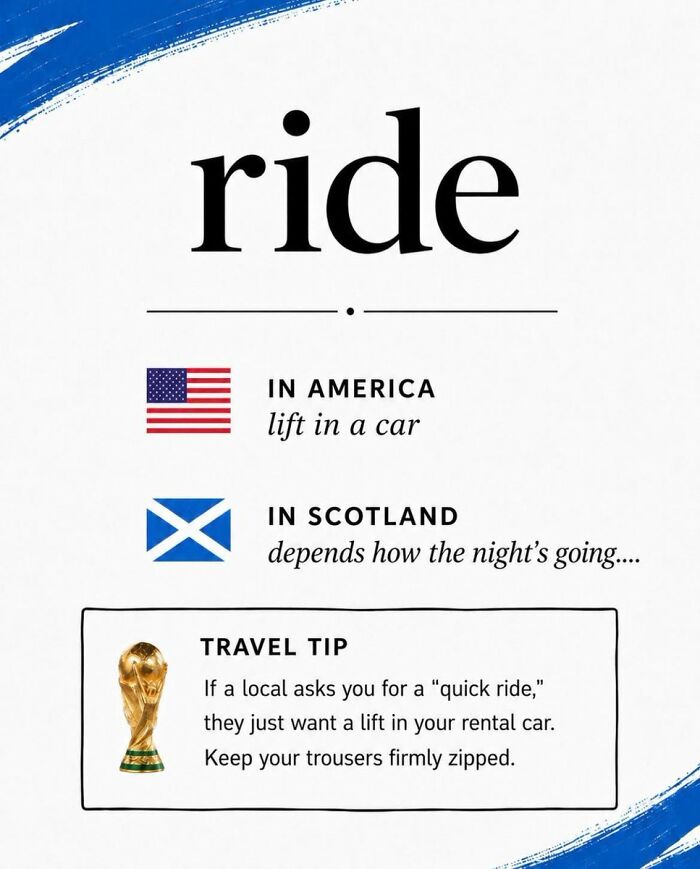
© Photo: Scottish Banter
#8
© Photo: Scottish Banter
#9
© Photo: Scottish Banter
The chip and crisp situation has been causing transatlantic disappointment for generations, and a football tournament is not going to fix it. While you're at it, do not order a biscuit expecting something that goes with a cup of tea. An American biscuit is a soft, buttery, fluffy roll that is genuinely great, but it has absolutely nothing in common with a digestive.
#10
© Photo: Scottish Banter
#11
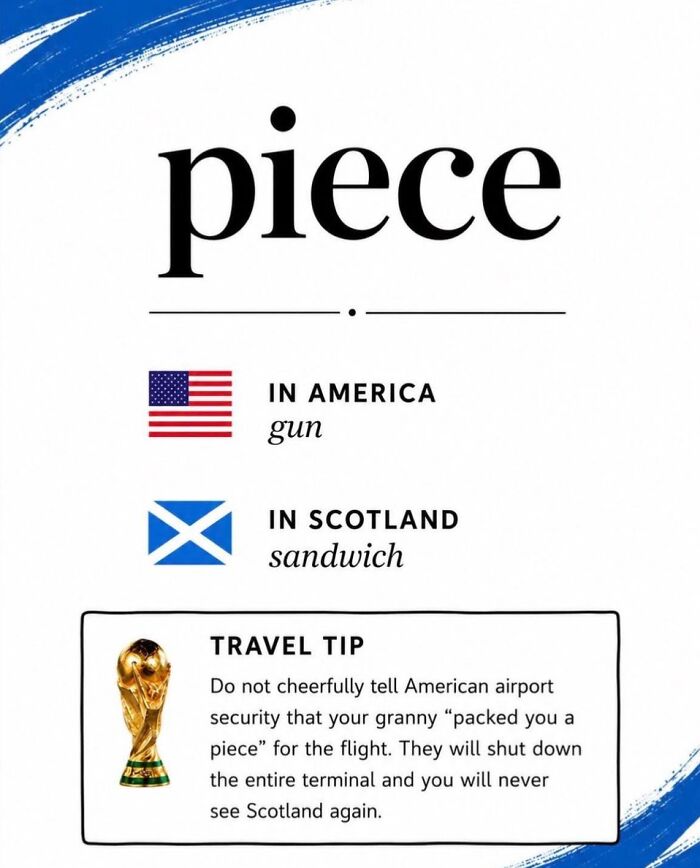
© Photo: Scottish Banter
#12
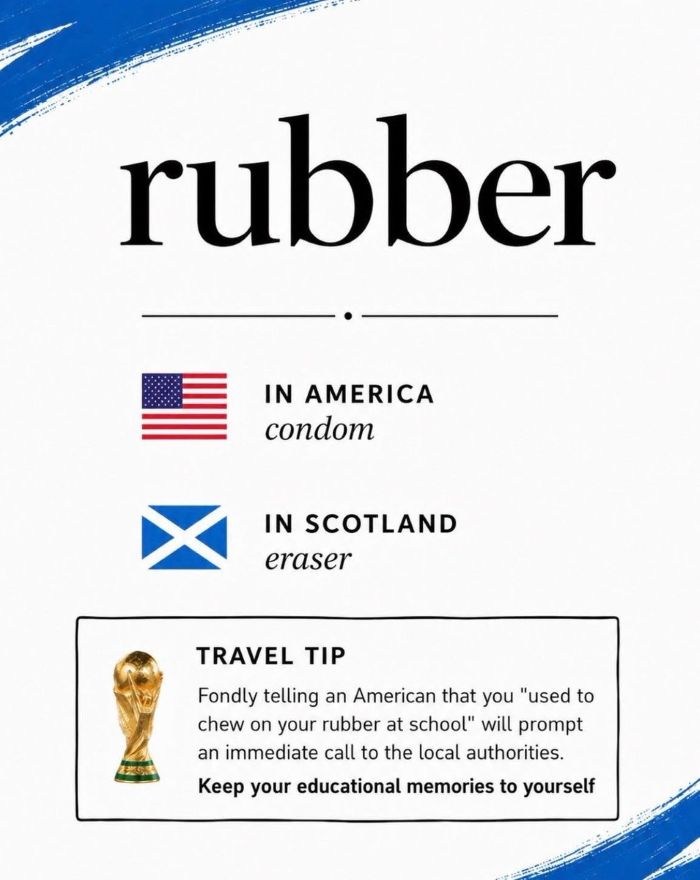
© Photo: Scottish Banter
When you've finished eating, ask for the check rather than the bill. Either will work, but what matters far more is the blank line at the bottom of it, which is where a tip goes. In the US, many servers earn a base wage that sits well below a livable income, with tips expected to bridge that gap. The standard is 18 to 20 percent on the pre-tax total, and this applies at bars too.
#13
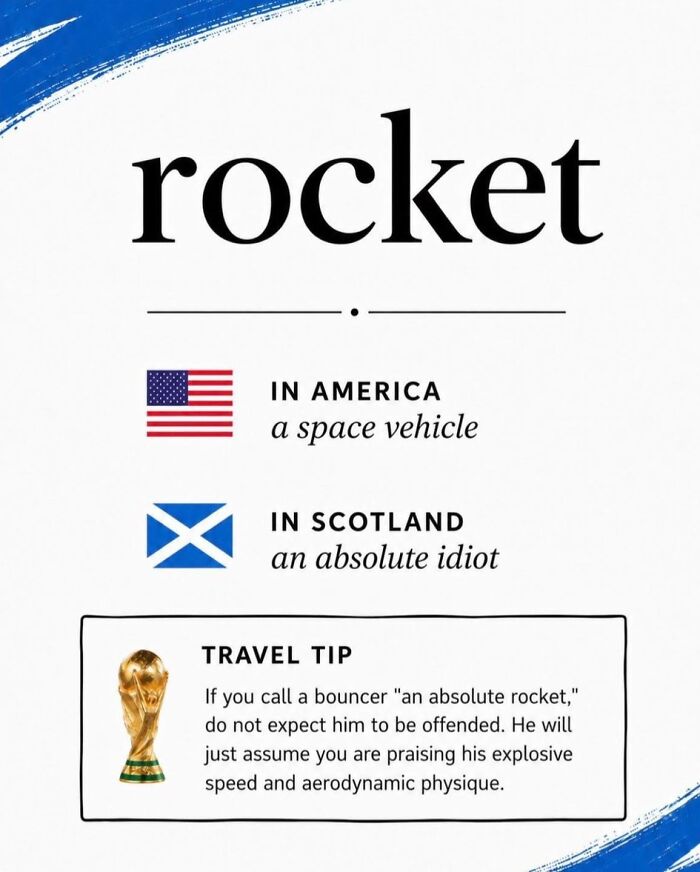
© Photo: Scottish Banter
Leaving the tip line blank is considered genuinely rude rather than a neutral choice. It's less optional appreciation and more a structural part of what the meal actually costs. And when a digital payment screen swings toward you with options starting at 18 percent, just know that pressing "no tip" at a table service restaurant will earn you a look.
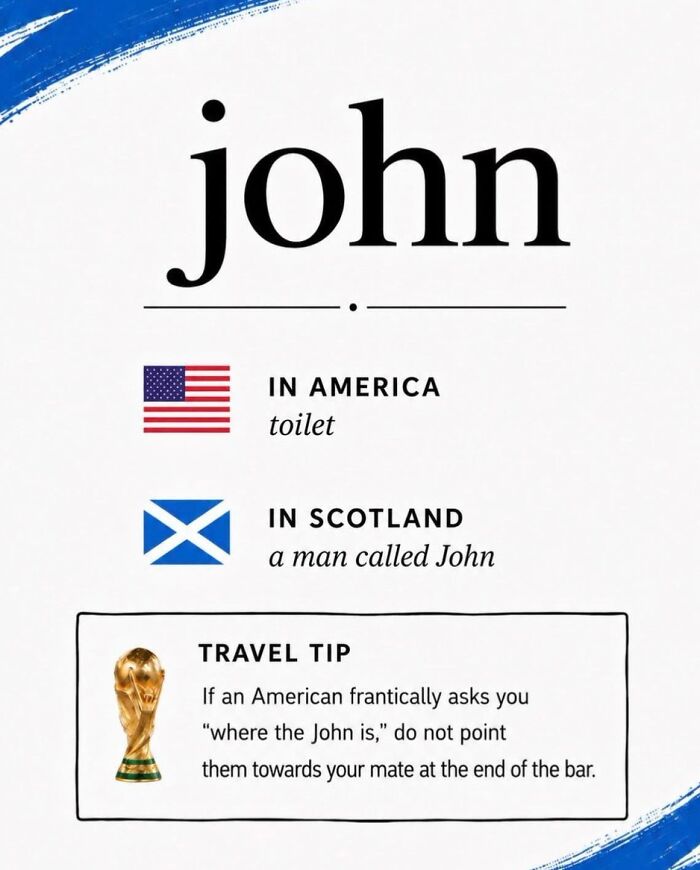
The restroom is what you'd call the toilet. Americans tend to find "toilet" a bit blunt as a standalone public request, so ask for the restroom or the bathroom and you'll be fine, regardless of whether there's an actual bath in the building. Also worth knowing: the button in a hotel is an elevator, not a lift, and petrol is gas. Not gasolene, not petroleum. Just gas. There are a lot of words like this.
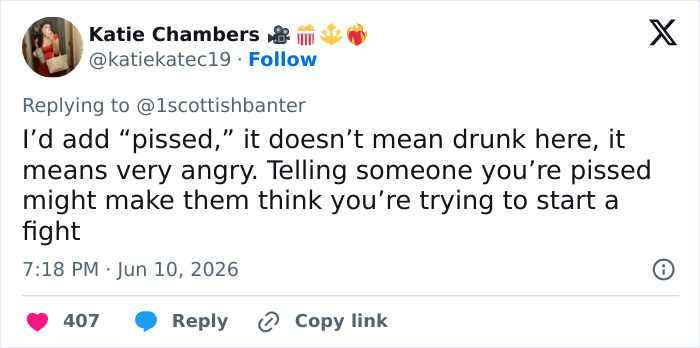
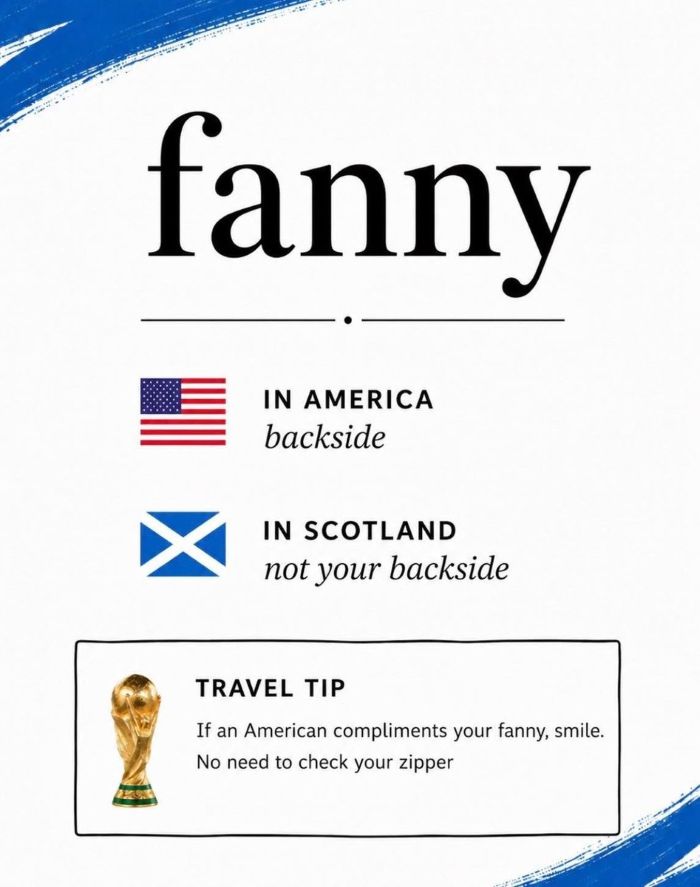
Be careful with the word "pants." In American English, pants means trousers, the things you wear on your legs. Announcing that you've spilled a pint on your pants is a perfectly ordinary sentence. In Scotland it means something considerably more personal. Along similar lines, if someone offers you a fanny pack to carry your match tickets around, they mean a small bag worn at the waist. In American English, "fanny" means the backside, used as casually as "bum," so try not to look too alarmed at the offer.
One last thing: when an American walking past asks "how are you?", they do not want to know. It is a greeting, not a question, and the correct response is "good, thanks, how are you?" delivered at exactly the pace they were already moving. If you stop to actually consider the answer, you will lose them before you finish the second word. Americans are famously warm, enthusiastic and welcoming, and this summer they are going to be spectacularly energetic hosts. Meet that energy halfway, learn which side of the pavement (sorry, sidewalk) to walk on, and you'll have a brilliant time. Just remember to tip.