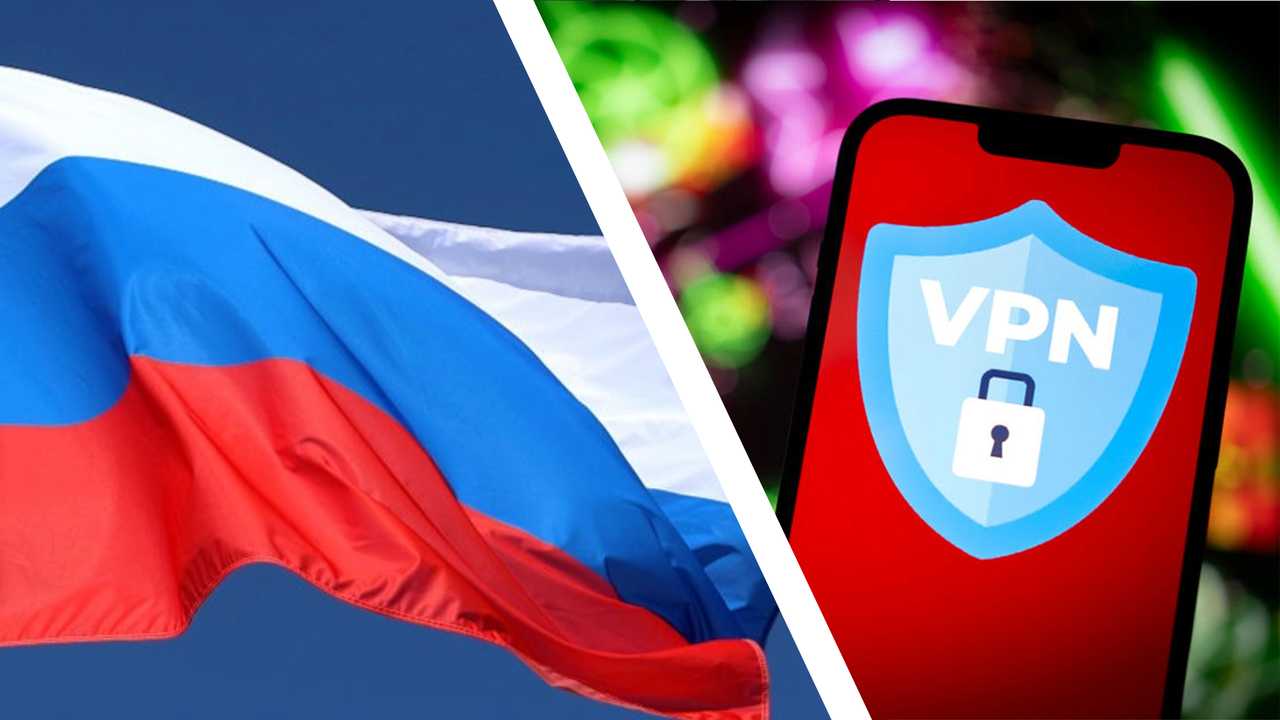
- Amnezia VPN claims Russian media regulator Roskomnadzor is actively DDoS-attacking its infrastructure
- The attacks began in late May, leaving both Amnezia Free and Premium users unable to switch servers or establish stable connections.
- Other circumvention services like BlancVPN have also reported disruptions,
Russia's federal media censor, Roskomnadzor, is allegedly taking a much more hostile approach to internet censorship.
Instead of simply blocking virtual private networks (VPNs), the agency is now accused of launching active Distributed Denial of Service (DDoS) attacks to take down VPN systems entirely.
The accusation comes from Amnezia VPN, a popular service that has been nearly non-functional for several days. The developers stated that the attacks have made it impossible for users to switch between servers, severely disrupting both its Free and Premium tiers.
According to a report by independent news outlet Meduza, Amnezia VPN users first started experiencing severe connection problems and app instability in late May. The service’s developers soon identified the cause, pointing the finger directly at Russian state censors.
"For the first time, we can state as fact that Roskomnadzor has begun not only blocking VPN servers but actively attacking our infrastructure," the developers announced. The agency has not commented on the allegations.
A coordinated cyberoffensive
The developers attributed the widespread outages to "an unprecedented DDoS attack amid the targeted blocking of a large array of Amnezia VPN IP addresses."
While Amnezia representatives first reported the targeted attack on June 1, they also noted that several other unnamed VPN services were "experiencing availability problems" around the same time.
An unprecedented DDoS attack"
Amnezia VPN
Although the team initially estimated that restoring the service would take only a few hours, the sheer scale of the disruption has dragged the recovery process out.
On June 4, the developers stated they were working to "find the most effective way to restore stable operation of the services" and emphasized that "work is continuing around the clock." Amnezia VPN has promised to compensate its Premium users for the downtime.
The escalating battle over Russian internet freedom
This is not an isolated incident. Amnezia VPN had previously experienced outages in mid-May, which it blamed on "mass blockings in connection with the actions of censors."
Around the same time, Russian users also reported widespread issues with the MTProto cryptographic protocol, which is used by Telegram to bypass blocks.
Another popular service, BlancVPN, also suffered major disruptions in late May and early June, though it reported on June 4 that a large portion of its service had been restored.
A representative from BlancVPN told Meduza that the censorship landscape is rapidly deteriorating. They noted that there have been more blockings in 2026 than in 2025, and more in 2025 than in 2024.
As Roskomnadzor continues to refine its technical capabilities, VPN providers are forced to continuously develop new workarounds. This latest alleged shift from passive blocking to active DDoS attacks indicates that the battle for digital privacy in Russia is entering a new phase.