Russia’s deteriorating performance on the battlefield is rendering it “more reckless and dangerous”, the foreign secretary has warned, declaring that the post-Cold War “peace dividend” has vanished.
Speaking after a Nato foreign ministers’ meeting in Sweden, Yvette Cooper highlighted the escalating threat posed by Moscow’s unpredictability.
“We discussed in the Nato foreign ministers’ meeting how Russia’s weakening on the battlefield against Ukraine is also making them more reckless and dangerous,” she said.
Ms Cooper detailed how Russia, despite being under immense pressure from Ukraine’s military response and economic challenges, is becoming increasingly unpredictable.
This manifests in “escalating attacks on Ukrainian civilians, increasing hybrid threats across the continent, and reports of drone incursions”. She added that the threat from Russia is expanding across “air, land, sea, space, cyber and information warfare”.
The foreign secretary’s stark assessment follows a recent incident where London made formal representations to Moscow after two Russian jets intercepted an unarmed RAF spy plane over the Black Sea.
According to the Ministry of Defence (MoD), a Russian Su-35 jet flew so close to the British reconnaissance aircraft that it triggered its emergency systems, disabling the autopilot.
Further underscoring the pervasive nature of the threat, veterans minister Al Carns, appearing before parliament’s Joint Committee on the National Security Strategy, described a “continual attempt by the Russians to identify weaknesses” in UK infrastructure, such as undersea cables. He noted, however, that “their ability to do that undetected is very difficult”.
Following the Nato meeting, Ms Cooper reiterated her concerns, stating: “Any lingering cosy assumptions about our defence and security are gone. So too is the post-Cold War peace dividend.”
She stressed the imperative to “keep increasing our defence and security capabilities and maintain our support for Ukraine”, advocating for a stronger Europe within Nato, which she described as “the most successful defensive alliance in history”.
Her comments came as Nato forces simulated launching “deep strike” operations on Russia in the event of an attack on a member state. Soldiers used a disused platform at Charing Cross station, London, to test the ability of electronic warfare to jam Russia’s communications and down drones in the event of an invasion of a Baltic country.
Speaking from the Tube platform, US General Christopher Donahue, head of Nato’s Land Command, said that Nato had little time to prepare to meet a potential Russian attack.
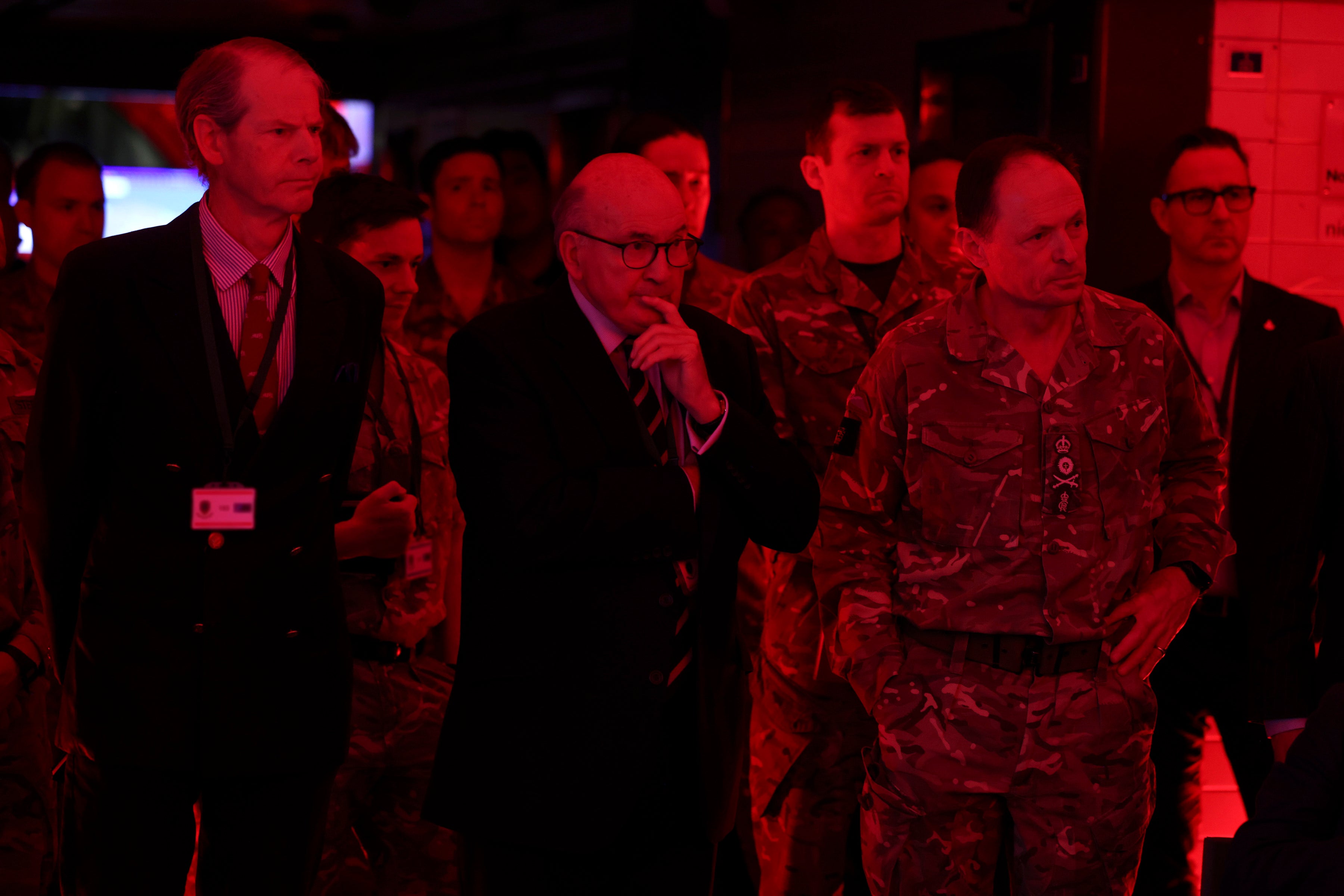
“Mission-ready by 2030 is not a slogan, it is what we must do,” he said. “Legacy forms of mobilisation and movement are no longer a given Nato advantage, and a lack of protection in depth will be used against us.”
British commander Lieutenant General Mike Elviss said that the exercise was necessary “not just to be good at it, but because the adversary is watching, and we want him to know that we are ready for the challenge”.
“Failure to learn, adapt, and apply the lessons we observe on the modern battlefield, and failure to do this faster than our adversaries, puts both our deterrence posture and our defence plans at risk. So this exercise comes at a critical time,” said Nato’s supreme allied commander for Europe, General Alexus G Grynkewich.
Separately, Sir Keir Starmer joined leaders from France and Germany in vowing to “double down on their support” for Ukraine.
A Downing Street spokesperson confirmed a virtual meeting between the prime minister, Ukrainian president Volodymyr Zelensky, French president Emmanuel Macron, and German chancellor Friedrich Merz had taken place.
During the meeting, President Zelensky provided an update on the recent progress made by Ukraine’s military. The leaders paid tribute to the resilience of the Ukrainian people and reaffirmed their commitment to increased support in the coming months.
They collectively agreed that confronting Russian aggression remains crucial for both European and global security, pledging to work towards a “just and lasting peace for Ukraine”. The leaders concluded by agreeing to reconvene soon.