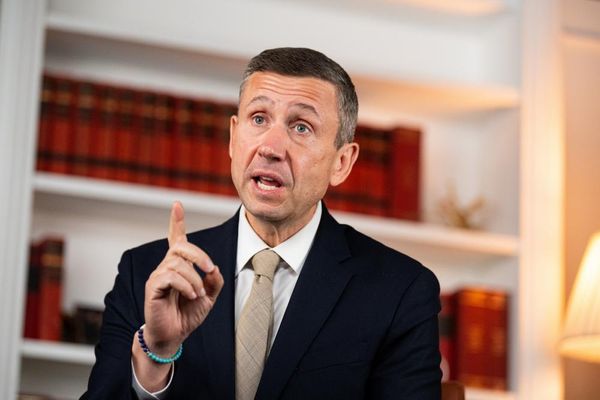
India's macroeconomic vulnerabilities are piling up, and UBS India Research Head Diviya Nagarajan is not mincing words. She flagged a potential rupee slide to 100, a looming $50 billion balance of payments stress, and an earnings outlook that gets harder to call by the day.
Rupee at 96; but 100 is on the table
UBS has an end-of-year rupee target of 96, but Nagarajan acknowledged the currency is already trading above that level. The risk of 100 is real and conditional: "If those measures do not come in and oil continues to remain elevated, then we could be looking at 100 in the near term."
The measures she is banking on include a temporary curb on outflows under the Liberalised Remittance Scheme, which saw $30 billion exit India last year, and a revival of the NRI deposit scheme, which previously pulled in a comparable amount. Without those interventions, currency pressure will persist.
Balance of payments already stressed
India is already feeling the heat on its external accounts. "As things stand, we are looking at north of a $50 billion kind of a balance of payment issue," Nagarajan said plainly.
As both an oil and gas importer, India is acutely exposed. UBS considers India one of the most vulnerable Asian economies to oil price shocks. The currency depreciation compounds the problem, it keeps foreign investors away and squeezes importers' earnings simultaneously.
GDP growth: 6.5% best case, 5.5% worst
UBS's base case GDP growth for the current year is 6.2%. A quick resolution to the ongoing geopolitical stress could push that to 6.5%. But a combination of prolonged disruption and a severe El Niño impacting crop output brings the downside scenario to 5.5%, a figure that would meaningfully disappoint markets.
Earnings: Too many moving parts
Earnings growth expectations for the year have already been cut from a starting point of 15% to below 10%. Nagarajan declined to put a precise number on further downside, calling it "very sector dependent" and contingent on government action. Her broad warning: "The risk is exponentially to the downside the longer this takes."
Demand destruction is visible in pockets of the economy, a consequence of India's dependence on imported energy. That said, she noted the economy has not fallen off a cliff yet, and government efforts to stabilise demand provide some cushion.
Banking: Better positioned than a year ago
On financials, Nagarajan offered a relatively measured view. Indian banks entered this period of stress in better shape than they were a year or two ago, making the sector more resilient. She does flag second and third-order risks, NPA formation if the crisis drags on, but for now, the sector holds up.
Her preference: private banks over PSU banks, particularly as a hedge against a potential farm or NPA crisis if El Niño plays out badly.
Power and renewables: The structural winner
One sector stands apart from the turbulence; power and renewables. Nagarajan drew a lesson from Europe's 2022 oil shock, noting that this time electricity prices have moved far less than during that episode, reflecting deeper investments in clean energy. India's expanding renewables base and nuclear capacity position it well to reduce import dependence over time, a theme she expects to gain policy momentum globally and domestically.