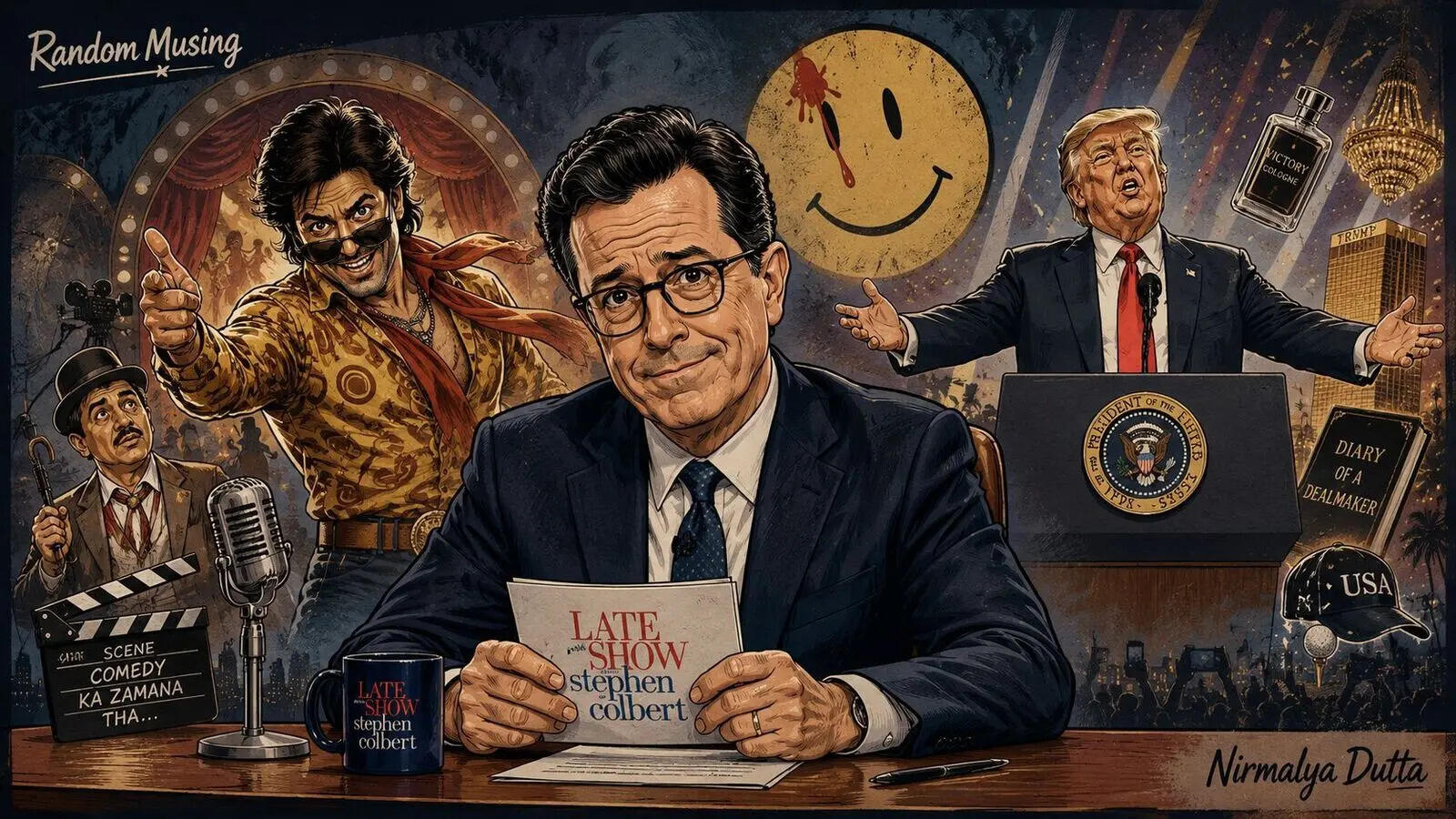
What do the graphic novel Watchmen, Bollywood and America have in common? They all have to deal with the mystery of the missing ‘comedian’. For the uninitiated, between his acts of making imperialist propaganda with CGI abs and the trials and travails of caped crusaders battling film critics, Zack Snyder made Watchmen, a graphic novel retelling masquerading as a movie, whose plot revolves around the untimely demise of a misogynist psychopath called the Comedian.
The same issue plagued Bollywood, not the misogynist psychopaths, though they might have been there, but missing comedians. Earlier, Bollywood plots had clear compartmentalisation: the hero bragged about his relationship with his mother, the mother looked stoic and sad, the heroine danced, the villain drank Vat 69 while usurping poor people’s land, and the comedian made the audience laugh. All that changed with Dharmendra’s comic turn in Chupke Chupke and Amitabh Bachchan swapping the angry young man for a swaggering jester in Amar Akbar Anthony.
A process that started in the 1970s eventually reached its conclusion by the 1990s, when Chi-Chi arrived onscreen and the demarcation between hero and comedian had collapsed like a wave function the moment it was observed. This was rather hard on professional comedians who lived and died by the audience’s laughter: the Johny Walkers, Mehmoods, Keshto Mukherjees, Asranis, Jagdeep Sahabs and Paintals of the world, men who once existed as separate comic planets but increasingly found themselves orbiting heroes who had learned to do their own jokes. It was the pre-AI equivalent of a product manager making coders extinct by vibe-coding with Claude.
And now America finds itself on the same precipice with the same problem statement: the missing comedian, which is odd given America is the nation that worships at the altar of the First and has the Second to back it up.
But it says something when the visiting king is funnier than most late-night TV hosts, which brings us to the current predicament where CBS is set to pull the plug on Stephen Colbert’s Late Show.
Colbert is a comedian who has survived for 3,000 episodes across 20 years and two TV networks, so obviously his acolytes are a little upset. The reaction is predictable, with CNN’s Roy Wood Jr hailing him for “sticking to the truth” and Hasan Minhaj praising him for “always meeting the moment”.
So why is CBS pulling the plug? Is it just to appease the orange overlord?
That may be part of the reason, but it’s not the only one, so let’s open the box to explain and examine the real nature of Schrödinger’s cat-like state of comedy in America, and late-night comedy in particular.
First off, while Colbert’s allies might hail him for “sticking to the truth”, one would be wont to point out that Colbert’s truth was often one-sided.
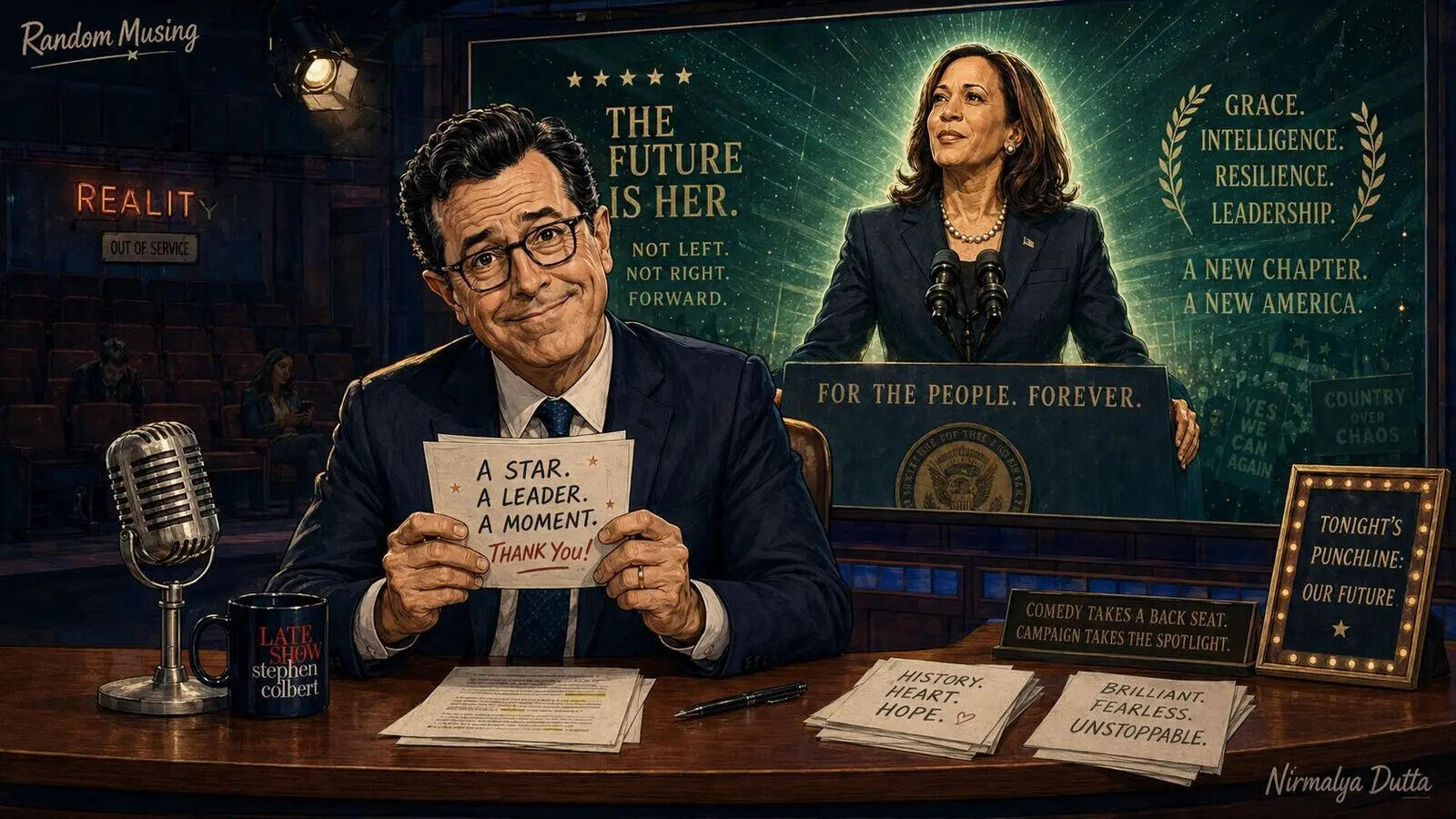
Take the coverage during the run-up to the 2024 US election, where Colbert was an unabashed superfan of Kamala Harris, waxing lyrical about her “verbal kung fu” and even overlaying her quotes with Morpheus calling her The Chosen One. That is, of course, his prerogative, but the audience, the voters and even reality begged to differ.