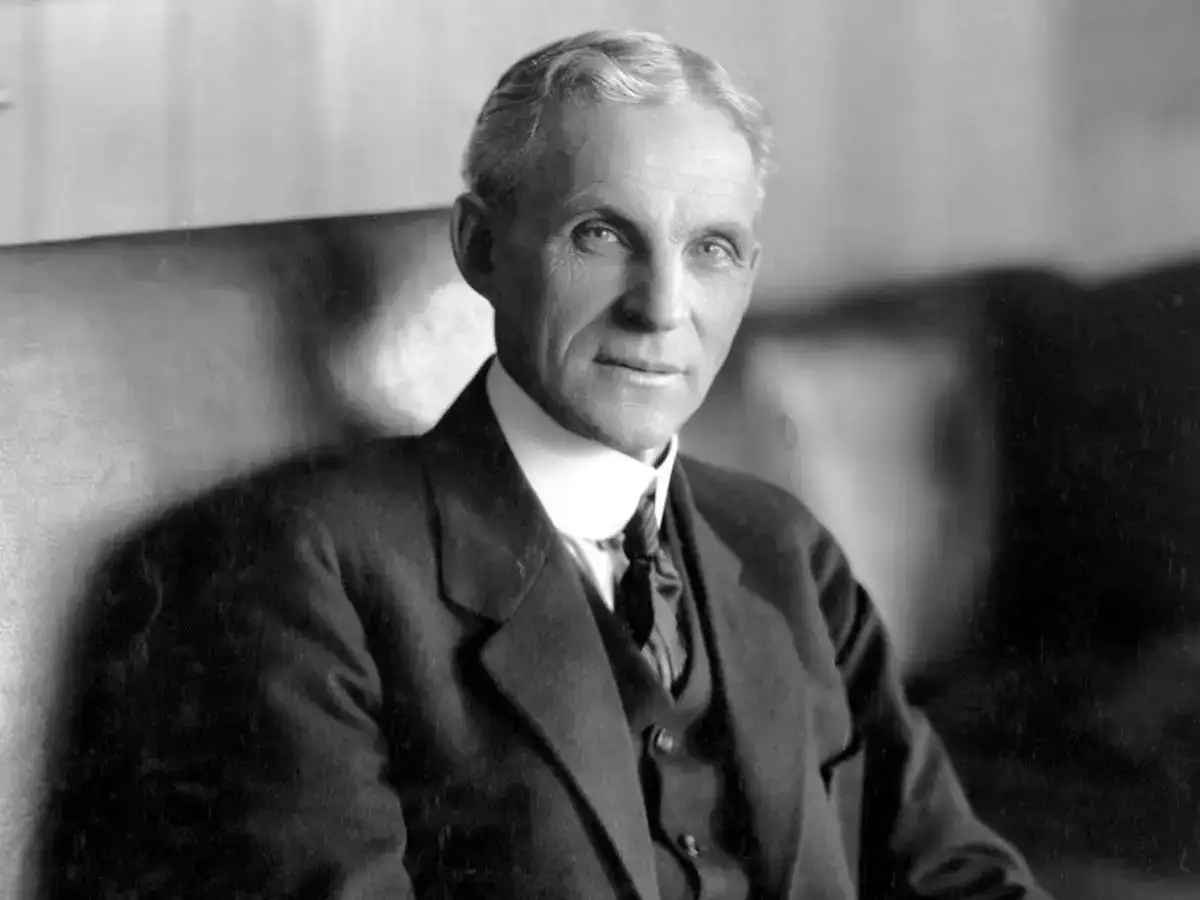
Quote of the day by Henry Ford continues to inspire people across generations because it explains the value of learning from mistakes and using failures as lessons for growth. Henry Ford, the American industrialist who changed factory production through assembly-line methods, faced many struggles before building one of the world’s largest automobile companies. His statement, “The only real mistake is the one from which we learn nothing,” reflects his own life experiences in business, manufacturing and innovation. The quote remains relevant today for students, workers, entrepreneurs and professionals because it highlights the importance of self-improvement, course correction and persistence in difficult situations and changing circumstances.
Quote of the day today
The quote by Henry Ford is,
“The only real mistake is the one from which we learn nothing.”
The quote by Henry Ford continues to remain relevant because it explains the importance of learning through failure, setbacks and wrong decisions. The statement focuses on personal growth, learning, discipline and course correction. It also reflects the life journey of Ford himself, who faced failures, criticism, legal battles and business struggles before changing factory production and the automobile industry in the United States.
Meaning of the quote and why it still matters
The quote explains that mistakes are not the biggest problem in life. The bigger problem is refusing to learn from them. Human beings often fail in careers, studies, relationships, business or personal decisions. However, people who examine their failures and improve themselves can move forward.
Henry Ford believed that learning from errors was necessary for progress. His own life reflected this idea. Before establishing the Ford Motor Company, several of his business efforts failed. Investors abandoned him because he kept changing and improving his automobile models instead of releasing them quickly into the market.
Even after facing criticism, Ford continued experimenting with gasoline-powered vehicles, racing cars and assembly-line production. He used mistakes as lessons and built systems that later changed industrial production across the world.
The quote is relevant in education, business, sports and personal development. Students who fail exams can improve through preparation. Workers can improve performance through experience. Businesses can avoid repeated losses by studying failures and changing strategies.
Life lessons from the quote
The quote provides several life lessons connected with growth and self-improvement.
Learning from failure is important
Henry Ford’s early automobile businesses struggled because investors wanted quick profits while Ford focused on improving the product. These setbacks did not stop him. He continued working until he launched the Ford Motor Company in 1903. This lesson teaches that failure should not end effort. People can use mistakes to build knowledge and improve future decisions.
Course correction helps long-term success
The quote also highlights the importance of course correction. Ford constantly adjusted his ideas, production systems and business plans. He experimented with assembly-line methods, production speed and labour systems. When problems appear in life or work, correcting mistakes becomes necessary. Ignoring them may lead to repeated failures.
Experience becomes a teacher
The statement explains that practical experience can become an important teacher. Mistakes often show weaknesses that people may not notice otherwise. Ford learned through experiments with engines, automobiles and manufacturing systems. He built vehicles repeatedly and improved them step by step.
Progress requires patience
Henry Ford spent years experimenting before finding commercial success. He worked in machine shops, learned about internal-combustion engines and built early vehicles like the Quadricycle before reaching large-scale production. The quote reminds people that growth often takes time and repeated effort.
Henry Ford and the transformation of factory production
Henry Ford was born on July 30, 1863, in Michigan. He became one of the most influential industrialists in American history because of his role in changing factory production and automobile manufacturing. Ford grew up on a farm near Dearborn, Michigan. At the age of 16, he moved to Detroit to work in machine shops. During this period, he first came into contact with internal-combustion engines.
Later, Ford worked for the Edison Illuminating Company, where he became chief engineer. During his free time, he experimented with gasoline-powered engines and vehicles. In 1896, he completed the Quadricycle, his first automobile. Ford continued building and selling vehicles to finance newer versions. After several failed business ventures and disagreements with investors, he founded the Ford Motor Company in 1903.
How the Model T changed transportation?
Ford announced the Model T in 1908 with the idea of building a car for ordinary people instead of only wealthy buyers. The vehicle became one of the most successful automobiles in history. More than 15 million Model T cars were sold in the United States during its production run. The automobile changed travel, farming, business and urban growth in America.
The success of the Model T also transformed factory production. Ford introduced moving assembly lines that reduced manufacturing time sharply. By improving coordination between workers and production systems, Ford Motor Company increased efficiency and lowered vehicle prices. The assembly-line system later influenced industries around the world.
Henry Ford’s labour policies and industrial impact
In 1914, Ford Motor Company announced a minimum wage of five dollars a day and reduced working hours from nine to eight hours. The decision attracted worldwide attention. Ford believed lower prices and higher production would increase sales. By paying workers more, he believed they could also become customers.
Mass production, wage changes and assembly-line systems influenced industrial growth in the United States. The automobile industry expanded rapidly, and suburbs, highways and transportation systems grew across the country.
Challenges, criticism and later struggles
Despite his achievements, Henry Ford also faced criticism and business setbacks. He resisted changes in automobile design while competitors introduced new features. Ford continued supporting the Model T for too long while rivals offered different colours, engines and technologies. By the late 1920s and early 1930s, companies like General Motors and Chrysler gained stronger positions in the market. Ford introduced the Model A later, but the company had already lost leadership in the automobile industry.
Ford also faced criticism for his anti-union policies and controversial public statements. His newspaper, The Dearborn Independent, published attacks against Jewish communities during the 1920s. Ford later retracted those statements in 1927. Even with controversies, Ford’s influence on manufacturing, industrial systems and transportation remained significant.
Why the quote connects with Henry Ford’s own life?
The quote about mistakes reflects Ford’s personal and professional experiences. He experienced failed companies, investor disputes, legal battles and changing market conditions. Instead of stopping after setbacks, Ford continued experimenting with new systems and methods. His life demonstrates the importance of persistence, learning and adaptation.
The statement also remains useful today because modern life changes rapidly. Technology, careers and industries continue evolving. People who learn from mistakes and adapt to new situations often improve their chances of success.