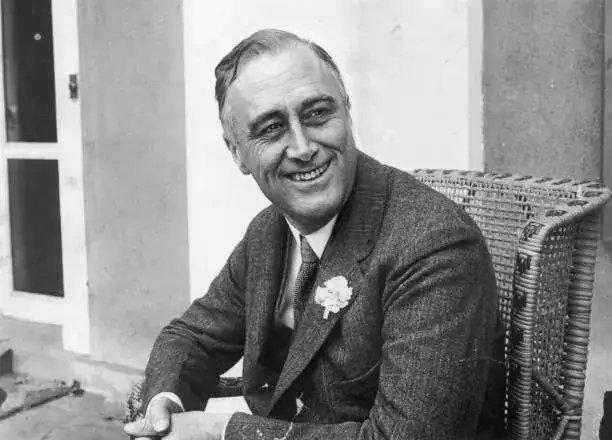
Quote of the Day by Franklin D. Roosevelt offers a message that remains relevant in modern life. Roosevelt said, “Men are not prisoners of fate, but only prisoners of their own minds.” The statement focuses on the idea that people often limit themselves through fear, doubt, and negative thinking. Rather than blaming circumstances or destiny, the quote encourages individuals to examine their thoughts and beliefs. It suggests that mental barriers can be stronger than external obstacles. The message continues to resonate with people seeking success, understanding human nature, and achieving inner peace. It also reflects lessons drawn from Roosevelt’s own life and leadership during challenging periods in history.
Understanding the Meaning Behind the Quote
The quote of the day by Franklin D. Roosevelt suggests that people are not controlled entirely by destiny or circumstances. Instead, their thoughts often shape how they respond to situations. Many individuals believe that success or failure is determined by factors beyond their control. Roosevelt’s words challenge that belief. He argues that the mind can become a prison when people allow fear, doubt, or negative assumptions to dictate their actions.
The statement does not imply that challenges do not exist. Rather, it emphasizes that a person’s response to those challenges often determines the outcome. A change in thinking can create new opportunities, while limiting beliefs can prevent progress. The quote encourages people to recognize the power of mindset and personal responsibility.
Life Lessons From the Famous Statement
One of the key lessons from the quote is that mindset matters. People often face obstacles in education, careers, relationships, and personal goals. While external factors can create difficulties, mental barriers frequently become the larger problem. Fear of failure, fear of criticism, and self-doubt can stop people from taking action.
Roosevelt’s words encourage individuals to challenge these thoughts. By changing their mindset, they may discover possibilities that were previously ignored. Another lesson is the importance of self-belief. Confidence does not eliminate challenges, but it helps people approach problems with determination and persistence. The quote also teaches that growth begins when individuals take responsibility for their choices and actions.
Franklin D. Roosevelt’s Life and Leadership
The message carries additional weight because of Roosevelt’s own experiences. Franklin Delano Roosevelt (FDR) was born on January 30, 1882, in Hyde Park, New York. He was the only child of James and Sara Delano Roosevelt. He received private education before attending Groton Preparatory School and later Harvard University.
During his time at Harvard, Roosevelt developed an interest in public service. He married Eleanor Roosevelt in 1905. Eleanor played an important role in broadening his understanding of social issues and the struggles faced by many Americans. After studying law at Columbia University Law School and passing the New York bar examination, Roosevelt entered public life.
In 1910, he won election to the New York State Senate. His political career continued to grow, and in 1913 he became Assistant Secretary of the Navy under President Woodrow Wilson. Roosevelt later served as Governor of New York. During this period, he focused on helping farmers, supporting consumers, and creating relief programs during economic hardship.
Leading the United States Through Crisis
Roosevelt became the 32nd President of the United States in 1933. His presidency began during the Great Depression. Millions of Americans were unemployed, banks had closed, and economic activity had declined sharply. Roosevelt introduced programs and reforms known as the New Deal. These measures expanded the role of the federal government in addressing economic problems and providing relief.
His famous statement during his inaugural address, “The only thing we have to fear is fear itself,” reflected a belief similar to the quote about mental limitations. He understood that fear could prevent people from taking action and rebuilding confidence. Roosevelt later guided the United States through World War II. He worked closely with Allied leaders, including Winston Churchill and Joseph Stalin, while supporting efforts to defeat Germany, Italy, and Japan. He remains the only U.S. president elected to four terms.
Relevance of the Quote in Modern Life
The quote continues to have significance in the modern world. In professional life, people often hesitate to pursue opportunities because they fear failure. Roosevelt’s message suggests that mental limitations can prevent progress more than external circumstances.
In education, students may believe they cannot achieve certain goals because of previous setbacks. The quote encourages them to reconsider those beliefs. In personal development, individuals frequently struggle with self-doubt. The statement reminds them that changing their thinking can lead to different outcomes. The quote is also relevant in discussions about mental resilience and emotional well-being. While challenges cannot always be controlled, attitudes and responses can often be improved.
Human Nature and Inner Peace
The quote offers insights into human nature. People naturally worry about uncertainty and future events. Many become trapped by assumptions about what might happen rather than focusing on what can be done in the present. Roosevelt’s words encourage a shift in focus. Instead of becoming prisoners of fear or negative expectations, individuals can develop awareness of their thoughts and make conscious decisions.
This approach can contribute to inner peace. When people stop viewing themselves as victims of fate and begin recognizing their ability to make choices, they often gain a greater sense of control and purpose. The quote promotes self-reflection and encourages people to examine whether their biggest obstacle is external circumstances or their own thinking.
Legacy of Franklin D. Roosevelt
Franklin D. Roosevelt died on April 12, 1945, in Warm Springs, Georgia. By that time, he had led the United States through the Great Depression and most of World War II. His supporters viewed him as a leader who helped the nation navigate economic and military crises. Critics questioned the expansion of federal government powers during his administration. Despite differing opinions, Roosevelt’s influence on American history remains significant.
His speeches, policies, and quotes continue to be studied decades after his death. Among them, “Men are not prisoners of fate, but only prisoners of their own minds” remains one of his most enduring messages. The statement continues to encourage people to challenge limiting beliefs, embrace personal responsibility, and pursue success with confidence and determination.