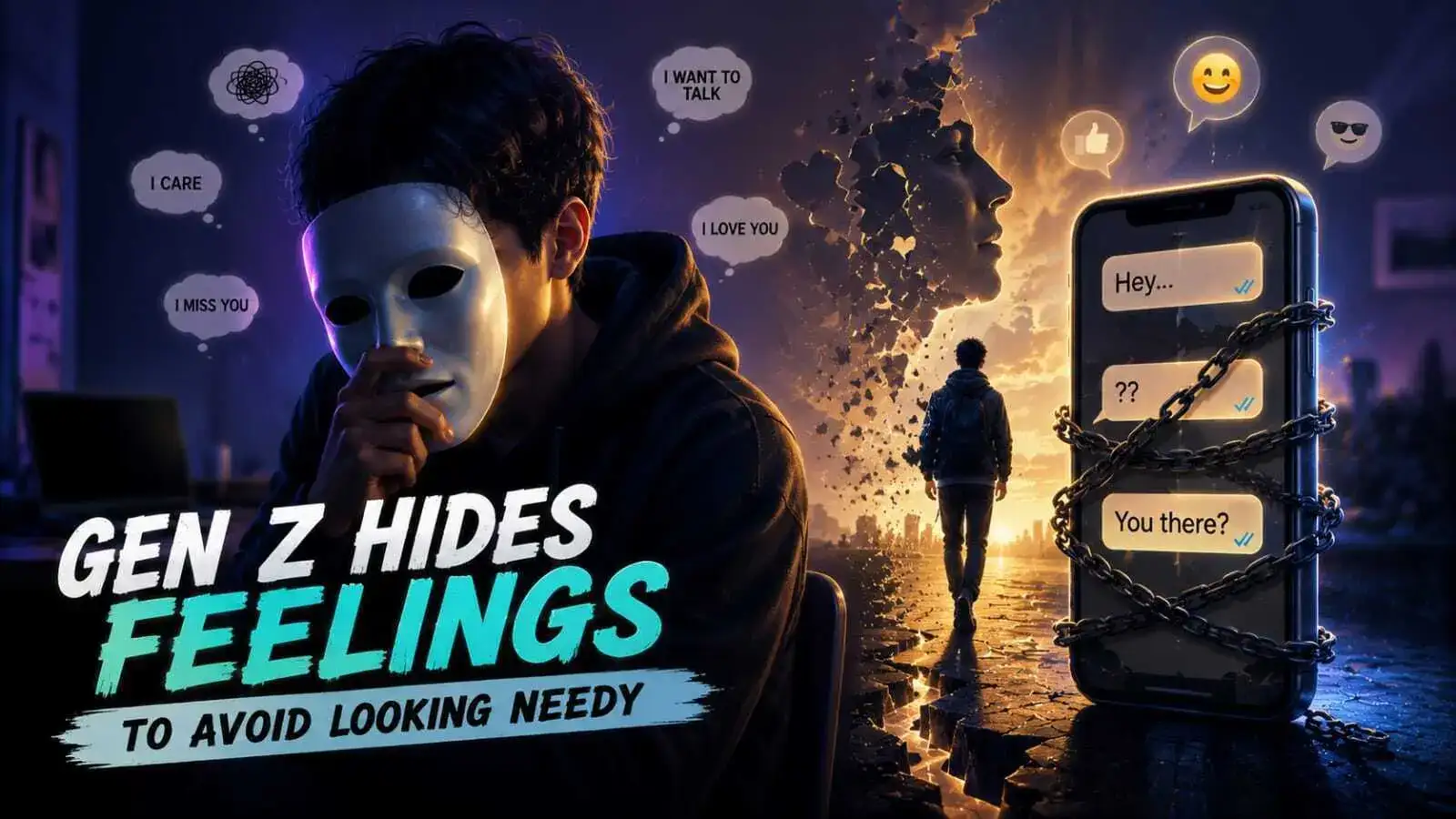
There was a time when expressing feelings was considered a sign of honesty. Today, for many young adults, sending a second text message, admitting romantic feelings, or simply asking where a relationship is going can feel surprisingly dangerous. Instead of speaking openly, many people choose silence. They overthink every message, wait hours before replying, avoid asking important questions, and pretend they care less than they actually do. Psychology suggests this behavior is not about a lack of interest. In many cases, it is a form of self-protection. For Gen Z, emotional vulnerability has become complicated by social media, digital dating culture, and a growing fear of appearing needy, desperate, or overly attached. While previous generations also experienced relationship anxiety, today's technology has amplified it in ways never seen before. The result is a generation that often feels deeply but struggles to express those feelings openly.
Why Being Seen As ‘Needy’ Feels So Threatening
One of the strongest explanations comes from Social Evaluation Theory. Humans naturally care about how others perceive them because social acceptance has historically been linked to survival and belonging. In today's digital world, this instinct has intensified. Every message, reply time, emoji, and interaction can feel like a public reflection of someone's social value. Sending a second text message may seem insignificant, but for many people, it feels like exposing themselves to judgment.
Questions quickly emerge. "Will I seem desperate?", "Will they lose interest if I show too much interest?", "Will they think I'm too available?" The fear is often not rejection itself. It is embarrassment.
The Rise Of ‘Coolness Culture’
Psychologists have observed a growing trend that experts sometimes call self-protective detachment. In modern dating culture, emotional restraint is frequently rewarded. People are often encouraged to appear mysterious, independent, and emotionally unavailable. Social media has reinforced this idea. Platforms such as TikTok and Instagram are filled with relationship advice promoting ideas such as "don't text first," "wait before replying," or "never show too much interest."
Over time, these messages shape behavior. A person who genuinely wants to communicate may instead hold back to preserve an image of emotional independence. Ironically, both people may be interested in each other while simultaneously pretending they are not.
Why Asking For Clarity Feels Emotionally Risky
Many young adults struggle to ask simple but important questions like: "Where is this relationship going?", "What are we?", "How do you feel about me?" Psychology suggests this hesitation is connected to Rejection Sensitivity Theory.
People with high rejection sensitivity become hyperaware of potential signs of disapproval or abandonment. Even neutral situations may feel threatening. For example, asking for clarity may feel like forcing someone into an uncomfortable decision. If the answer is not positive, it can feel deeply personal. To avoid this possibility, many people tolerate uncertainty instead. This is one reason why situationships have become increasingly common among younger generations.
Why Double Texting Creates So Much Anxiety
On the surface, double texting is harmless. Yet it has become one of the biggest social fears among Gen Z. One explanation comes from Impression Management Theory, developed by sociologist Erving Goffman. The theory suggests people constantly manage how they appear to others.
Digital communication intensifies this process because interactions are visible, measurable, and easy to analyze. A second message can suddenly feel like evidence of excessive interest. Someone may write a thoughtful message and immediately regret sending it if a reply does not arrive quickly. Instead of interpreting the delay rationally, they may assume they have already damaged the relationship.
Social Media Has Changed Emotional Vulnerability
Technology has fundamentally altered emotional communication. Unlike previous generations, Gen Z has unprecedented access to information about other people's lives. Features such as online activity indicators, read receipts, story views, and timestamps create endless opportunities for overthinking.
A person may wonder: "They posted a story but didn't answer my text. Did I do something wrong?", "They're online but not replying to me.", "Should I message again or wait?"
Psychologists refer to this as hypervigilance, a state where individuals become excessively alert to social signals. The brain begins treating ordinary digital behavior as meaningful evidence about relationships. Unfortunately, this often increases anxiety instead of providing reassurance.
Why Attachment Styles Matter
Another explanation comes from Attachment Theory, developed by psychiatrist John Bowlby. People with anxious attachment tendencies often fear abandonment, while avoidant individuals may fear emotional dependence. Digital communication can intensify both patterns. An anxiously attached person may want to send another message but stop themselves for fear of appearing needy. An avoidantly attached person may suppress their feelings altogether. The result is a paradox: people who crave connection often become afraid of expressing it.
The Cost Of Pretending Not To Care
Research suggests authentic emotional expression is essential for healthy relationships and psychological well-being. The irony is that many people are not afraid of love itself. They are afraid of appearing vulnerable. However, psychology consistently shows that vulnerability is not weakness. It is often the foundation of meaningful connection.
The healthiest relationships are rarely built by two people pretending not to care. They are built by people who are willing to communicate honestly, tolerate uncertainty, and risk being seen for who they truly are. Perhaps the greatest emotional challenge facing Gen Z is not learning how to connect online. It is learning that expressing genuine feelings is not something to be embarrassed about.
FAQs
Why is Gen Z afraid of looking needy?
Psychology suggests social media, fear of rejection, and digital dating norms have made emotional vulnerability feel riskier than before.
Why does double texting create anxiety?
Many people fear being judged as desperate or overly attached, even when their intentions are healthy.