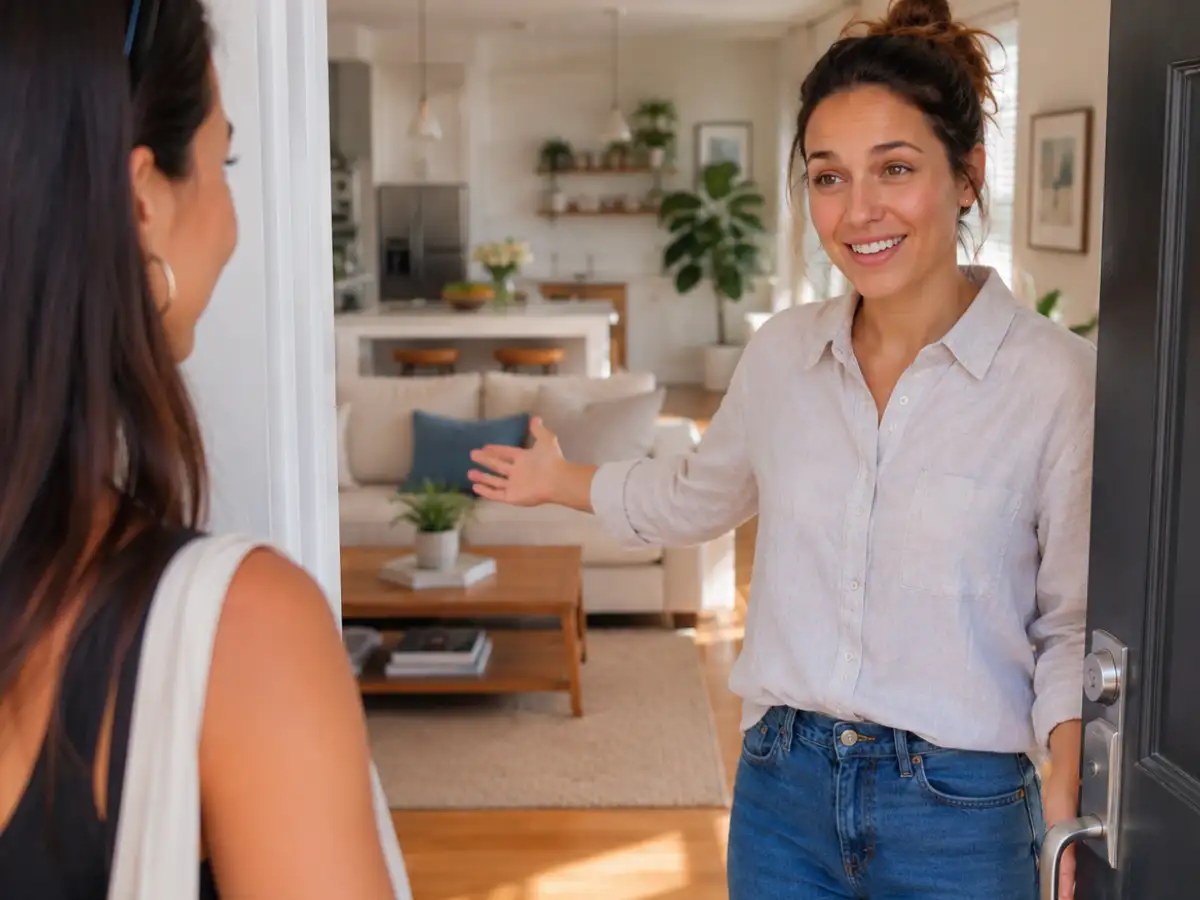
You open the front door. Your friend walks in, and before they even cross the threshold, it comes flying out of your mouth: “Sorry, the place is a mess.” You say it, even though the living room looks perfectly fine. Sometimes you say it even when the house is clean.
Here's something worth noticing: the people who do this most reliably are rarely the ones with the messiest homes. They're usually the ones whose mothers probably had said the same thing, years before, at the door of a completely different house. The apology has not followed the dirt. It's been following the family.
According to Albert Bandura's social learning theory, people learn behaviors not only through direct experience but also by observing and imitating those around them, a process he called observational learning. The child who watched their mother apologize at every doorway wasn't being given a lesson. They were absorbing a script that would play itself decades later, the moment the doorbell rang.
Saying sorry is a habit you learn, not a character trait
Bandura’s study revealed that people learn behaviors by merely observing models around them, retaining what they see, and later reproducing it. No formal teaching needed. No rewards. No punishments. Just watching and absorbing it all.
That’s what happens with the doorbell apology. A child watches their mother greet each visitor upfront with a disclaimer. They don't record it as a rule. They take it in as the right socially accepted way to greet somebody. The doorbell triggers the response, and the apology comes out before the conscious mind can really say anything about it.
This also explains why the habit does not die even if the person knows that they have nothing to be sorry for. They’ve told themselves to stop. They’ve noticed the pattern, but when the door opens, the words lead the way.
Most guests, for what it’s worth, don’t even notice or care. They came to see the person. The condition of the floor was never the issue.