A large-scale pro-Kremlin disinformation campaign is targeting Armenia ahead of its parliamentary elections on 7 June, researchers say.
In total, 343 fake videos were published by early May, prompting analysts to describe the operation as one of the most extensive in recent years — second only to the campaign observed during Moldova's 2025 election.
According to researchers, the campaign began in early March and was part of "Matryoshka" — a pro-Kremlin disinformation operation that has increasingly used artificial intelligence.
Among the fabricated videos, a central narrative claims that a victory for Prime Minister Nikol Pashinyan, whose campaign focuses on a pro-European direction, could trigger a war between Armenia and Russia.
The collective Antibot4Navalny, which studies bot networks, said it had identified more than a dozen fake videos featuring Pashinyan and French President Emmanuel Macron, which repeatedly promote the false claim that the two leaders struck a "secret deal": French backing in the election in exchange for Armenia launching a war against Russia after a victory.

On 11 May, one video falsely claimed that Pashinyan's press secretary had confirmed the presence of NATO instructors in Armenia, and that, following the parliamentary elections, he would "provoke a military conflict with Russia."
However, fabricated media reports are not the only tool used in this disinformation campaign. Researchers say bots are also spreading false claims on social media platforms such as X in an apparent effort to undermine Pashinyan.
No evidence supports these allegations. It is also worth noting that, although some of these posts garnered tens of thousands of views, researchers say the figures were artificially inflated.
The aim of the campaign
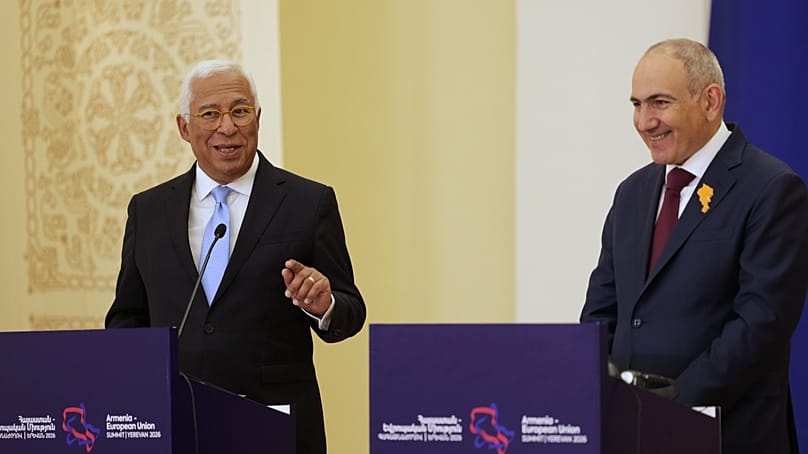
The election campaign has unfolded against a backdrop of growing cooperation between the EU and Armenia, highlighted by the first EU–Armenia summit held in the country in early May.
Several senior European figures attended, including European Commission President Ursula von der Leyen, European Council President António Costa, and France's President Macron.
The meeting was marked by a shared commitment from both sides to strengthen bilateral relations.
"Today’s EU–Armenia summit sends a clear signal of the EU's firm commitment to deepen our relations with Armenia, and to strengthen cooperation across many new areas, bringing Armenia and its people closer to the European Union," Costa said.
During the summit, Pashinyan said Armenia was entering "a new period of peace, of consolidation of a democratic regime, and this really, certainly creates a good environment for the development of our bilateral relations."
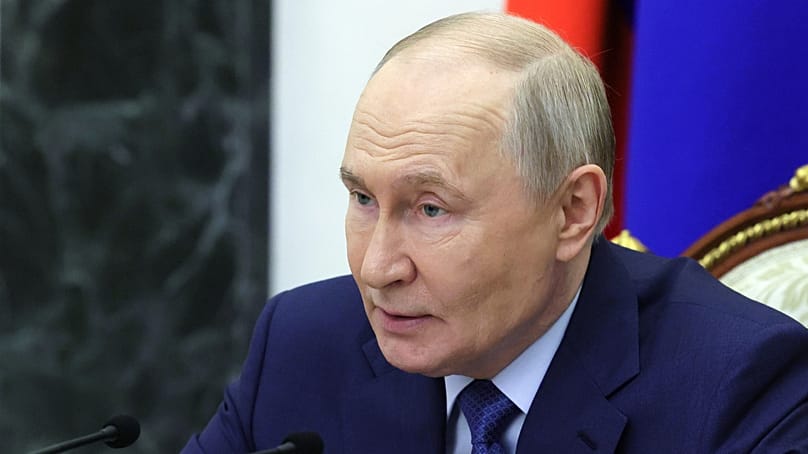
Two months after the campaign began — and just days after the summit — Russian President Vladimir Putin drew a comparison between Armenia and Ukraine during a press conference in Moscow on Victory Day, warning that Armenia could face similar consequences if it pursued closer integration with the EU.
"We are all currently feeling the consequences of the situation in Ukraine. How did it all begin? With Ukraine's accession — or rather attempted accession — to the EU. That was the first step, the very first," Putin said.
He added that subsequent developments — including political upheaval and conflict — stemmed from that initial move, calling it "a serious problem".
On 26 March 2025, the Armenian parliament voted by a large majority to launch a process towards EU accession, in a move backed by Pashinyan's Civil Contract party.
Moscow, however, has repeatedly accused Western actors of interference. As early as January, Russia claimed the EU was encouraging the Armenian government to rig the parliamentary elections.
On 20 January, Russian Foreign Minister Sergey Lavrov said financial support pledged by the EU's top diplomat, Kaja Kallas, to Armenia amounted to a "sincere" confession and an "admission of guilt".
Those claims echo accusations made during Moldova's recent elections, which were ultimately won by pro-European forces.
Matryoshka and Storm 1516
Alongside the Matryoshka campaign targeting the election, another pro-Kremlin disinformation campaign, known as Storm-1516, is also spreading false narratives targeting Pashinyan on social media, according to researchers from the South Carolina-based Clemson University's Media Forensics.
Germany's foreign intelligence agency, the BND, and France's Viginum agency, a government body monitoring disinformation campaigns, describe Storm-1516 as a Russian information manipulation network that used coordinated disinformation campaigns with the aim of destabilising democratic institutions.
According to Clemson's research, the campaign has been active since January and spread false claims about Pashinyan's election promises, in addition to allegations that Pashinyan used $11 million (€9.5 million) in funds from the Eurasian Economic Union (EAEU), earmarked for digitalisation, to covertly finance his campaign.
According to Ella Murray, a digital influence analyst at Clemson, Storm-1516's methods in the Armenian campaign show they are evolving.
"Particularly, they have expanded their stable of influencer networks and fake marketing bots," she said. "Additionally, they have started using accounts purporting to be local and country-specific."
"Russian campaigns are targeting Armenia for the same reasons they interfered in elections in Moldova and Hungary," Murray continued. "They want to discredit pro-Western candidates and reassert regional influence."