A viral video showing the present condition of Kempty Falls near Mussoorie has triggered widespread debate online, with social media users expressing shock over what many described as uncontrolled commercialisation, poor urban planning and the rapid deterioration of one of Uttarakhand’s most famous tourist attractions.
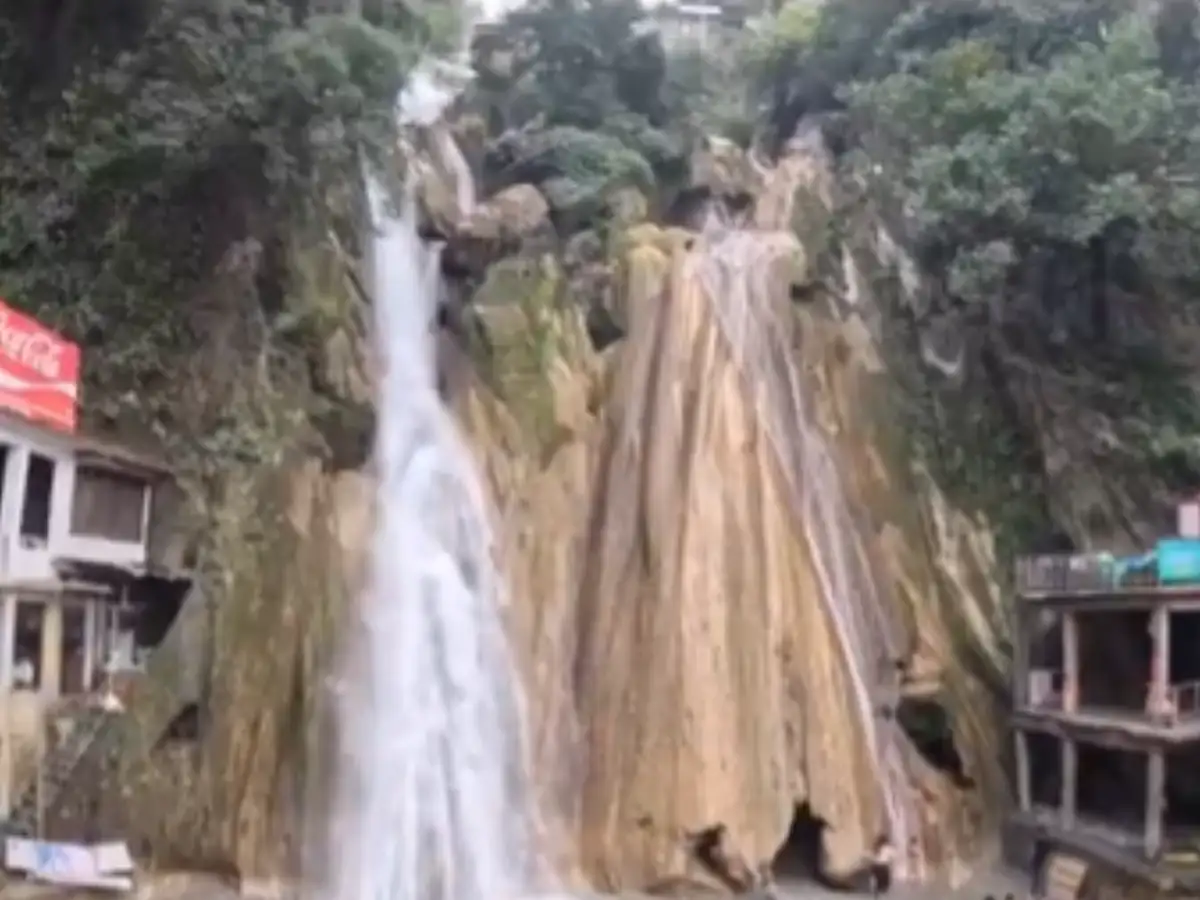
The clip, which has been widely shared on X, shows the once-scenic Kempty Falls surrounded by tightly packed concrete structures, half-finished buildings, shops, eateries and tourist facilities crowding the natural landscape. While the waterfall itself continues to gush down the hills of Tehri Garhwal, viewers said the surrounding area now looks dramatically different from the picturesque mountain destination many remembered from earlier visits.
Located roughly 13 to 15 kilometres from Mussoorie, Kempty Falls has long been one of Uttarakhand’s most visited tourist spots. The waterfall, which cascades around 40 feet down rocky cliffs into pools below, traditionally attracted travellers looking for mountain scenery, cool weather and a peaceful retreat in the hills.
However, the latest viral footage has reignited concerns over overtourism in hill stations and the environmental cost of unchecked construction in ecologically sensitive regions.
What does the viral Kempty Falls video show?
The now-viral Kempty Falls video captures tourists standing near the waterfall while rows of shops, dhabas and densely packed buildings dominate both sides of the stream. In several frames, the waterfall appears hemmed in by commercial activity, leaving very little visible natural landscape around it.
The user who posted the clip criticised the current state of the tourist spot, writing: “Poor waterfall is just surrounded by hideous, half-finished buildings. Flanked on all sides and being attacked. Being nature is a crime in India. No sense of aesthetics, no planning, zero space, civic sense dehydrated tourism.”
The post quickly gained traction online, with thousands of users reacting to the visuals and debating the broader issue of tourism infrastructure in Indian hill stations.
Many viewers said the area looked overcrowded, poorly maintained and visually chaotic compared to how Kempty Falls used to appear in older photographs and travel brochures.
Why are people upset about Kempty Falls?
The outrage surrounding the Kempty Falls viral video is not only about one tourist spot. For many social media users, the video symbolises a much larger issue, the growing commercialisation of natural destinations across India.
Several viewers argued that popular hill stations and waterfalls are increasingly being transformed into congested marketplaces rather than preserved natural sites. Concerns raised online included:
- Excessive construction near environmentally sensitive zones
- Lack of urban planning in hill regions
- Poor waste management around tourist sites
- Overtourism during holiday seasons
- Encroachment around rivers and waterfalls
- Visual pollution caused by unregulated buildings
- Environmental damage caused by unchecked commercial activity
Users also questioned how so many structures received permission near a waterfall and whether environmental regulations were being adequately enforced.
One user commented: “How did those buildings even get permissions... no wonder nature comes back with a fury every year.”
Another wrote: “Kempty Falls used to be amazing. Visited again and saw this hideous abomination. Never visiting again.”
Kempty Falls once represented the charm of Mussoorie tourism
For decades, Kempty Falls was regarded as one of Mussoorie’s signature attractions. Families visiting Uttarakhand often included the waterfall in their travel itineraries, while honeymooners and backpackers saw it as a scenic stop amid the Himalayan foothills.
Older travellers still remember Kempty Falls as a quieter destination with open views of hills, forests and flowing water. The surrounding landscape once offered a relatively natural setting where visitors could sit near the stream or enjoy panoramic mountain views.
However, tourism growth over the years has brought rapid infrastructure expansion. Hotels, cafes, roadside stalls, parking areas and commercial buildings have steadily multiplied around the site to accommodate increasing tourist numbers.
While tourism provides income and employment for local businesses, critics say the pace and style of development have significantly altered the region’s natural character.
Social media reactions to Kempty Falls video go viral
The reactions online were swift and emotional, with many users sharing personal experiences from visits to Kempty Falls in recent years.
One person wrote: “Kempty Falls, right? I had heard so much about it, but it was awful when I visited. Idiots serving Maggi in the water.”
Another user added: “I visited this place in 2022, and it was a complete mess.”
A different viewer described the visuals simply as: “Looking dystopian.”
Others pointed to broader concerns around tourism management in India, especially in fragile mountain ecosystems.
One comment read: “The rest of India has a lot to learn from the North-east.”
Another compared Indian tourist management with Nepal, writing: “Recently been to Kathmandu. Heartening to note how beautifully they have maintained their heritage sites. No ugly concrete structures around heritage sites.”
The discussion quickly evolved beyond Kempty Falls itself, with many people debating whether India’s tourism model prioritises short-term commercial gain over long-term environmental preservation.
Is overtourism damaging hill stations in India?
The Kempty Falls controversy has once again brought attention to overtourism in Indian hill stations.
Popular destinations such as Mussoorie, Manali, Shimla, Nainital and parts of Uttarakhand and Himachal Pradesh frequently witness enormous tourist inflows during holidays and summer vacations.
While tourism supports local economies, several reports and environmental studies have warned that excessive tourist footfall, combined with poor infrastructure planning, can place enormous pressure on fragile mountain ecosystems.