ACT public servants will need to brace for potential job cuts as the Treasurer says voluntary redundancies will be among the tools agencies can use to meet stricter, front-line-focused budgets.
Chris Steel, who will hand down his second budget on Wednesday, said agencies had been working to keep costs down as part of a $282 million, four-year savings plan announced a year ago, and would be supported to restructure where necessary.
"That work hasn't just involved voluntary redundancies, it's involved a whole range of budget control measures that have been undertaken by agencies, but voluntary redundancies are part of the mix to use if necessary to meet those budgets," Mr Steel said.
"In this budget, that work will continue and there will be support for agencies to undertake that work over the coming years."
Mr Steel said the City and Environment Directorate's announcement it would offer voluntary redundancies to cut more than 100 jobs - between 3 and 5 per cent of its staff - was evidence of the "difficult decisions" being made across government to make the budget sustainable.
The budget is set to provide longer-term funding for front-line services, which would show a lower fiscal position over the forward estimates.
"We've provided those agencies with longer-term funding decisions so that they can plan to make sure that they can meet government and community needs and priorities," Mr Steel said.

The Treasurer said the government would continue to invest in services the community expected in a "measured way".
"The decisions that we're making in the budget won't see deep cuts to services," Mr Steel said.
Spending controls and efficiency measures in Canberra's public health system had also shown real results in constraining demand for more money, he said.
"The level of extra support that we provide in the last budget is continuing to support the needs of the community. But it's an area that is still a significant risk to the ACT budget that we all need to closely monitor," Mr Steel said.
"And costs that have been flowing through the economy also affect health as much as they do other areas."
In 2025, the government cited a dramatic, unexpected spike in patient demand as the reason for a sharp increase health funding.
Mr Steel said last year's budget had painted a rosier picture of the future, which had worsened with the economic shocks caused by the fallout of the United States launching strikes on Iran in late February.
"The government has had to absorb quite a significant increase in costs as a result of the war. And that's included direct costs in terms of increased diesel prices for Transport Canberra's fleet," Mr Steel said.
"But it's also had a flow-on effect to prices right across the economy. And that has affected the ACT government in a range of different ways. So we have had to really focus on expenditure to try and manage those additional costs and continue the work that we started in the last budget."
Mr Steel said households and businesses were feeling the impact of higher interest rates, meaning the government would not seek to raise as much extra revenue as it did in last year's budget.
"We will also be looking at the revenue side of the budget, but we've had to be measured in the decisions that we've made, given the economic context of this year's budget," he said.
The Treasurer said his budget would outline a series of alternative scenarios for the future of the territory's economy, depending on assumptions about the end of the conflict in the Middle East.
"We will need to make sure that we remain open to the fact that things could change very quickly and that we may need to respond," he said in an interview with The Canberra Times.
The Iran war prompted a surge in inflation and the Commonwealth Treasury last month warned a continuing conflict in the region might lead to the Australian economy contracting and unemployment reaching pre-pandemic levels.
This week's budget is also the first since independent economist Saul Eslake's report into the ACT's fiscal sustainability was released.
Mr Steel said the government believed Mr Eslake's report had reset the narrative about the ACT's finances and had shown the territory was among the average of Australian states and territories on measures of fiscal sustainability.
"It's also underlined, I think, the necessity of the work that we set out in the last budget, where we did make tough decisions to put on the expenditure side of the budget and the revenue side of the budget, to put the ACT budget on a more sustainable path," Mr Steel said.
"He has provided some very specific suggestions in relation to the fiscal strategy. We adjusted the fiscal strategy in last year's budget and we will be updating the fiscal strategy again."
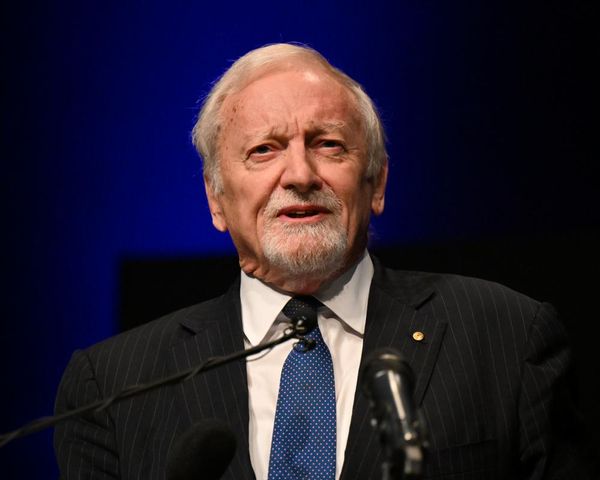
Mr Eslake recommended setting fiscal sustainability targets but said the infrastructure projects the government chose to fund were largely political decisions.
Chief Minister Andrew Barr on Sunday announced the budget would set out $700 million in savings over four years from deferred and delayed infrastructure projects.
Opposition Leader Mark Parton said the announcement was a sad reflection on 15 years of financial mismanagement and vindicated the Canberra Liberals. "It's an admission that their reckless spending on infrastructure and heaps of other stuff is just unsustainable. It shows us that things are really beginning to fall apart," Mr Parton said in a social media video on Monday.
Mr Steel said the government hoped early engagement with the ACT Greens, whose support Labor needs to pass the appropriation bills, would smooth the passage of the budget.
After last year's budget, the Greens blocked a health levy in favour of an increase in payroll tax paid by large businesses, raising the prospect of a last-minute Assembly process that threatened the government's ability to increase general rates.
"I think what [the Greens] will see in the budget is investment in key areas of shared priority for the Greens and our Labor government, particularly in housing and community services, but also continued response to climate change and environment," Mr Steel said.