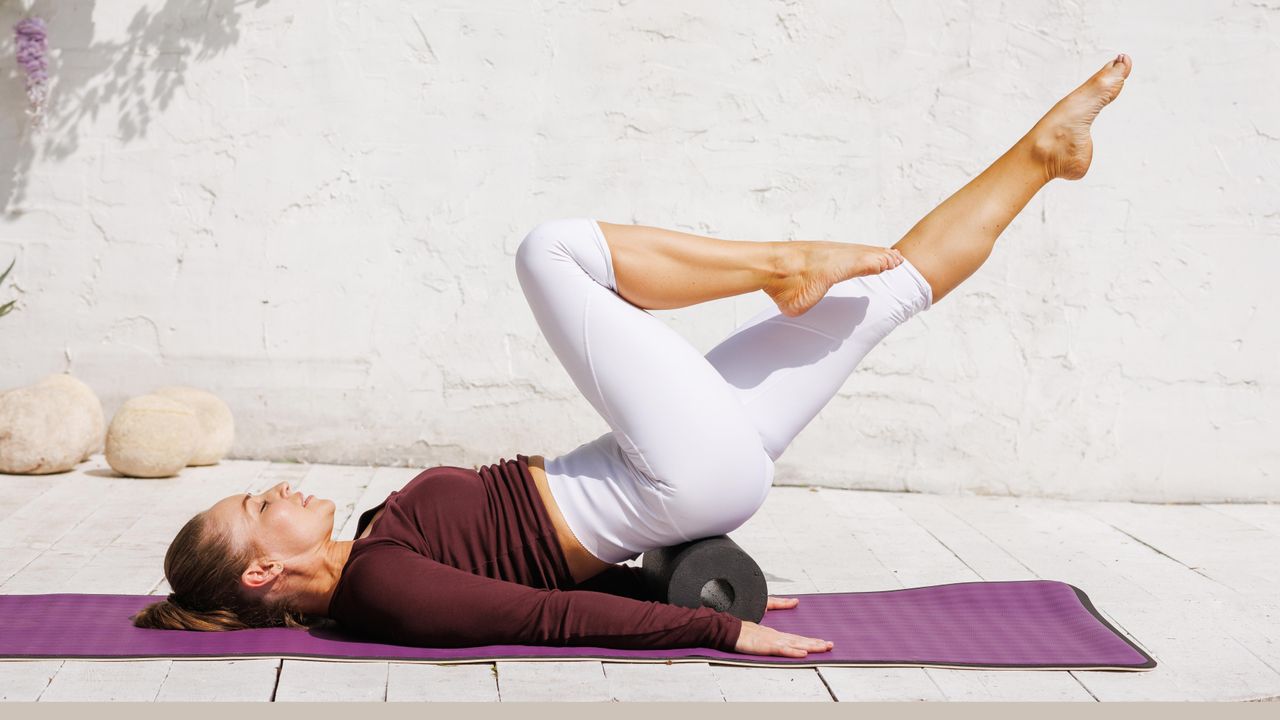
The Pilates butterfly is one of those deceptively simple Pilates exercises, like the Pilates hundred, that works muscles you probably never think about. One of these muscles is your pelvic floor — something that most women won’t really worry about till childbirth, and most men won’t consider until they get older. But your pelvic floor is essential — it’s a group of muscles and tissue that support the bladder and the bowel, and this simple Pilates exercise is one I used all the time after the birth of my son to rebuild strength.
As a reminder, what works for me might not be right for you and your body. If you’re a complete beginner, you’re pregnant or postpartum, or you’re currently dealing with an injury, it’s always best to seek personalized advice before trying something new.
What is the Pilates butterfly?
The Pilates butterfly looks like a simple stretch, but it actually requires you to work your deep core and pelvic floor muscles. You won’t need any additional equipment for this move, but lying on one of the best yoga mats can help keep things more comfortable.
Here’s how to do the Pilates butterfly:
- Start by lying on your back and engaging your core, keeping your lower back pressed into the mat. Keep your feet flat on the floor, hip-width apart.
- Inhale, and keeping your left hip steady on the mat, slowly let your right knee fall open to the side.
- As you exhale, squeeze from your pelvic floor, thinking about really zipping your abs up and in, to pull your knee back to the center.
- Do all your reps on one side slowly and with control, before switching to the other side.
It’s important to remember that, like all Pilates exercises, good form really is essential here. The slower you move, the harder you’ll be working your deep abs and pelvic floor muscles. If you struggle to feel your hips moving, place your hands on your hip bones. If they wobble, decrease your range of motion.
What are the benefits?
Targets your pelvic floor
As mentioned above, this move really works on the connection between your inner thighs and pelvic floor. As you pull the leg back to the center, remember that the movement should be coming from your pelvic floor and deep abdominal muscles. When I was rehabbing from giving birth, my female health physio told me to do ten really slow reps on each time, then focus on fully relaxing my pelvic floor muscles when I returned to my starting position.
Improves hip mobility
If, like me, you’re a runner who spends too much time sitting behind a desk, you probably have tight hip flexors. Tight hip flexors can lead to imbalances and injuries, so it’s a problem to address, and this exercise is a great way to do so. The opening of the knee helps lubricate the hip joint, and will feel like a nice stretch across the groin. If you have a pinchy feeling in your hips, this is one to try.
Works on pelvic stability
Building a stable pelvis is essential when it comes to protecting your lower back during everyday activities like carrying a heavy suitcase, or twisting to reach something down from a shelf. As one knee opens to the side in the butterfly exercise, your obliques and deep stabilizer muscles will be working to keep your pelvis from following the open leg.
What are the progressions?
- Double leg: By lifting both legs, you’re forcing your core to do all of the stabilizing work. For this variation, start with both legs in tabletop position, with a 90-degree bend in your knees, which are in line with your hips. Keep your feet together, and let both knees fall open like a book. Use your core to really keep your back pressed into the mat.
- Add weight: Adding extra weight to this move increases the resistance and makes the opening phase harder to control. Place a resistance band above your knees or wear a set of ankle weights. If you’re wearing a resistance band, really resist the tension on the way down.
- Add instability: Finally, place a Pilates ball under your tailbone and perform the exercise from this position. Your abs and hips will have to work harder to keep your pelvis stable, increasing the intensity.
Pilates essentials we love
More from Tom's Guide
- Not sit-ups, planks, or crunches: I do this simple Pilates exercise every single day to build a strong and stable core and work on my hip flexor mobility
- Not sit-ups or lunges — I use this simple Pilates exercise to sculpt strong obliques, inner thighs and hip stabilizers
- 'I’m a Pilates instructor, and I recommend these 5 core exercises to help older clients build strength and improve posture'