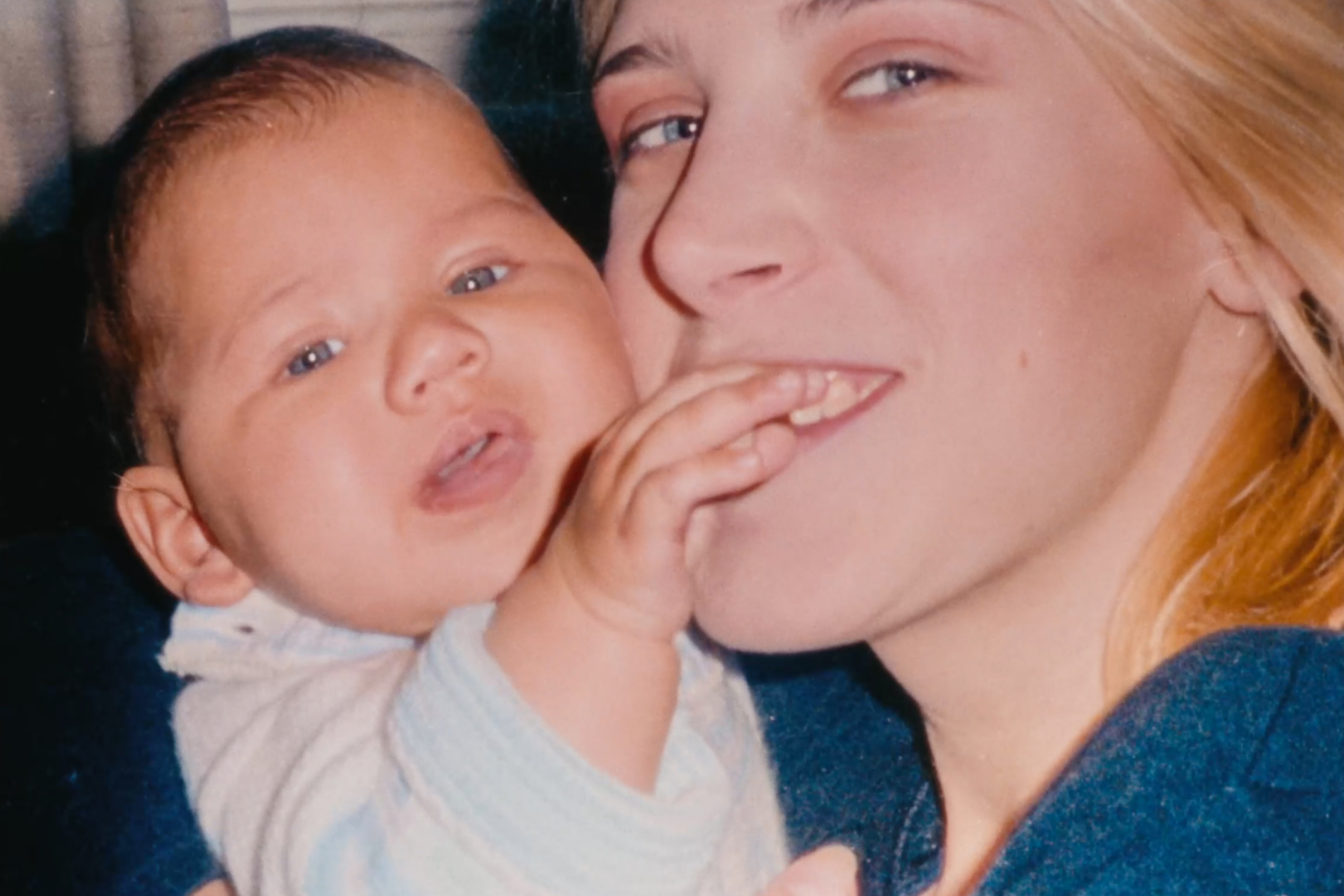
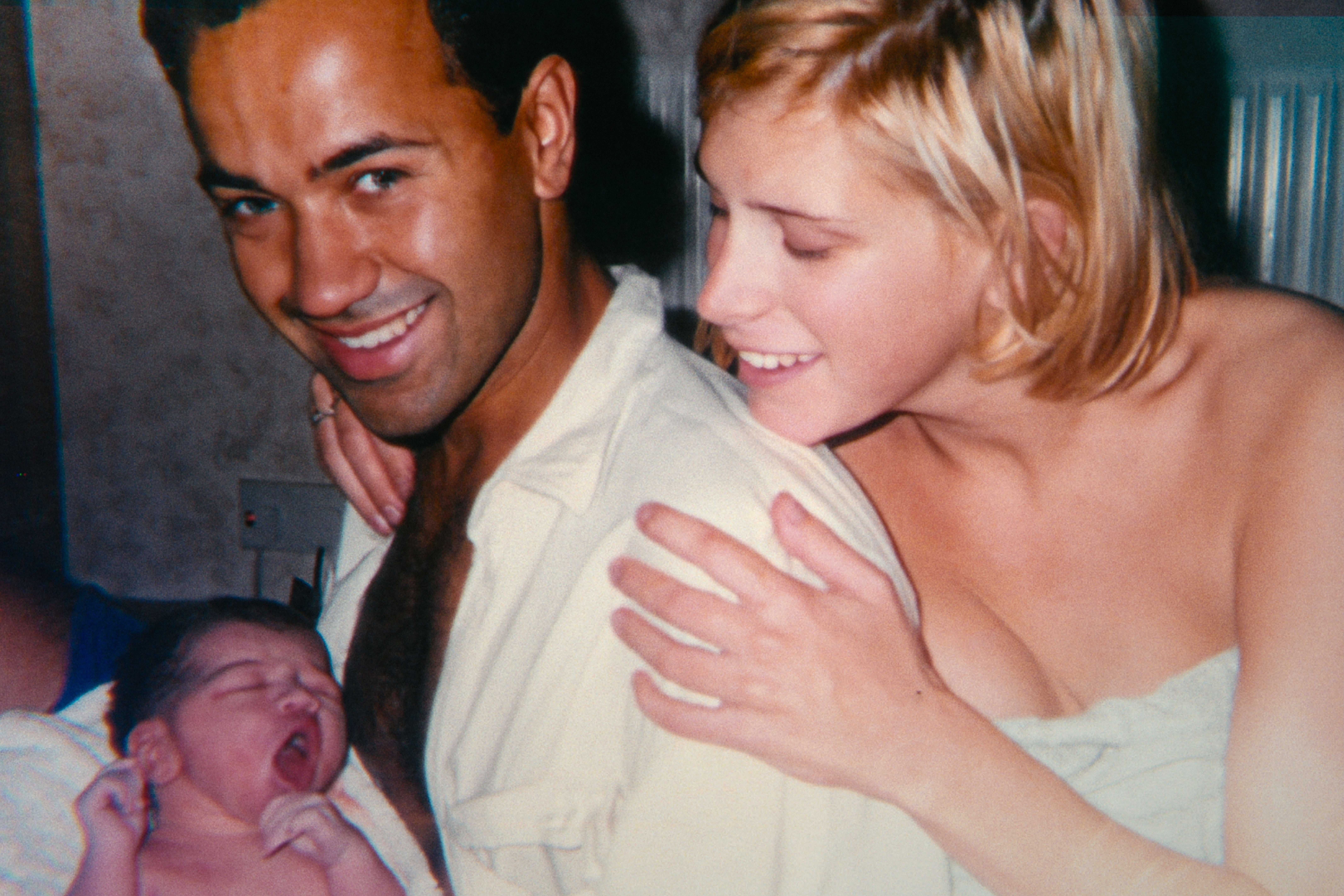
The day in July 1992 when Rachel Nickell took her toddler to play on Wimbledon Common was ordinary. It had been just the two of them in a secluded area of woodland, meaning that when a man suddenly appeared out of nowhere, sexually assaulted and stabbed Rachel to death 49 times, her son was the only one to see it. At two years old, Alex became the sole witness to his mother’s murder, and the most promising prospect for catching her killer.
For many the case will be familiar, its torrid details, relayed at the time in a nonstop churn of salacious news coverage, forever etched into the public consciousness. For others, particularly those born after the 1990s, a new three-part Netflix dramatisation, The Witness, will serve as an introduction to one of the UK’s most notorious crimes. And for Rachel’s son and partner, Alex and André, who worked together on the show as consultants, it is an opportunity to make something good out of something unthinkably terrible.
Rob Williams, the screenwriter behind such acclaimed crime dramas as Chasing Shadows, The Victim and Suspicion, was 18 when Rachel was killed. Now in his fifties, he came across the case again decades later after Alex, now 36, published a memoir about his mother’s murder, its impact and aftermath. “There had been this huge amount of interest in this little boy but actually no one knew what happened next,” says Williams. “No one knew what happened to the ‘tragic tot’ as the media called him.”
The media is just one institution to come out of this ordeal compromised, looking callous in its treatment of André and his then young son – hounding them relentlessly, even going so far as to try to goad André into commenting publicly by shouting racist remarks at him. It wasn’t long before the father and son moved to France, where they were quickly tracked down and had to relocate to Spain. Today, they still reside in Barcelona, returning to London during the summer of 2024 to film the series.
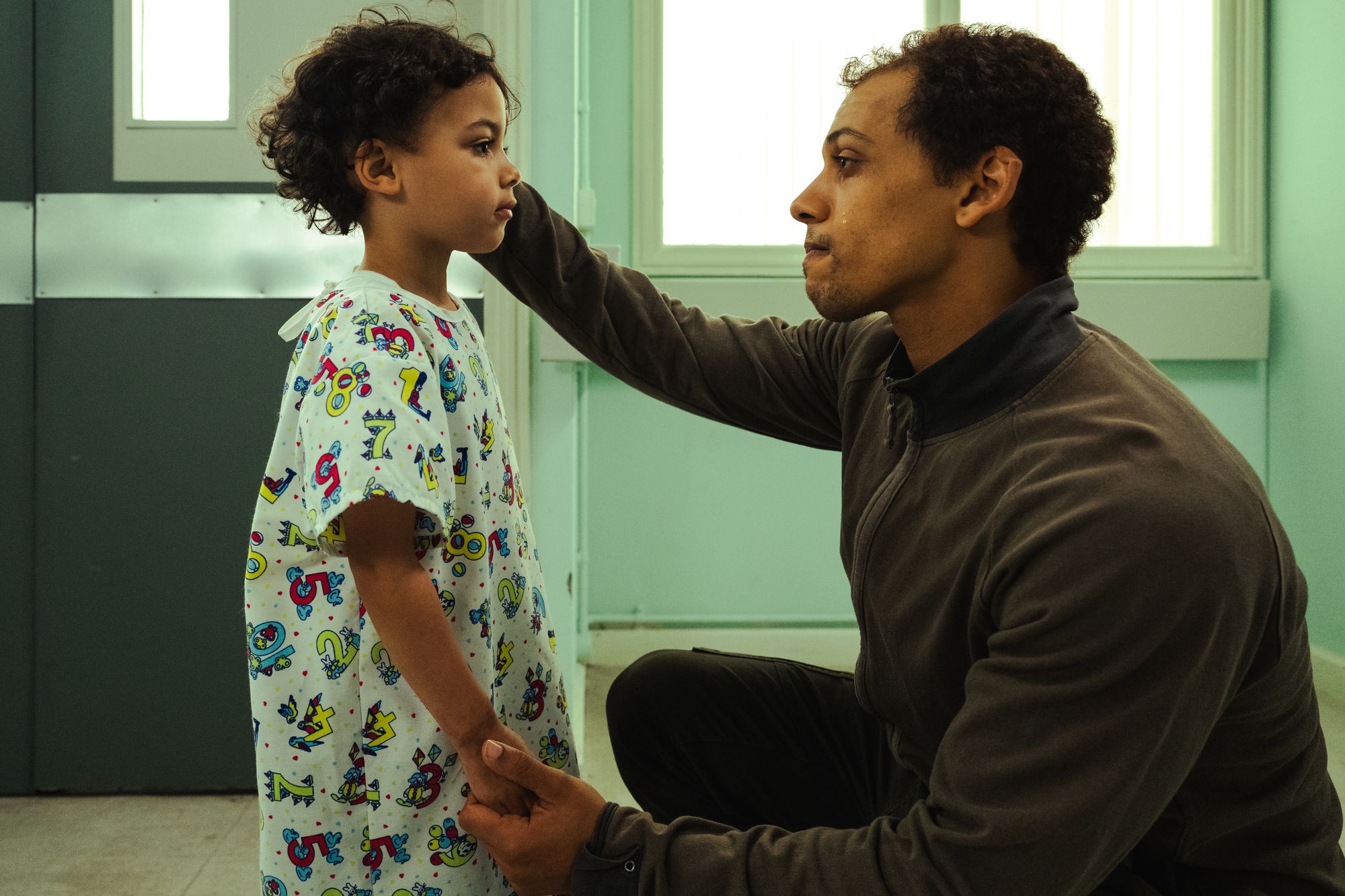
It’s difficult, even impossible, to imagine going through a trauma like the one Alex and André went through. It’s even more difficult to imagine going through it and then wanting to make a show about it, to see actors re-enacting what was the worst chapter of their lives. (In the show, André is played by Jordan Bolger, with Alex portrayed both by Jahsaiah Williams and Max Fincham.) Williams was astounded by their openness, their willingness. “The idea of somebody putting words into my mouth during the rawest time of my life, that’s just mind-boggling – but I think it’s a testament to just how passionately they feel this is a story they want to be told,” he says. “That you can get through this, and that there is something on the other side of it. They want to show what’s possible.”
The episodes are concerned with the aftermath of the murder, how widely its effects are felt – first in the crashing waves of shock and then decades later, the almost imperceptible ripples of lasting grief. “It’s not the normal excavation of a true crime,” says Williams. “There has to be a good reason for excavating this kind of thing when people who are alive are still touched by it. I wouldn’t want to do it for the sake of doing it, without a purpose. I really felt there was a purpose to tell this story, not least because this is a father-son story.”
Indeed, the series (which shuttles back and forth between the immediate fallout in 1992 and the reopened investigation 10 years later) shows how deeply Rachel’s death fractured the relationship between Alex and André. A fracture that has only healed in recent years, but healed stronger than ever. “They were really keen to talk about what life looks like on the other side of what happened, how you can make a positive out of it,” says Williams. “On first hearing, you think, well, there is no positive in something so horrific, but they’ve found one, and they want to share that with people.” He goes on to observe, “I’ve never met anyone who talks about trauma the way they do – and indeed they don’t particularly like that word either.”
To that end, only the opening minutes of The Witness deal directly with the murder itself – cutting from Rachel’s frightful face to the police cordon arriving at the scene. “How much do you show?” Williams had asked himself when approaching the question of Rachel’s murder. “Do you need to show any of it? But we felt it was really important to show Rachel at that point, and also before it briefly, because we didn’t want to just cast her as a victim.”
It is also about getting the facts straight. “Not many people know the truth,” Williams says. “If you mention Rachel Nickell, a lot of people still think Colin Stagg is responsible.” Spotted walking his dog on the Common around the time of the murder, Stagg is the man the police initially zeroed in on. With no forensic evidence and only a hypothetical profile devised by a criminal psychologist to go on, the police conducted an undercover operation to “honey trap” Stagg into a confession, using an undercover female police officer as bait. He did not confess to the crime, but did relay a series of disturbing fantasies. In 1994, when the case reached trial, the judge ruled the entrapment evidence inadmissible. Stagg spent 13 months in custody and was awarded £706,000 in damages from the Home Office.
The dogged pursuit of Stagg is one of several fumbles depicted on screen – a frustrating sequence of errors that prolonged Alex and André’s grief, uncertainty and fear for over a decade. In 2010, an IPCC report ordered the Metropolitan police to apologise over “a catalogue of bad decisions and errors” – ones that allowed Rachel’s real killer to continue a five-year spree of violence, rape and death. But the series is careful to portray these errors as mistakes, grave mistakes certainly, but mistakes all the same. “What’s extraordinary about Alex and André is their reluctance to vilify individuals,” says Williams.
“They’re not vengeful. What we didn’t want to do was use this as an excuse to vilify police officers,” he says. “Speaking with Alex about it, we don’t think those officers set out to do a bad job. I think they were under incredible pressure, and they wanted to catch Rachel’s killer. The mistakes were bigger than individuals, really.” That, he says, is “one of the most tragic things about it in a way. I don’t think anybody set out to compound the horrendous situation. What it did show was that there are huge systemic failings.” Those were, he says, “the last days of the police being an institution that people trusted and believed in”.
Released on Netflix the same day as The Witness is a companion documentary titled The Murder of Rachel Nickell. “They complement one another,” says Williams. “I do think there are things that a drama can do that a documentary can’t and vice versa. Drama gives you this unique perspective; you can actually walk in someone else’s shoes. It’s just this great provider of empathy, isn’t it? I’m not decrying documentary’s ability to do that, but I don’t think anything does it better than drama.”
Notably, however, there is a disclaimer added to the beginning of The Witness stating that “some characters and aspects of the story have been changed or invented for dramatic purposes”. Williams is eager to stress that this doesn’t mean that they played fast and loose with the truth. “We’ve stayed really close to the evidence,” he says. “However, what I hope we’ve done is give a voice to people who wouldn’t ordinarily get that.”
What we wanted to get across was Alex’s willingness and desire to understand [his mother’s murderer]. It’s incredibly brave
One such person, perhaps, is Rachel’s killer himself: Robert Napper. It was over a decade after Rachel’s murder that Napper was found guilty thanks to advancements in DNA technology. A paranoid schizophrenic, he was already institutionalised in Broadmoor psychiatric hospital, after confessing to the brutal 1993 killing of Samantha Bisset and her four-year-old daughter Jazmine, when he was finally convicted of Rachel’s murder. In 2008, he pleaded guilty to manslaughter on the grounds of diminished responsibility, and remains at Broadmoor indefinitely.
The Witness makes a conscious effort to contextualise Napper’s crimes, recalling how he spent his childhood in a very violent home and was sexually assaulted by a family friend at the age of 12 when camping. In one particularly moving scene towards the end, Alex seeks out an old therapist of Napper’s to try to better understand the man who so brutally murdered his mother in front of his own eyes.
Williams won’t be drawn on whether the encounter between Alex and the therapist did or did not take place in real life. “What we wanted to get across was Alex’s willingness and desire to understand. It’s incredibly brave,” he says. “One of the things that really struck me was the parallels between these two young men who experienced awful things in their lives – you can use the word trauma – things they had to find a way to come back from. And so, while nobody is taking away, or playing down, the awful things that Napper is responsible for, I think Alex’s desire to look beyond that is something I wanted to get across. And so did he.”
When Williams thinks of Alex and André, he pictures the father and son smiling. “I was so struck by this when I met them,” he says, “how they could go through something that most of us find unimaginable and come out of it with hope and a smile.” That’s what they want viewers to take away from The Witness: “Making a positive out of a negative.”
‘The Witness’ is on Netflix now