
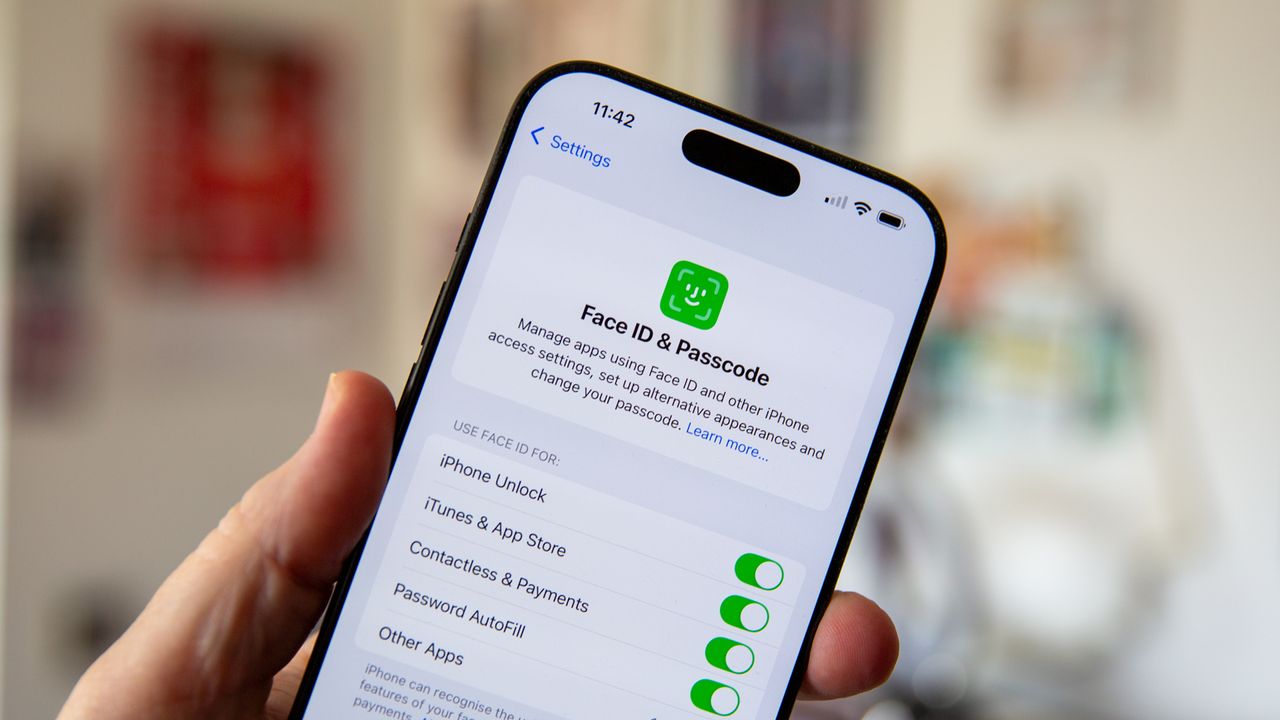
A new system, called VitalID, could change how you log into your phone thanks to a team at Rutgers University.
The discovery uses biometrics that detect tiny micro-vibrations in your skull to recognise it's you.
Apple could have a new way to unlock your iPhone in the future if a fresh discovery is anything to go by.
Researchers at Rutgers University have discovered a new way to unlock devices, using the subtle vibrations of your skull – and they're calling it VitalID.
Yup, biometrics can now recognise you based on something you can't even see. Scariness about robots seeing us clearer than we can aside, this could be a far more consistent, accurate and secure way to unlock your phone, AR platforms and more.
The VitalID system works by detecting your unique micro-vibrations from breathing and heartbeats, which resonate through your skill. Each person has a unique bone structure and facial tissue setup, which makes this output identifiable.
The idea in developing this new recognition system is to help make logging in as seamless as possible in a future where extended reality, or XR, becomes a more standard part of daily life.
In a virtual world where typing is difficult, this could help to offer an authentication that's both easy and secure – a tough combination to achieve.
Yingying Chen, a Distinguished Professor and chair of the Department of Electrical and Computer Engineering in the Rutgers School of Engineering, said: "If immersive systems are going to become woven into daily life, authentication has to be secure, continuous and effortless."
She went on: "XR is becoming a gateway to everyday internet services, many of which involve sensitive personal data. We need authentication that works without adding hardware."
Whether or not the feature ends up coming to market, it's certainly an interesting avenue to be exploring.