We’re shutting this page now, but our live coverage continues on a fresh blog here, which includes a summary of the latest key developments. Thanks for following along.
Updated
Returning to the Israeli military saying sirens warning of a hostile aircraft infiltration had sounded in northern Israel, it said later on Tuesday that the alert was determined to be a “false identification”.
The sirens had sounded in the area of Sasa, it said.
Updated
More on Rubio’s comments: he also anticipates progress over a potential US-Iran deal will “take a few days” amid discussions over the language in the agreement.
“There were some talks going on in Qatar today, so we’ll see if we can make progress,” the US secretary of state was quoted as saying in India during an official visit.
I think it’s a lot of talking back and forth going on about specific language in the initial document, so it’ll take a few days.
The president’s expressed his desire to make it. He’s either going to make a good deal or no deal.”
The comments came as leading Iranian negotiators arrived in Doha for talks with the Qatari prime minister on the potential peace deal to end the Iran war, and amid fresh US strikes it called “self-defensive” on southern Iran.
As just mentioned, Rubio also told reporters in relation to the strait of Hormuz that “the straits have to be open” and “they’re going to be open one way or the other”.
Updated
Strait of Hormuz will be open 'one way or the other' – Rubio
US secretary of state Marco Rubio has said the strait of Hormuz has to be open “one way or the other”, in comments after new US strikes on Iran on Monday.
“The straits have to be open they’re going to be open one way or the other, so they need to be open,” Rubio was quoted as telling reporters on his plane in Jaipur, India, on Tuesday amid an official visit.
What’s happening there is unlawful, it’s illegal, it’s unsustainable for the world, it’s unacceptable.”
Rubio said the negotiating language of the deal with Iran could “take a few days”.
Updated
The fresh US strikes on southern Iran came as Iran’s top negotiator and its foreign minister were in Doha for talks with Qatar’s prime minister over the potential deal to end the war, Reuters quoted an official as saying on Monday.
The visit came after Washington and Tehran played down hopes for an imminent breakthrough.
The unnamed official, who the news agency said was briefed on the trip, said the discussions with the Iranians focused on the strait of Hormuz and Iran’s stockpile of highly enriched uranium.
Iran’s central bank governor also attended to discuss the potential release of frozen Iranian funds as part of a final deal, the official said.
Iranian foreign ministry spokesperson Esmaeil Baghaei said earlier that nuclear issues would be negotiated only after the framework accord was agreed.
While the price of West Texas Intermediate crude oil fell, the fresh US strikes reportedly sent Brent futures rising more than 1% in early Asian trade to $97.32 a barrel.
Stock markets were mixed, with MSCI’s broadest index of Asia-Pacific shares outside Japan up 0.8% and Japan’s Nikkei down 0.2%.
Updated
US oil price falls despite military strikes
The price of the main US benchmark for oil fell more than 5% on Tuesday, despite the new US strikes on southern Iran.
Around 0030 GMT the price of West Texas Intermediate was down 5.46% at $91.33 a barrel.
But North Sea Brent crude was up 1.6% at $97.68 a barrel, AFP is reporting.
Oil prices plunged below $100 on Monday amid investor optimism for a reopening of the strait of Hormuz after signs the US and Iran were edging closer to a deal.
Updated
The Israeli military is saying sirens warning of a hostile aircraft infiltration have been sounded in the northern area of Sasa.
The details were under review, it added on Telegram.
Updated
Circling back to the Abraham Accords, Donald Trump said any deal to end the war with Iran should include a requirement for several additional countries including Saudi Arabia and Pakistan to join the agreements aimed at normalising relations with Israel.
The US president pointed to Saudi Arabia and Qatar as countries that should “immediately” sign on, alongside Pakistan, Turkey, Egypt and Jordan.
Bahrain and the United Arab Emirates in 2020 became the first countries to join the accords, which the US brokered during Trump’s first tern.
He has long hoped Saudi Arabia would join, but the kingdom has maintained that any normalisation deal requires first establishing a clear path for Palestinian statehood, the Associated Press reports. That’s also key for Pakistan, which is among the countries that do not have diplomatic relations with Israel.
Masood Khan, Pakistan’s former ambassador to the US, said it remained to be seen how workable the proposal might be for the countries on Trump’s list. Pointing to the domestic pressure Trump is facing to strike a favourable deal with Iran, Khan said:
The invocation of the Abraham Accords at this stage gives an altogether new dimension to the diplomatic and mediatory processes because this issue was not on the agenda.”
The intensifying fighting between Israel and Hezbollah comes amid waning hopes for an imminent deal between the US and Iran, with Tehran pointing to the confusion in US positions and Israeli interference as key factors in why a complete agreement is proving difficult to secure.
As mentioned, the Israeli army has intensified strikes in southern Lebanon as prime minister Benjamin Netanyahu said he had ordered the military to escalate its offensive in an effort to “crush” Hezbollah in a further erosion of an already fragmented ceasefire.
In turn, Hezbollah said it attacked three barracks and a military post in northern Israel on Monday “in response to the violation of the ceasefire” by Israel.
After Netanyahu’s call for escalation, residents were seen fleeing the southern suburbs of Beirut, a Hezbollah stronghold.
The Israeli air force carried out successive strikes in the Bekaa valley in eastern Lebanon on Monday evening, according to Lebanon’s National News Agency. Dozens of Israeli strikes earlier targeted several towns and villages in southern Lebanon, killing three people, it reported, and strikes then targeted towns near the ancient city of Tyre.
There’s more in our new full report:
Updated
Iranian boats laying mines in Hormuz strait before US attack – report
Two Iranian boats had been spotted laying mines in the strait of Hormuz, and US forces also responded after a missile site targeted US warplanes, Fox News has quoted a senior US official as claiming.
The US military destroyed both Revolutionary Guard vessels and also struck a surface-to-air missile site in the southern city of Bandar Abbas, it reported.
“These were defensive strikes,” the official said. The strikes did not indicate the ceasefire with Iran was over, two additional sources told the network.
Explosions had been heard on Monday in regions across the strait of Hormuz, Fox said, including close to Sirik and Jask near the key waterway. The official later confirmed the US strikes were “over for now”.
Updated
US launches strikes on southern Iran
The US military’s Central Command is saying US forces have carried out strikes on southern Iran in “self-defence”.
The strikes targeted missile launch sites and Iranian boats seeking to lay mines, Centcom is quoted as saying.
It says the military will defend US forces “while using restraint” during the ongoing ceasefire.
Explosions were heard earlier in the southern Iranian port city of Bandar Abbas and the Iranian state news agency Mehr later said the situation was “completely under control” and there was no reason for residents to worry.
Updated
Stockpile of enriched uranium could be destroyed inside Iran, Trump announces
Donald Trump has said the enriched uranium held by Iran could be destroyed inside the country, in a process overseen by an international nuclear agency.
The Enriched Uranium (Nuclear Dust!) will either be immediately turned over to the United States to be brought home and destroyed or, preferably, in conjunction and coordination with the Islamic Republic of Iran, destroyed in place or, at another acceptable location, with the Atomic Energy Commission, or its equivalent, being witness to this process and event.”
The fate of Iran’s stockpile of highly enriched uranium has been a major sticking point in various rounds of negotiations between Washington and Tehan.
In previous rounds of talks with the US, Iran has said it is willing to down-blend the enriched uranium, but it would not permit the transfer of the stockpile to either the US or Russia.
Experts say Trump’s announcement on his Truth Social platform on Monday could amount to a major concession from the US president as he seeks to finalise an agreement with Iran.
Updated
When Donald Trump launched a pre-emptive war on Iran with Israel in February, many in the country hailed the campaign as the crowning triumph of Benjamin Netanyahu’s political and diplomatic career.
Three months on the regime is still in power in Tehran, Trump is chasing a deal that will reopen the strait of Hormuz to oil tankers, and the reported terms have provoked alarm, dismay and anger in Israel.
“Israel is completely beholden to the decisions of a capricious, hollow and desperate American president,” Nahum Barnea wrote in Yedioth Ahronoth, one of several commentators who condemned both the deal and the Israeli prime minister.
“The greater the fury, the greater the roar, the greater the defeat,” he added. “If the agreement currently being talked about is signed, the damage will be even worse. The billions that will flow into the regime’s pockets will go a long way.”
At the beginning of the war Israel’s security elite warned that Netanyahu risked sacrificing the country’s most vital foreign policy asset – bi-partisan support in the US – in pursuit of regime change in Iran and possibly a boost in an election due by October.
Almost three months on, US opinion polls indicate that a body blow to a decades-old legacy may be the conflict’s most enduring legacy for Israel.
Read the full analysis here:
Updated
Hezbollah said it staged several attacks on Monday on three barracks and a military post in northern Israel “in response to the violation of the ceasefire” by Israel.
The Iran-backed group claimed responsibility for at least four drone attacks on the Shomera barracks, as well as attacks on two barracks in towns in northern Israel, and another on a military post in Misgav Am.
They were carried out around midday at short intervals, AFP is reporting.
The attacks came as Israeli prime minister Benjamin Netanyahu said he would escalate strikes against Hezbollah in Lebanon to “crush them” and the Israeli military said it struck more than 70 of the militant group’s siteson Monday.
Iran, meanwhile, praised Hezbollah for its continuing resistance against Israel.
Updated
The situation in the Iranian port city of Bandar Abbas is “completely under control” and there is no reason for residents to worry, the state Mehr news agency reported, after explosions were heard in the area earlier.
Further to my earlier post, the Tasnim news agency said three explosions were heard in the Iranian port city of Bandar Abbas, while the Fars news agency said similar sounds were heard close to Sirik and Jask near the strait of Hormuz.
The cause and exact locations of the explosions was unknown.
Updated
The Israel Defence Forces said it struck more than 70 Hezbollah sites across Lebanon on Monday.
Around 10 centres, weapons storage facilities and additional infrastructure sites were targeted in the southern Tyre region alone, the IDF said on Telegram.
The Israeli air force also eliminated Hezbollah operatives using motorcycles in southern Lebanon, it said.
Iran's foreign minister expresses 'resolute support' to Hezbollah leader
Earlier, Iran’s foreign minister Abbas Araghchi issued a statement praising Hezbollah for its ongoing resistance in Lebanon against Israel.
In a statement on Telegram, Araghchi congratulated the group’s secretary general Naim Qassem, and Nabih Berri, speaker of the Lebanese parliament, in separate messages to mark the anniversary of Liberation Day in Lebanon.
The anniversary commemorates the Israeli withdrawal from Lebanon in 2000, and Araghchi emphasised Iran’s support for the independence, sovereignty and territorial integrity of Lebanon against Israel.
“In these messages, Araghchi... emphasized the Islamic Republic of Iran’s continued and resolute support for the independence, sovereignty, and territorial integrity of the Lebanese people and their legitimate resistance against the occupation and aggression of the Zionist regime,” it said.
Here are some images from Beirut on Monday.
Explosions have been heard in the southern Iranian port city of Bandar Abbas, which sits on the Persian Gulf, north of the strait of Hormuz, Reuters reports, citing the semi-official Mehr news agency.
I’ll bring you more on this as we get it.
Updated
As we’ve been reporting, the Israeli army intensified strikes in southern Lebanon on Monday, as Israeli prime Minister Benjamin Netanyahu said he had ordered the military to escalate its offensive in Lebanon in an effort to “crush” Hezbollah.
It comes as the United States and Iran seek to finalise the terms of an agreement to end the Middle East conflict, which could include the Lebanon front, where Israel has waged war on Hezbollah since 2 March.
Following the call for escalation, an AFP correspondent reported residents fleeing the southern suburbs of Beirut.
The Israeli air force carried out successive strikes in the Bekaa valley in eastern Lebanon on Monday evening, according to Lebanon’s National News Agency (NNA), and dozens of Israeli strikes earlier targeted several towns and villages in southern Lebanon in the early hours, killing three people in two cars and on a motorcycle.
Israeli airstrikes then targeted several towns near the ancient city of Tyre, according to the state-run agency.
Those strikes came after Israel issued evacuation orders for 10 villages, accusing Hezbollah of breaching the truce.
Later on Monday, it issued another evacuation warning directed at residents of a building in Rashidieh and two buildings in Burj al-Shamali, near Tyre.
A Palestinian woman and girl have been killed in an Israeli airstrike in southern Gaza, according to medical officials.
The strike hit a tent sheltering a displaced family in the west of Khan Younis on Monday, the Kuwait field hospital told the Associated Press. The hospital, which received the casualties, said another girl was wounded.
The Israeli military said it had struck a militant, but gave no further details.
This adds to the more than 880 Palestinians who have been killed since the ceasefire in October, according to Gaza’s Health Ministry.
Israel will 'crush' Hezbollah, says Netanyahu
Israeli prime minister Benjamin Netanyahu has said he will escalate strikes against Hezbollah in Lebanon in order to “crush them”.
“I have ordered an even greater acceleration of our operations,” Netanyahu said in a video posted on Telegram.
He accused the Iranian-backed militant group of attacking them with drones.
“We will intensify our blows, increase our firepower, and we will crush them,” he said.
This comes after the Israeli military issued an evacuation order for 10 Lebanese towns and villages this morning. Israel has continued striking southern Lebanon regularly, despite a US-brokered ceasefire coming into effect last month.
Lebanon’s health ministry has said the overall death toll in the war since 2 March to 3,185.
Updated
Strait of Hormuz could open within 30 days of deal - report
The strait of Hormuz could open about 30 days after a peace deal is struck between the US and Iran, Tokyo-based financial newspaper the Nikkei is reporting.
Citing a Middle East diplomatic source, the newspaper reports that Washington and Tehran are discussing a plan that would see the critical waterway open 30 days after an agreement is made, during which Iran would clear mines from the area.
Ships from all countries would be able to navigate freely, and Iran would stop collecting transit fees, according to the report. Meanwhile, US sanctions would be lifted and Iranian assets unfrozen in stages, and April’s ceasefire would be extended for 60 days to allow for talks on Iran’s nuclear programme.
This comes after the Iranian foreign ministry said earlier that a conclusion had been reached “on a large portion of the issues under discussion”, but denied that an agreement was imminent.
The deal has to be approved by Iran’s leadership, including the apparently hard to reach supreme leader Mojtaba Khamenei, which could take some time.
Updated
A regional diplomat has told Al Jazeera, “The focus of the [Iranian] delegation’s visit to Doha is on issues relating to the strait of Hormuz and highly enriched uranium.”
“The governor of the [Iranian] central bank is part of the delegation to discuss the issue of frozen funds, which is addressed in the [memorandum of understanding] as part of an eventual final deal,” they added. Reuters hears the same, citing an official briefed on the visit.
As we’ve been reporting, Iran’s top negotiator and its foreign minister have been in Doha for talks with Qatar’s prime minister on a potential deal with the US to end the war, after Washington and Tehran played down hopes for an imminent breakthrough.
US secretary of state Marco Rubio told reporters in New Delhi earlier that the US would give diplomacy every chance to succeed before considering whether to deal with Iran in “another way”.
There was a “pretty solid thing on the table in terms of their ability to open up the strait, get the strait open, enter into a very real, significant, time-limited negotiation on the nuclear matter, and hopefully we can pull it off,” he said.
In a lengthy post on Truth Social earlier on Monday, Donald Trump said talks with Iran were going “nicely“, but again warned of fresh attacks if they failed. It “will only be a Great Deal for all, or no Deal at all”, he wrote.
Reuters reports that Iran’s foreign ministry spokesperson Esmaeil Baghaei said in a briefing that conclusions had been reached on many topics but that did not mean the sides were close to agreement.
He said earlier that nuclear issues would only be negotiated on if the framework accord is agreed first.
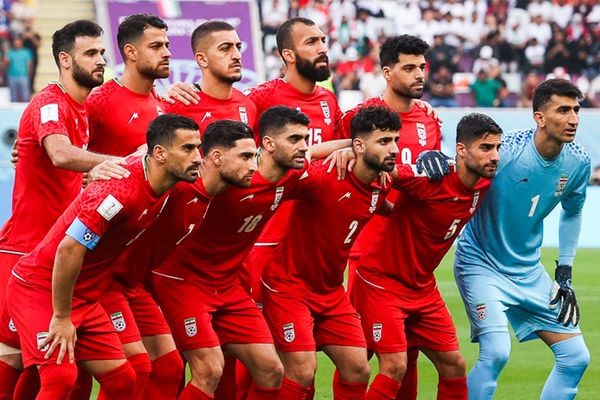
Iran’s sports minister has said that Fifa has promised that the country’s men’s football team will receive visas to play in the US at the World Cup this summer despite the ongoing Middle East war, local media reported on Monday.
As we’ve been reporting, Iran’s participation at the global spectacle has been in question for months because it is being co-hosted by the US, which along with Israel began bombing Iran on 28 February, sparking a wider regional conflict.
“The Fifa president promised us that all our players would receive visas. There is no reason why our players should not receive visas,” said minister Ahmad Donyamali, quoted by local news agency ISNA.
“I hope that all the conditions will be met so that the national team can participate in the tournament in a calm and orderly manner,” he added.
Per our previous posts, the Iranian squad will now be based in Tijuana on the Mexican border with the United States during the tournament.
Mexican president Claudia Sheinbaum on Monday confirmed that the Iranian can be based there to avoid US visa restrictions.
Donyamali said the World Cup hosts had an obligation to provide visas to all participating countries, including for players and backroom staff.
“In Mexico, the Iranian national team is expected to obtain multiple-entry visas issued by the United States,” he said.
Lebanon’s public health ministry has said a total of 3,185 people have been killed by Israel since it renewed its offensive against Hezbollah on 2 March. A further 9,633 people have been wounded, it said.
A bit more on that news regarding Iran’s participation at next month’s World Cup finals in North America.
Mexican president Sheinbaum said football’s governing body Fifa approached her government after the US said it did not want Iran’s squad to stay in the country throughout the tournament, despite Iran playing all three of its group matches there.
“We have no reason to deny them the possibility of staying in Mexico,” Sheinbaum said during her daily press conference.
The White House and the State Department did not immediately respond to a request for comment, Reuters reported. Mehdi Taj, head of Iran’s football federation, said on Saturday the team’s base would be moved from Arizona to the Mexican border city of Tijuana during the tournament.
Taj added that the move would help avoid visa-related complications and that the squad would be able to travel directly to Mexico aboard Iran Air flights.
The Iranian team’s participation in the tournament had been in question since the US and Israel attacked Iran in late February.
Mexican president Claudia Sheinbaum said on Monday her government agreed to allow the Iranian national soccer team to stay in Mexico during the World Cup, adding that the United States did not want to host the team.
The head of Iran’s soccer federation said on Saturday the team’s base will be in the Mexican border city of Tijuana during the tournament.
Plumes of smoke billow from southern Lebanon following Israeli strikes, as seen from Nabatieh earlier today.
The shock of the Iran war and its fallout has driven rivals in the Middle East to get behind a peace deal, pushing the Trump administration to accept a tentative agreement in the face of furious opposition from Israel and its supporters in Washington.
The diplomatic efforts come as the region is reshaping to adapt to diminished US power after Washington’s inability to land a knockout blow on Iran, force the opening of the strait of Hormuz or safeguard its Gulf allies. Tehran has few friends in the region, but the regime’s survival has meant that its neighbours have had to find an accommodation.
Andreas Krieg, an associate professor at Kings College London, said the Gulf was shocked at the degree to which Washington protected Israel first against Iranian drones and missiles, despite the trillions of dollars of Gulf investment pouring into the US.
“We’re probably seeing the final days of American empire in the Middle East,” he said. “Across the Gulf, there is complete disillusionment with American influence and the ability of America to lead.”
The provisional deal was agreed at the end of last week after Pakistani and Qatari officials travelled to Iran in a final push for an outline agreement between Tehran and Washington. In a call with Trump on Saturday, leaders from a group of eight Muslim-majority nations urged him to accept a deal that would end the war, reopen the strait of Hormuz, and relaunch negotiations on Iran’s nuclear programme.
In the lengthy Truth Social post, Donald Trump said the process should start with the “immediate signing” of the Abraham accords by Qatar and Saudi Arabia, and then “everybody else should follow suit”. He continued:
If they don’t, they should not be part of this Deal in that it shows bad intention. In speaking to numerous of the Great Leaders mentioned above, they would be honored, as soon as our Document is signed, to have the Islamic Republic of Iran as part of the Abraham Accords.
Wow, now that would be something special! This will be the most important Deal that any of these Great, but always in Conflict Countries, will ever sign.
Nothing in the past, or in the future, will surpass it. Therefore, I am mandatorily requesting that all Countries immediately sign the Abraham Accords, and that, if Iran signs its Agreement with me, as President of the United States of America, it would be an Honor to have them also be part of this unparalleled World Coalition.
The Middle East would be United, Powerful, and Economically Strong, like perhaps no other area, anywhere in the World! By copy of this TRUTH, I am asking my Representatives to begin, and successfully complete, the process of signing these Countries into the already Historic Abraham Accords.
Trump suggests Saudi Arabia and Qatar sign Abraham accords as part of Iran peace deal
In a new post on Truth Social, the US president, Donald Trump, said that talks with Iran are “proceeding nicely” but reiterated his earlier warning that it will either be a “great deal for all” or there will be no deal at all, raising the prospect of a resumption of attacks on Iran if the peace talks fail.
He went on to say that it should be “mandatory” for certain countries in the region – Saudi Arabia, Qatar, Egypt, Jordan, Turkey and Pakistan – to sign up to the Abraham accords as part of US efforts to reach a deal with Iran.
All of these countries have, to various extents, helped facilitate mediation efforts between Washington and Tehran in the current conflict, with Pakistan taking the lead.
Trump, who said he spoke to mediating regional powers on Saturday, wrote:
It may be possible that one or two have a reason for not doing so, and that will be accepted, but most should be ready, willing, and able to make this Settlement with Iran a far more Historic Event than it would, otherwise, be.
The Abraham Accords have proven to be, for the Countries involved (The United Arab Emirates, Bahrain, Morocco, Sudan, and Kazakhstan), a Financial, Economic, and Social BOOM, even during this time of Conflict and War, with the current Members never even suggesting leaving, or taking so much as even a pause.
The UAE and Bahrain signed the Abraham accords during Trump’s first term in 2020, breaking a longstanding taboo to become the first Arab states to recognise Israel in a quarter century.
Morocco and Sudan followed, although in Sudan they were not ratified because of internal instability caused by conflict and political turmoil. Kazakhstan said last year it was joining the accords even though it had already established diplomatic relations with Israel in 1992.
Since the signing of the historic agreement, Israel and the UAE in particular have developed close economic and security ties, including defence cooperation and a free trade pact, although there are significant strains in the relationship.
Saudi Arabia’s Crown Prince Mohammed bin Salman has previously expressed a potential willingness to normalise relations with Israel, but Saudi Arabia has said recognition of Israel is conditional on the establishment of a Palestinian state.
Updated
The Israeli military has issued a forced evacuation order for some residents of southern Lebanon’s Tyre city and its surroundings ahead of imminent attacks, claiming it is responding to Hezbollah violations of the US-brokered ceasefire with the Lebanese state last month.
Updated
Iran's top envoys discussing potential peace deal with Qatar prime minister
Iranian top negotiator Mohammad Bagher Qalibaf and foreign minister Abbas Araqchi are in Doha for talks with Qatar’s prime minister on a potential US-Iran deal to end the conflict, an official briefed on the visit said on Monday.
The discussions are focused primarily on the strait of Hormuz and Iran’s stockpile of highly enriched uranium, the official told Reuters.
Iran’s central bank governor is also part of the delegation to discuss the potential release of frozen Iranian funds as part of a final agreement, according to the official.
Updated
Russian president Vladimir Putin and Bahrain’s King Hamad bin Isa Al Khalifa discussed by phone the need to find a rapid diplomatic resolution to the Iran crisis, the Kremlin said on Monday.
It comes as Iran warned on Monday that, while some progress had been made, it was not yet close to striking a deal with the United States to end the Middle East war.
World oil prices tumbled on renewed optimism about an agreement, after top US diplomat Marco Rubio suggested a deal could be reached within the day – but Iran’s foreign ministry spokesman responded: “No one can make such a claim.”
Donald Trump said on his Truth Social platform on Saturday that the agreement would include opening of the strait of Hormuz, a crucial chokepoint for global trade, which Iran has effectively shut since the US and Israel started the war in February.
But the US president did not mention Iran’s nuclear program and highly enriched uranium, despite repeatedly insisting that Tehran renounce any nuclear ambitions was a “red line” in negotiations to end the war. Iranian officials have sought to negotiate those matters at a later date.
The peace draft includes a 60-day ceasefire extension, during which the strait of Hormuz would be reopened, according to Axios.
Iran would agree to clear mines it deployed in the strait and allow ships to pass freely, and in exchange, the US would lift its naval blockade on Iranian ports. During that time Iran would also be able to freely sell oil and negotiations would be held on the nuclear issue.
The apparent concessions from Washington have triggered alarm among several Republican foreign policy hawks.
Senator Lindsey Graham, a close ally of Trump, warned: “If a deal is struck to end the Iranian conflict because it is believed that the strait of Hormuz cannot be protected from Iranian terrorism and Iran still possesses the capability to destroy major Gulf oil infrastructure, then Iran will be perceived as being a dominate force requiring a diplomatic solution.”
The perception of Iran being able to “terrorize” the strait of Hormuz, and its ability to damage oil infrastructure across the Gulf, amounts to a “major shift of the balance of power in the region and over time will be a nightmare for Israel”, Graham argued.
“If the result of all that is to be an Iranian regime – still run by Islamists who chant ‘death to America’ – now receiving billions of dollars, being able to enrich uranium & develop nuclear weapons, and having effective control over the strait of Hormuz, then that outcome would be a disastrous mistake,” Texas senator Ted Cruz wrote on X.
Updated
Iran deal will either be 'great and meaningful' or there will 'be no deal' at all, Trump says
In a post on Truth Social, the US president, Donald Trump, has again hit out at US lawmakers who reacted furiously to reports that a proposed deal with Iran contained major concessions from Washington.
“I laugh at all of the Dumocrats, RINOS, and Fools who know nothing about the potential deal I am making with Iran, things that haven’t even been negotiated yet,” Trump wrote.
“The deal with Iran will either be a great and meaningful one, or there will be no deal. It will be the exact opposite of the JCPOA disaster negotiated by the failed Obama Administration, which was a direct and open path to a Nuclear Weapon for Iran,” he said, referring to the 2015 deal, known as the Joint Comprehensive Plan of Action, to limit Iran’s nuclear enrichment in return for sanctions relief.
Trump withdrew from that international deal in 2018, saying the agreement was “rotten” and complaining it only limited Iran’s nuclear activities for a fixed period. He has claimed the new deal will be far superior, without saying how.
Updated
Israel issues more forced evacuation orders for Lebanese towns and villages
The Israeli military issued an evacuation order for 10 Lebanese towns and villages this morning as it continues displacing residents ahead of attacks it says are targeting Hezbollah although many civilians are being killed in them. You can read more information about the latest evacuation order in this post on X.
Israel has continued striking Lebanon regularly, both south and north of the Litani River in south Lebanon, despite a US-brokered ceasefire coming into effect last month. It says it is targeting Hezbollah sites including weapons storage facilities and command centres.
Hezbollah, the Iranian-backed Lebanese militant group, has fired rockets and drones into northern Israel and against Israeli troops in southern Lebanon as it rejects pushes for its disarmament and Israeli occupation of some of southern Lebanon.
According to the Lebanese health ministry, at least 3,111 people have been killed in Israeli attacks since Israel’s renewed war on Lebanon started on 2 March.
Israel’s deadly air assault – and ground invasion – were in response to Hezbollah firing rockets at northern Israel after the US and Israel killed the former Iranian supreme leader in Tehran on 28 February.
Iran is pushing for an and to Israel’s war on Lebanon as part of its negotiations with the US. As part of the emerging US-Iran deal, Israel could reportedly be allowed to strike Hezbollah if the militant group instigates or carries out attacks, giving the Israeli military large scope going forward.
Despite a ceasefire between Lebanon and Israel being signed last month, regular Israeli airstrikes on southern Lebanon have continued unabated.
Lebanon’s state-run National News agency (NNA) reported this morning that the Israeli army carried out airstrikes in towns in the Bint Jbeil district, and the towns of al-Mansouri, al-Qulaylah and al-Haniyeh were hit by Israeli airstrikes and phosphorus shelling in the Tyre district.
The NNA also reported that three people were killed after Israeli warplanes carried out three drone attacks this morning, targeting a vehicle on the Kfar Rumman-Jarmaq highway, another on the Jarmaq-Khardali road, and a motorcycle near the Usersif Hotel.
We have not yet been able to independently verify these reports.
Updated
In a social media update, the IDF said that a drone was forced to perform an emergency landing in an “open area” in central Israel earlier today due to a technical malfunction.
“The aircraft was collected by IDF forces, there is no damage and no casualties,” it wrote in a short statement.
Iran’s foreign minister, Abbas Araghchi, will not participate in the UN security council meeting in New York due to issues related to a US visa, Al Jazeera quoted the Iranian foreign ministry spokesperson, Esmaeil Baghaei, as having said earlier.
Ebrahim Rezaei, the spokesperson of the Iranian parliament’s national security and foreign policy commission, has said that time is working against the US and warned that Iran does not respond well to threats.
In a post on X, he wrote:
During the military war, our tactic was an eye for an eye; in the diplomatic war, it is action against action. Do not believe the bluff of the failed president; time is against the Americans.
If they want an agreement, they should negotiate; if they want $6 gas, they should stand firm and bluff until the grass grows under their feet. Iran does not bow to force or threats.
The US has repeatedly raised the prospect of a resumption of attacks on Iran if the negotiations do not bear fruit.
The Iranian foreign ministry spokesperson cast doubt about how trustworthy the US were, saying there are no “guarantees” that Washington will honour whatever deal is agreed upon.
The current US-Israeli war on Iran and the 12-day war launched by Israel last June both began when Iran and the US were engaging in talks over Iran’s nuclear programme.
Esmail Baghaei also told journalists in the briefing that the focus of this phase of talks is not on “the nuclear issue” but “ending the war”, including Israel’s assault on Lebanon.
Updated
Iran says progress on many issues with US but agreement not 'imminent'
The Iranian foreign ministry spokesperson Esmail Baghaei has been speaking at a news briefing about the contours of a potential deal with the US to end the war.
“It is correct to say that we have reached a conclusion on a large portion of the issues under discussion,” he said.
“But to say that this means the signing of an agreement is imminent – no one can make such a claim.”
A potential deal reportedly includes a 60-day ceasefire extension, reopening the strait of Hormuz to international vessels and a plan for further negotiations over Iran’s much contested nuclear programme.
However, the deal has to be approved by Iran’s leadership, including the apparently hard to reach supreme leader Mojtaba Khamenei, which could take some time.
Lead Iranian negotiator re-elected as parliament speaker
Iran’s top negotiator in talks with the US, Mohammad Bagher Qalibaf, has been reelected as the country’s parliamentary speaker, semi-official Fars news agency reported on Monday.
Updated
During military conflict Iran’s tactic was “an eye for an eye,” and in diplomatic conflict it is “action for action“, Ebrahim Rezaei, the spokesperson of the Iranian parliament, has said.
In a posting on X on Monday, he said:
During the military war, our tactic was an eye for an eye; in the diplomatic war, it is action against action. Do not believe the bluff of the failed president; time is against the Americans.
If they want an agreement, they should negotiate; if they want $6 gas, they should stand firm and bluff until the grass grows under their feet. Iran does not bow to force or threats.
Iran executed a man over charges related to the anti-government protests that took place nationwide in January, state media reported on Monday.
The individual was identified as Abbas Akbari, Reuters cited state media as saying.
Israeli strikes pounded south and east Lebanon on Sunday despite the ceasefire as the leader of Hezbollah expressed hope for an agreement between Iran and the US that also ends hostilities in Lebanon.
Lebanon’s health ministry raised the overall toll in the war since 2 March to 3,123 killed.
It said two people including a paramedic from the Hezbollah-affiliated Islamic Health Committee were killed on Sunday in Israeli raids.
A day earlier 11 people including six women and a child were killed in a single strike in the south’s Sir al-Gharbiyeh, the ministry said on Sunday, decrying a “massacre”.
Israel and Iran-backed Hezbollah have continued attacks on each other despite the nominal ceasefire, as mentioned.
Hezbollah chief Naim Qassem said that “God willing, this [Iran-US] agreement will be finalised ... and accordingly that we too will be among those included in this agreement” on a full cessation of hostilities.
After Qassem’s speech, US secretary of state Marco Rubio accused Hezbollah of trying to plunge Lebanon “back into chaos”.
Israel said on Monday a soldier was killed in southern Lebanon, taking to 23 the number of its troops killed in the war with Iran-backed Hezbollah.
A military statement cited by AFP named him as 19-year-old Sgt Nehoray Leizer of the 601st Combat Engineering Battalion, who “fell in combat in southern Lebanon”.
During the incident in which Leizer was killed, “an additional soldier was severely injured”, the Israeli military said separately on Telegram.
A total of 24 Israelis have been killed in the conflict – 23 soldiers and one civilian contractor – since hostilities resumed on 2 March.
Updated
Marco Rubio also told reporters in New Delhi that “Israel always has a right to protect itself”.
“If Hezbollah is going to launch missiles or launches missiles at them, Israel has every right to respond to that, or to prevent that from happening,” the US secretary of state was quoted as saying.
That’s always been understood. It’s being understood during the ceasefire.”
Israel and Hezbollah have continued trading strikes during the US-brokered ceasefire between Israel and Lebanon, which began on 16 April and was recently extended by 45 days.
The potential deal between the US and Iran to end their war also reportedly requires Israel to stop its offensive in Lebanon.
Israeli prime minister Benjamin Netanyahu said on Sunday that Donald Trump had reaffirmed his support for Israel’s right “to defend itself against threats on all fronts, including in Lebanon”.
Updated
Summary
Hello and welcome to the Guardian’s continuing coverage of the crisis in the Middle East.
US secretary of state Marco Rubio said on Monday that a deal to end the war with Iran could materialise “today”.
His comments came after oil prices plunged and Asian shares rose earlier in the day amid optimism that the US and Iran were close to an agreement that might secure a lasting end to the three-month war and reopen the strait of Hormuz. Oil prices hit a two-week low, with Brent crude futures falling 4.5% to $98.83 a barrel by 11.50pm GMT.
“We thought we might have some news last night, maybe today – I wouldn’t read too much into it,” Rubio said in New Delhi of a potential agreement.
“We have what I think is a pretty solid thing on the table in terms of their ability to open up the straits,” he said. “It has a lot of support in the Gulf.”
Rubio’s remarks came after Donald Trump tempered expectations of a deal, saying on Sunday that he had told his negotiators “not to rush”. Negotiations with Iran were “proceeding in an orderly and constructive manner”, the US president said.
Middle East officials told the Associated Press on Sunday that the US was close to reaching a deal with Iran that would end the war and reopen the strait, a vital conduit for global energy supplies.
On Sunday Trump said the US blockade on Iranian ships in the Hormuz strait would “remain in full force and effect until an agreement is reached, certified and signed”. “Both sides must take their time and get it right,” he added.
As details of the possible agreement emerged over the weekend, critics including Trump’s former secretary of state Mike Pompeo said it offered little beyond the 2015 Iran nuclear deal negotiated by former president Barack Obama, from which Trump withdrew during his first term.
Chris Van Hollen, a Democratic member of the Senate foreign relations committee, said the deal’s reported outlines would amount to little more than “the prewar status quo” with Iran.
Updated