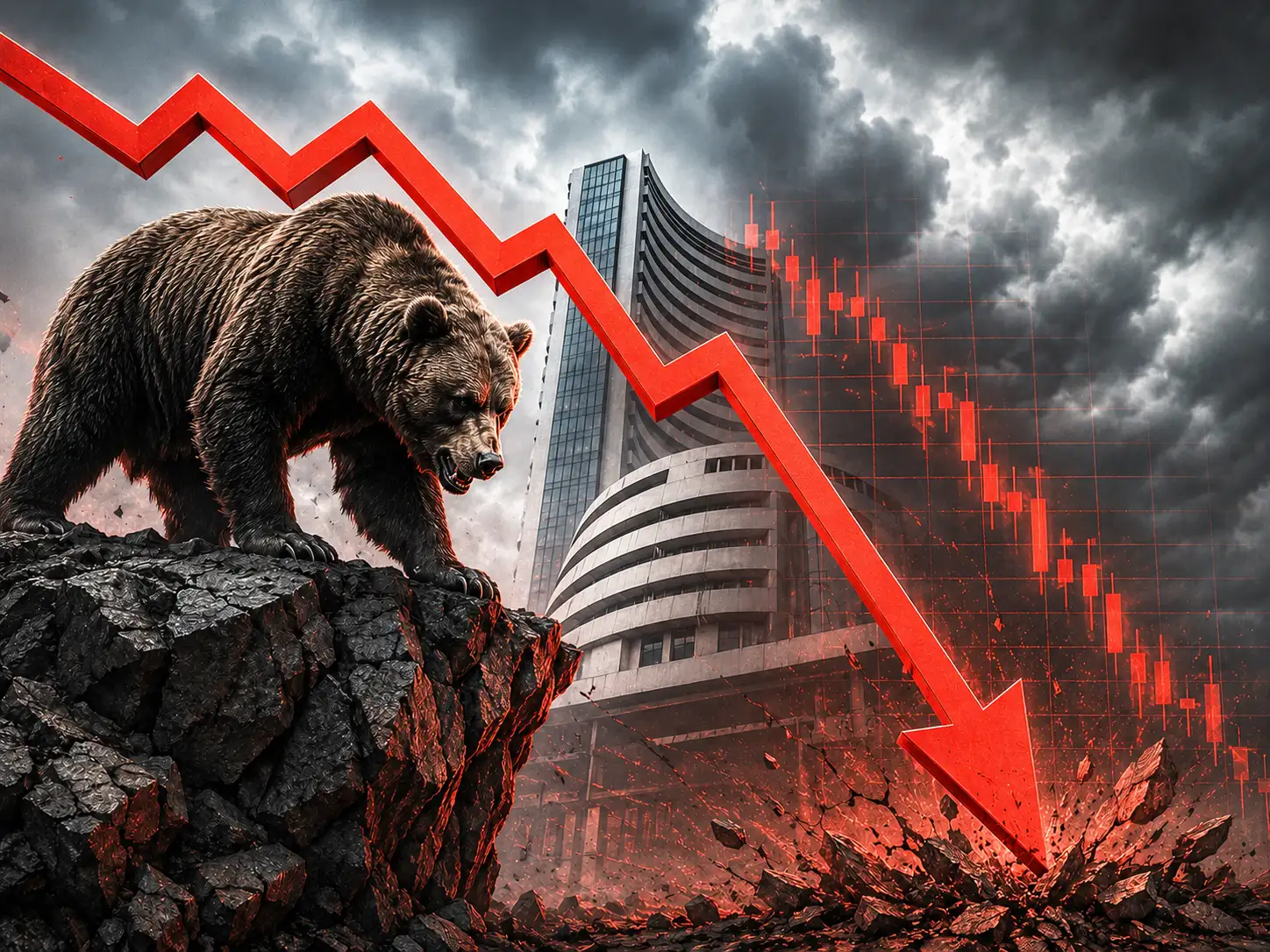
Benchmark indices Sensex and Nifty ended the Tuesday session sharply lower, dragged by a fall in bank, oil and gas, and pharma stocks. Investor sentiment reversed from Monday after the U.S. carried out strikes in southern Iran, reviving concerns over a prolonged conflict in the Middle East.
The 30-share Sensex ended at 76,010, down around 479 points or 0.63%, while the Nifty50 closed at 23,933, lower by 98 points or 0.41%. Among the top laggards were HDFC Bank, Trent, TCS, Bharti Airtel, Axis Bank, and Titan Company. Gainers included Tech Mahindra, Eternal, Maruti Suzuki, and HUL.
Broader markets outperformed frontline indices with the Nifty Midcap 100 and Smallcap 100 indices gaining 0.5% and 0.35%, respectively.
Expert views
Vinod Nair of Geojit Investments said that near-term optimism surrounding a potential U.S.–Iran peace deal faded sharply after U.S. military operations in southern Iran. According to him, the development triggered a spike in crude oil prices and reversed the rupee’s brief appreciation. He noted that the monthly F&O expiry further intensified technical selling pressure in an already risk-off environment, leading domestic equities to end lower.
Nair added that with crude oil prices still lower on a weekly basis, markets continue to factor in a meaningful probability of de-escalation in West Asia.
Global markets
U.S. stock index futures climbed to fresh record highs on Tuesday as investors remained optimistic about ongoing Middle East peace negotiations despite recent military strikes, while continued AI-driven momentum in chip stocks further supported sentiment. Futures linked to the Dow Jones rose 0.48%, while S&P 500 and Nasdaq futures gained 0.52% and 0.77%, respectively.
U.S. Secretary of State Marco Rubio said on Tuesday that negotiations with Iran could take “a few days,” while U.S. President Donald Trump said in a Truth Social post on Monday that discussions with Iran were progressing “nicely.”
European markets, however, traded mixed on Tuesday, easing slightly after recent gains as rising oil prices and renewed U.S. strikes in southern Iran dampened hopes of an imminent peace agreement between the U.S. and Iran.
The STOXX Europe 600 slipped 0.2%, though it remained close to its highest level since the start of the conflict. Britain’s FTSE 100 advanced 0.7%, while Germany’s DAX fell 0.7%. The MSCI World Equity Index was largely flat on the day but remained up 3.8% for the month so far.
In Asia, Japan’s Nikkei 225 ended 0.25% lower at 64,996.09 after surging 2.87% on Monday to close above the 65,000 mark for the first time, driven by optimism around artificial intelligence-linked stocks. The index has gained 8.95% over the last three sessions, marking its steepest three-day rally in more than six years. Japan’s broader Topix index edged down 0.1% to close at 3,938.46.
Meanwhile, South Korea’s KOSPI continued to benefit from strong technology sector momentum, rising 2.6% to hit a fresh record high.
Crude impact
Brent crude futures neared $100 again after prices rose nearly 4% to extend gains from morning. The surge came after the U.S. military launched strikes in southern Iran, describing the action as defensive in nature. The developments kept markets tense as hopes of a deal to end the ongoing conflict remained uncertain.
The U.S. Central Command said it had carried out strikes on targets in southern Iran, including boats allegedly attempting to lay mines and missile launch sites. According to the military, the strikes were aimed at protecting U.S. troops from threats posed by Iranian forces.
Rupee vs Dollar
The Indian rupee weakened 0.47% to close at 95.68 against the U.S. dollar as of 3:30 p.m. IST on Tuesday, compared with its previous close of 95.23.
(Disclaimer: Recommendations, suggestions, views and opinions given by the experts are their own. These do not represent the views of The Economic Times)