
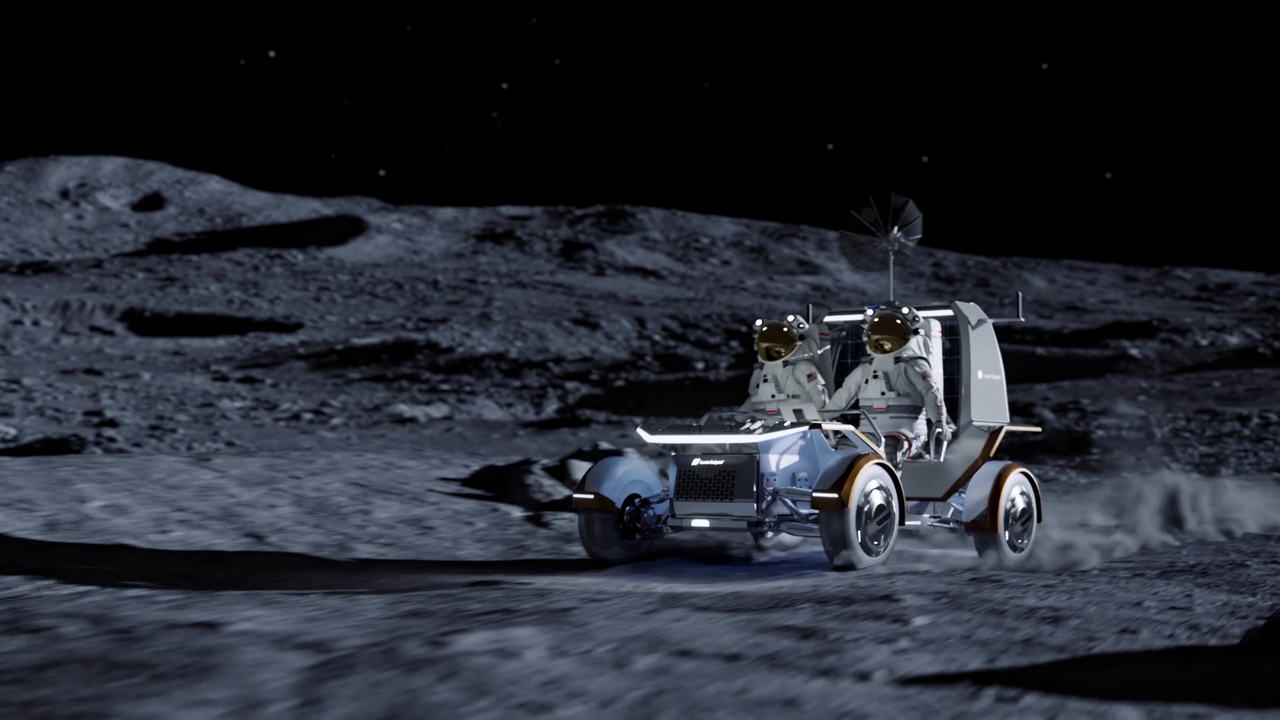
Lunar Outpost has big plans for the moon. It's right there in their name.
The Colorado-based company has already built a sleek lunar rover named Eagle and sent a robotic mini-rover to the moon on a commercial lunar lander. There's a Lego kit inspired by both of them. This month, the company announced that it has secured $30 million in funding to help it develop a new, smaller rover named Pegasus.
Concept art shared by the company reveals Pegasus to be a leaner offering than the larger, SUV-like Eagle rover, resembling NASA's "moon buggy" used during the Apollo missions. The company hopes to have the new Pegasus rover delivered by the end of 2027, with a launch to the moon in 2028, a timeline that matches NASA's latest timeline for Artemis 4. Already, Lunar Outpost has more moon rovers assigned to missions than all other commercial companies combined. But rovers aren't the only lunar technologies the company is researching and developing.
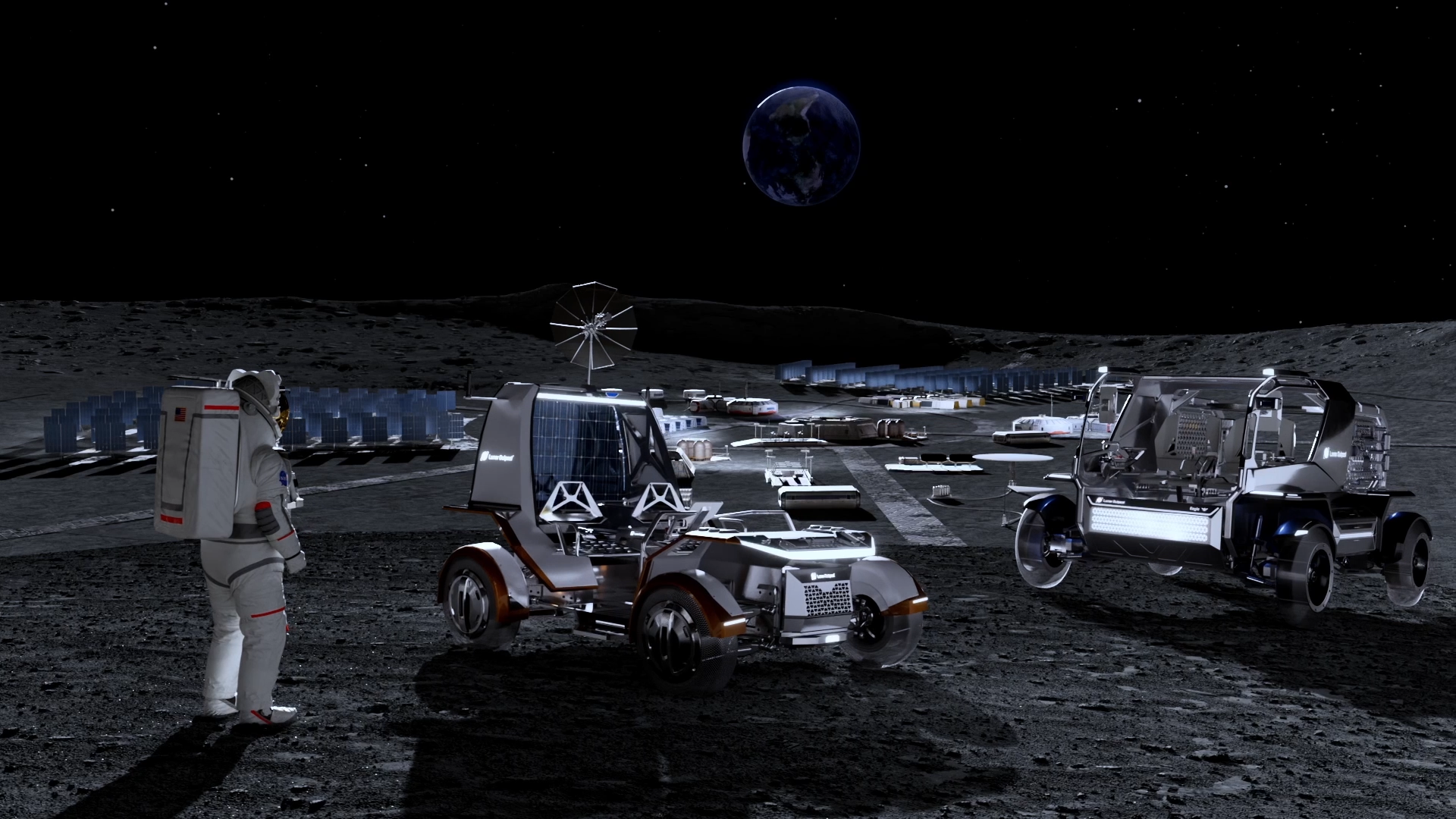
Lunar Outpost aims to develop a whole ecosystem of infrastructure on the moon, as well as the robots that will build it.
"We're a lunar infrastructure company, and the infrastructure of the moon base won't be built by astronauts alone," the company's Vice President of Strategy Michael Moreno told Space.com. "It'll be an autonomous robotic workforce, and that's our expertise."
Space.com spoke with Moreno in April 2026 at the Space Foundation's annual Space Symposium in Colorado Springs about Lunar Outpost's vision for autonomous technologies that will operate alongside astronauts to build the infrastructure needed for a sustained human presence on the moon.
"We have rovers that will do autonomous infrastructure construction, lunar surface improvement, help build launch and landing pads, energy storage, and habitats," Moreno said. "So, all of the things that humans will need for a permanent human presence, Lunar Outpost was built to help to build, maintain and operate."
Lunar Outpost's first robotic MAPP (Mobile Autonomous Prospecting Platform) mini-rover never got to explore the moon, because its ride, the Intuitive Machines Athena lunar lander, tipped over upon landing in March 2025.
But Lunar Outpost has four more MAPP missions already in the works, Moreno said, including one on NASA's Artemis 4, which will mark humanity's return to the lunar surface, if all goes according to plan.
"We're pairing a MAPP rover with an Artemis astronaut on Artemis 4," Moreno said. "That'll be the first time in history that that has happened, an astronaut working alongside a rover."
Lunar Outposts envisions one of its MAPP rovers traveling alongside Artemis astronauts, studying the properties of the lunar surface. "They'll be working together to characterize the lunar regolith and understand some of the properties of regolith to help us on both science objectives, paving the way for future exploration," Moreno said.
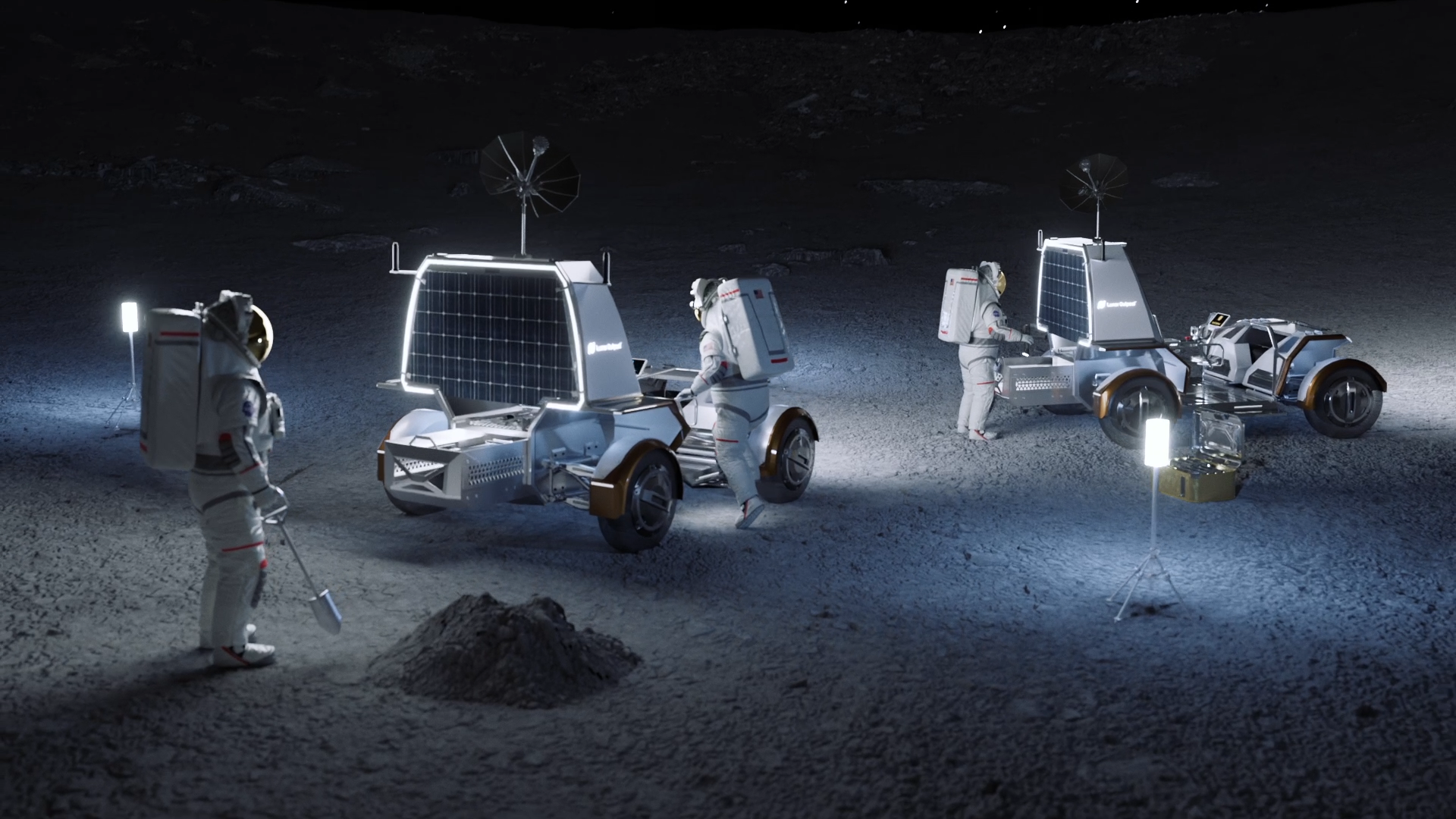
There's big money at stake in designing and developing the next moon rover. NASA's new round of lunar terrain vehicle contracts are worth a total of $4.6 billion through 2039.
But Lunar Outpost's push to build infrastructure on the moon isn't just about the next big economic boom, the company says. According to Moreno, Lunar Outpost is inspired by a much grander vision of helping humanity settle other planets.
"We've been wanting to go back to the moon for 50 years now, and I believe it's a human imperative," he said. "Beyond that, it's the launching point for deep-space exploration. It's how we start making humans a multi-planetary species."