Air pollution across the Indo-Gangetic Plain and eastern India has worsened sharply over the last two decades, with Bihar and West Bengal emerging as some of the most polluted regions, according to a long-term satellite-based study by Kolkata’s Bose Institute. The research found that particulate matter pollution rose by more than 20% during 2010-2019 compared to the previous decade, while pollution from the plains is now travelling into the Himalayan region. The study also warned that India’s clean air efforts remain heavily city-centric and are failing to tackle rural biomass burning, which has become a major source of pollution.
Published in the journal Atmospheric Environment, the research analysed pollution patterns from 2000 to 2024 across the Indo-Gangetic Plain, the Himalayas and the North-East. It tracked how pollution hotspots shifted over time and examined whether interventions under the National Clean Air Programme (NCAP) made a measurable impact.
Pollution no longer staying in the plains
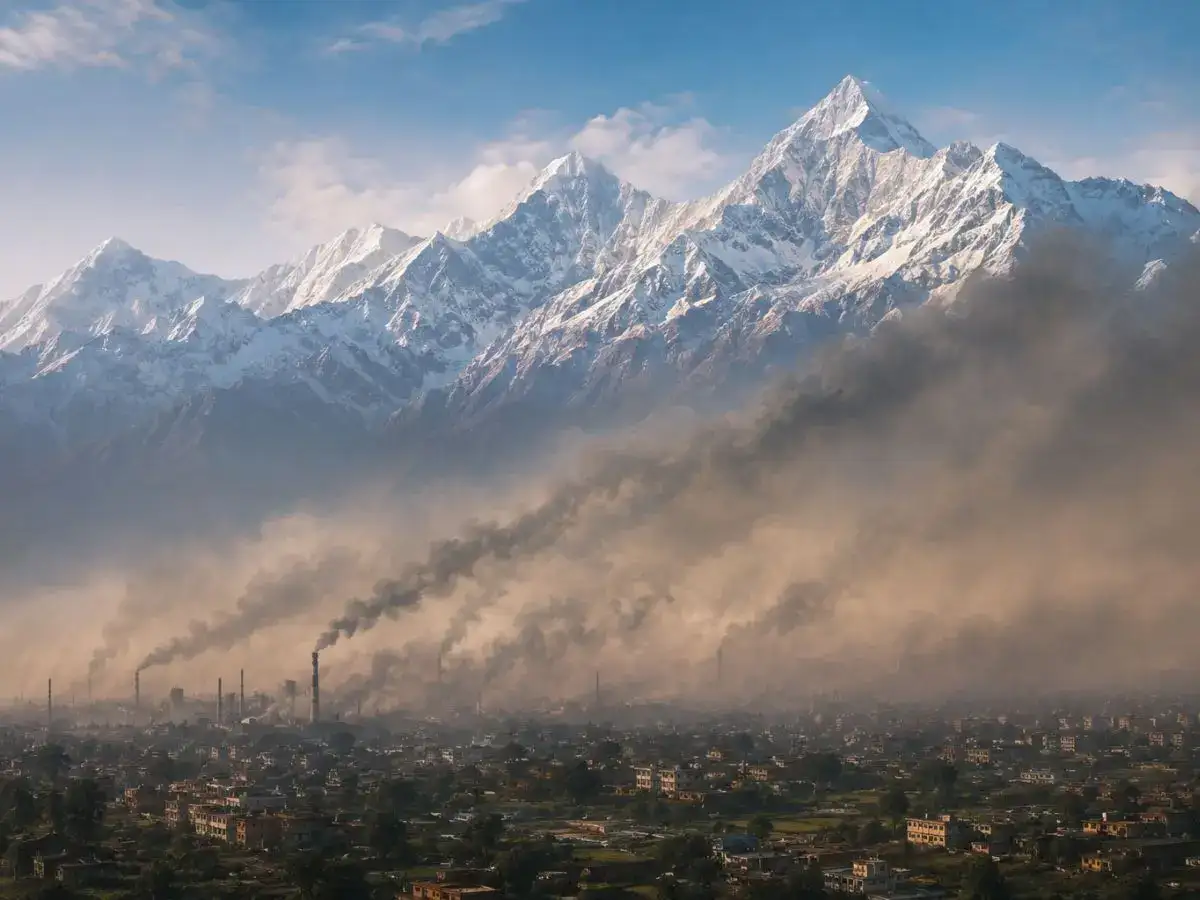
The study highlighted a major environmental shift: pollution generated in the Indo-Gangetic Plain is no longer confined to the region. Instead, emissions are now moving towards the Himalayas and affecting fragile mountain ecosystems.
Researchers found that pollution originating from Punjab, Haryana and Delhi is reaching the western and central Himalayan ranges, while emissions from Bihar and West Bengal are impacting the eastern Himalayas.
“The Himalayas are not insulated from IGP pollution. Our trajectory analysis shows that what is emitted in Punjab or Bihar does not stay there, it travels into the mountains. These are ecologically and climatically sensitive zones, and they are currently outside the scope of any structured clean air intervention in India,” said Soumen Raul, the primary researcher involved in the study.
The research focused on aerosols, microscopic particles such as soot, dust and chemical droplets suspended in the atmosphere, which can travel long distances and worsen both climate and health conditions.
Bihar and Bengal emerge as expanding hotspots
The study mapped how pollution hotspots have spread over the years. During 2000-2009, severe carbon pollution remained concentrated in parts of Bihar, Uttar Pradesh, northern West Bengal, Assam, Meghalaya, Tripura and Bangladesh.
By 2020-2024, the polluted belt had expanded significantly. Researchers found that almost all of West Bengal and Bihar, along with large parts of Assam, Meghalaya, Tripura and Bangladesh, now fall within high-pollution zones.
The expansion, according to the study, has largely been driven by rural biomass burning and urban waste burning rather than industrial activity or vehicle emissions.
Interestingly, Uttar Pradesh stood out as an exception, with researchers observing a recent decline in carbon pollution levels.
NCAP helping cities, but rural smoke remains unchecked
The study also reviewed the impact of India’s National Clean Air Programme and found that some states, including Bihar, West Bengal and Assam, showed measurable improvements in overall particulate matter levels after NCAP interventions began.
However, researchers said the programme has not been effective in reducing pollution linked to biomass burning. Such emissions continue to remain high across the region.
“NCАP is primarily designed as a city-focused initiative. But our data shows that air pollution in rural India is equally severe, and in some cases more so. Biomass burning — for cooking, heating, agriculture — is not being adequately addressed by the programme as it currently stands. The rural dimension needs to be explicitly built into the clean air mission,” said Abhijit Chatterjee.
The study further noted that pollution from thermal power plants and urban solid waste burning continues to slow progress in reducing carbon emissions across the region.
Why the findings matter
The research paints a picture of pollution spreading beyond crowded cities into rural belts and ecologically sensitive mountain regions. While clean air measures may be helping some urban centres, the study suggests that smoke from household fuel use, agricultural burning and waste disposal is becoming the next major challenge.
For regions already struggling with poor air quality, the findings indicate that pollution is no longer just a city problem — it is turning into a wider regional crisis stretching from the plains to the mountains.