Last year, a funeral services company in Korean called Bumo Sarang put 59.5 billion Won ($40 million) of its clients' money into a leveraged crypto ETF, which is now worth just 10.2 billion Won ($6.8 million), resulting in a $33 million loss. The company is downplaying this revelation, which was part of a broader investigation done by the Korean Economic Daily that highlights embezzlement as a scarily common practice in the industry.
Go deeper with TH Premium: AI shortages
- AI data centers are swallowing the world's memory and storage supply
- Chip scarcity assaults auto industry amid the worsening Nexperia and DRAM crisis
- Samsung and SK hynix shorten memory contracts as pricing power shifts back to suppliers
- Memory makers are set to earn $551 billion from the AI boom
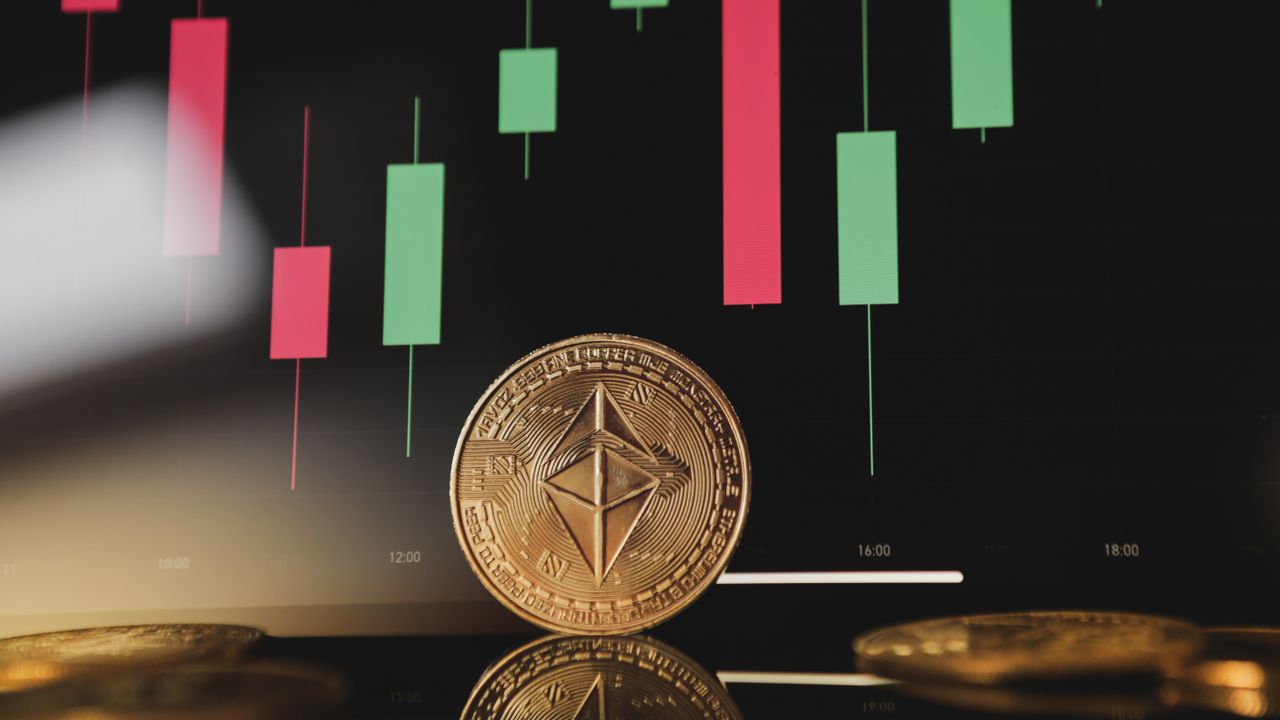
More specifically, Bumo Sarang invested the $40 million in the T-REX 2X Long BMNR Daily Target ETF that's supposed to double the daily return of a company called BitMine — the largest Ethereum treasury in the world. This fund is a leveraged ETF, which we'll explain later in the article, but the main takeaway is that it's designed for day trading and is not supposed to be held for long periods of time.
Beyond the illegality, you can already start to piece together why keeping $40 million of customer funds in a leveraged ETF for a year was a terrible investment in general. Putting it a leveraged crypto ETF only exacerbated the losses, as the crypto market has been in a downturn for the past year. That being said, Bumo Sarang is not an isolated case — it's just the biggest one.
韩国人是真正在以太坊上把棺材本都给亏没了...韩国一家名为“父母之爱”的殡葬公司,在最新发布的审计报告中披露,因为投资了2倍做多BMNR亏损近500亿韩元,买入了595亿只剩下了102亿...亏的钱是这家公司年营收的整整8倍,关键是这家公司的商业模式是每月预付,也就是还活着的人每个月给它缴纳一笔固定金… pic.twitter.com/KkKyIyklUAMay 20, 2026
In the aforementioned investigation, out of 75 audited funeral service companies in Korea, 43% were technically insolvent, meaning they owe more than they own. If customers pulled out of their prepaid plans, these firms won't have the cash to pay them back. Smaller firms were even found to issue unbacked, multi-million-dollar loans to shareholders and CEOs.
To understand how all this happened, we'll have to look at how funeral services companies operate in Korea. Unlike banks, which are treated as financial institution and thus placed under much stricter scrutiny, these funeral firms are as classified as "prepaid installment businesses." They answer to the Korean Fair Trade Commission (FTC) instead and exploit the 50-50 rule that states only half of their customers' deposits are supposed to remain in cash reserves.
That doesn't mean the other half can be spent in whatever way the company desires, but it opens a loophole in which 50% of money is simply not required to be regulated. People pay these companies to arrange or prepare for their funerals ahead of time so that their loved ones aren't burdened with the process later on. The firms happily take this cash and try to make a profit on it over time, similar to how insurance companies often deny claims despite taking payments regularly.
The difference is that insurance companies are chained by laws that act as a safety net for customers, whereas funeral servicers don't even have to provide the service until years down the line in most cases. All that time leaves an opportunity for creative investments, but, unfortunately, Bumo Sarang chose quite possibly the worst one imaginable —one that's actively affected by "volatility decay."
Volatility decay is basically a mathematical phenomenon pertaining to leveraged investments (like ETFs in this case) where a bad day on the market followed by a good day doesn't guarantee a recovery. For instance, if you invested $100 in a single share of stock and it fell to $80 the next day, but rose back up to $110 on the second, you'd have not only recovered but actually made a profit.
Leveraged ETFs work differently; their goal is to amplify the movement both ways. The same $100 invested in a leveraged ETF wouldn't have fallen to $80, it would've fallen to $60 since it faced a 40% drop instead of just 20%. When it was time for recovery the next day, the 37.5% gain realized on the stock would push it to $110. Doubling that to 76% and applying it to $60 would only bring you back up to $105 instead on the leveraged ETF.
That was just one small movement. Imagine this across the highly volatile crypto market that fluctuates every minute, for a full year. Bumo Sarang treated an extremely sensitive investment that's really only meant for day trading as a long-term play. The crypto market has fallen hard from last year so not only did the company face that upfront loss, but it also has to eat up the volatility decay from each fluctuation.
Compounded across a year, that number boils down to $33 million lost so far. There's a chance it will get even worse from here, as Bumo Sarang is confident that it can keep itself afloat because it claims it has enough of a financial buffer. A spokesperson from the company said this is just a "short-term unrealized loss due to global market volatility" that it can bounce back from without hurting its customers.
Following the story, politicians in Korea immediately sprang up to tighten regulations on these funeral service companies. There are six different bills already being proposed in the country's national assembly that should overhaul the industry and ensure the $7.2 billion of customers funds it handles are protected. The government will likely ban them from speculative trading entirely, but that notion itself is speculative for now.