Prog often shines a light on artists who are positioned outside the genre, but whose works occasionally overlap sufficiently to reward exploration. But what of those musicians whose origins were once firmly entrenched in prog, only for those roots to be obscured by the passing of time?
Step forward New Zealanders Split Enz, whose 1975 debut album Mental Notes is so unabashedly prog that it’s astonishing it doesn’t wear a cape or shave the middle of its hair.
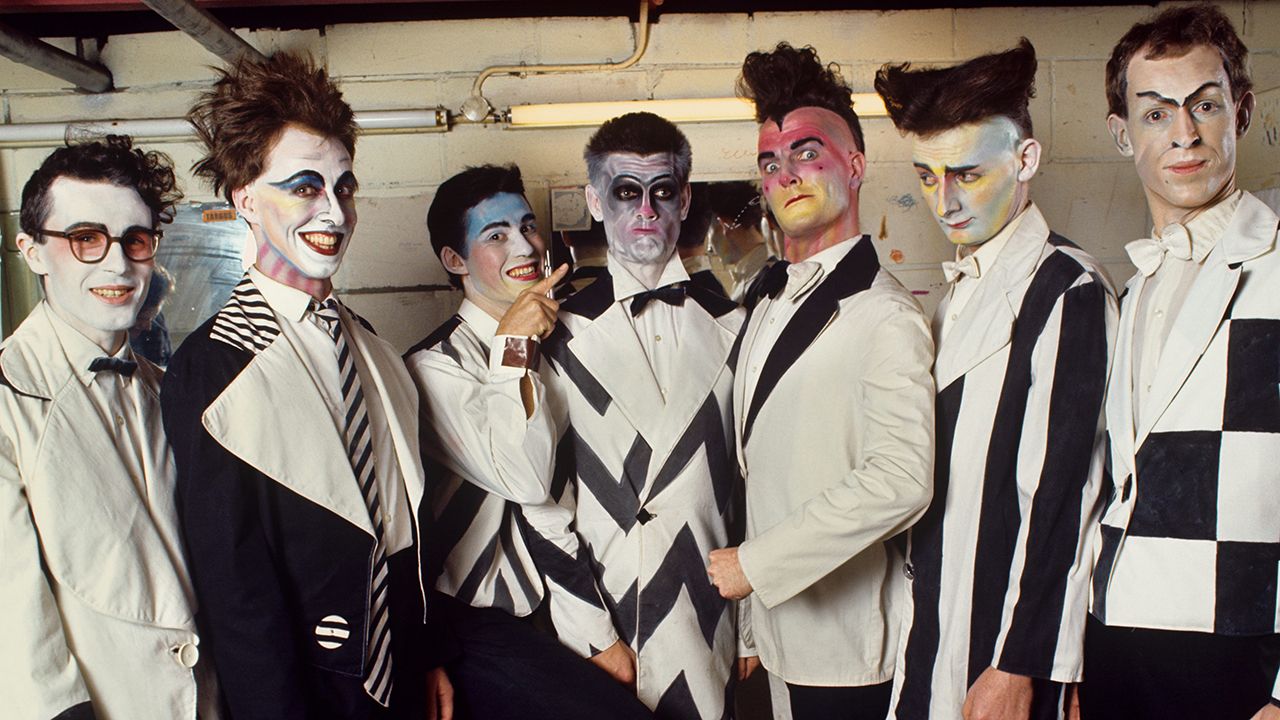
To those weaned on the UK pop charts of the 70s and 80s, the band will be remembered as the sharply-dressed new-wave interlopers who delivered the insanely catchy single I Got You – before later mutating into the internationally successful Crowded House.
That pop-centric narrative has long since hardened into received wisdom; but their prog origins are impossible to deny. Mental Notes is steeped in drama and restless invention, speaking a creative vernacular far closer to prog than the band’s later incarnations might suggest – whether history has chosen to remember that or not.
These days, certain pockets of prog are routinely re-labelled as “art-rock” by those still fighting a long-forgotten culture war; and it’s a label retrospectively attached to the recently reissued Mental Notes.
But let the evidence stand: this is a band operating with a prog aesthetic from the outset, conjuring a surreal, slightly unbalanced environment that sits somewhere between Foxtrot-era Genesis, early Van der Graaf Generator and the theatrical art-rock of Roxy Music – all viewed through a haze of spectral menace.
Peter Hammill’s shadow looms particularly large over Tim Finn’s increasingly demented vocal performance on the near eight-minute excursion, Under The Wheel.
The galloping Walking Down A Road sets a lofty standard that’s sustained throughout. Eddie Rayner’s keyboards are the obvious focal point – witness the lush piano and Mellotron embellishments of Time For A Change – but he’s ably supported by Wally Wilkinson’s impressive guitar work, Emlyn Crowther’s muscular drumming and Mike Chunn’s solid bass.
The dual-vocal assault of Phil Judd’s quivering unease and Finn’s compelling delivery gives the record its singular flavour, with the sweeping and climactic Spellbound standing out as a particular high point of daring approach and creative execution.
History may have been unkind to Mental Notes – a musical exercise never repeated by the band – but by any reasonable measure this is a prog statement worthy of rehabilitation.