Israel’s parliament has approved a bill to dissolve itself, paving the way for a general election, which polls suggest that Benjamin Netanyahu will lose.
Lawmakers voted almost unanimously for an early ballot in a preliminary reading of a bill to disband the 120-seat Knesset.
If it receives final approval, a process that could take weeks, Israel could hold an election several weeks ahead of a 27 October deadline.
Here, we look at what could happen next.
When is the election?
An election date is yet to be set. Israel is supposed to hold a national vote every four years, but early elections have happened often.
The last national election was in November 2022 and the next ballot is due at the latest on 27 October.
After voting to dissolve parliament, members will have to agree on an election date. Political commentators in Israel say an election is likely in the first half of September, but it could also be held nearer to the late October deadline.
Why did parliament vote to dissolve?
Mr Netanyahu’s government faces renewed instability after a key ultra-Orthodox Jewish faction, traditionally a staunch ally, declared it no longer considers the prime minister a partner and will push for an early general election.
The faction’s leaders cited the coalition’s failure to deliver on a promise to enact legislation that would exempt their community from compulsory military service in Israel.

This comes as opposition parties, which have consistently sought to oust Mr Netanyahu’s administration, see a fresh opportunity. A previous attempt to bring down the government last June proved unsuccessful.
Should this latest push succeed, even if only bringing forward the election by a matter of weeks, it could significantly energise the opposition’s campaign and curtail the ruling coalition’s capacity to advance any contentious legislation in the interim.
What happens next?
The dissolution bill now goes to committee, where an election date is agreed. It then goes back for final approval, with the third of three votes requiring a 61-member majority of the 120 Knesset members.
The process could be swift or take many weeks.
Will Netanyahu lose the election?
Less than a year after a 2022 political comeback at the head of Israel’s most right-wing government ever, Mr Netanyahu’s security credentials were left in tatters by Hamas’s surprise attack on 7 October 2023.
Polls have since consistently shown the prime minister’s governing coalition falling far short of a parliamentary majority. However, there is also a chance that opposition parties will fail to form a coalition, leaving Mr Netanyahu at the head of an interim government until the political stalemate is broken.
This has happened previously. Before the 2022 election, Israel was caught in a series of inconclusive elections, holding five ballots in less than four years.
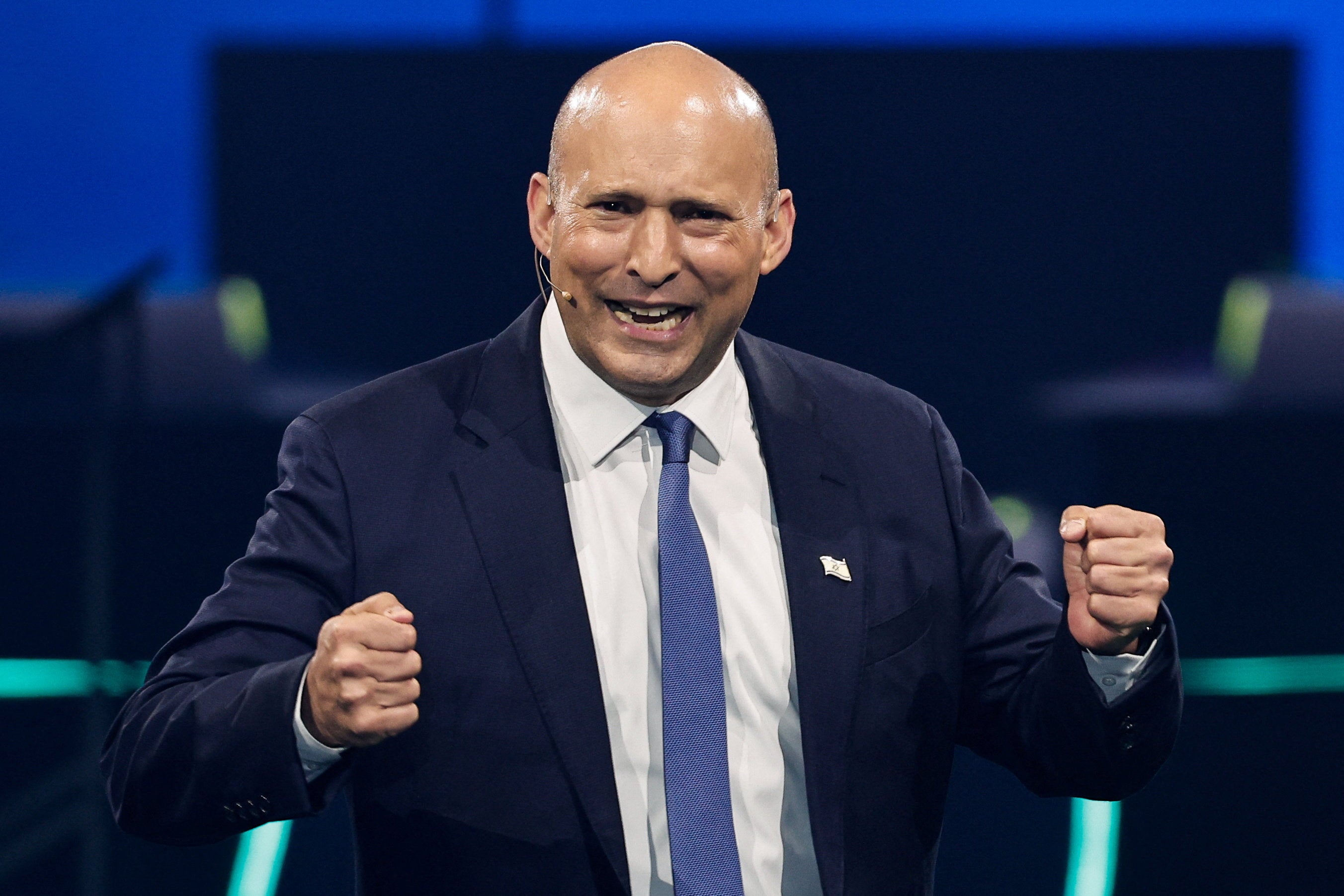
Who is running against him?
Mr Netanyahu’s main challenger is Naftali Bennett, a former aide who ousted Israel’s longest serving leader in a 2021 election and became prime minister himself.
Mr Bennett, a right-winger, has joined forces with centre-left opposition head Yair Lapid to form a new party, Together, which is now neck and neck with Mr Netanyahu’s Likud. Another contender gaining in the polls is former military chief and centrist cabinet minister Gadi Eisenkot.
They are all running on similar campaign platforms, seeking to mobilise swing voters disappointed by Mr Netanyahu, with messages of healing divisions and getting the country back on track after the trauma of 7 October and wars in Gaza, Lebanon and Iran, which have hurt Israel’s economy and international standing.