
Apparently there is such a thing as war apathy. Because for more than a month, investors have had it.
The geopolitically charged, highly speculative national security trade in rare earth elements has dropped anchor. Even though bombs still drop almost daily in the Middle East.
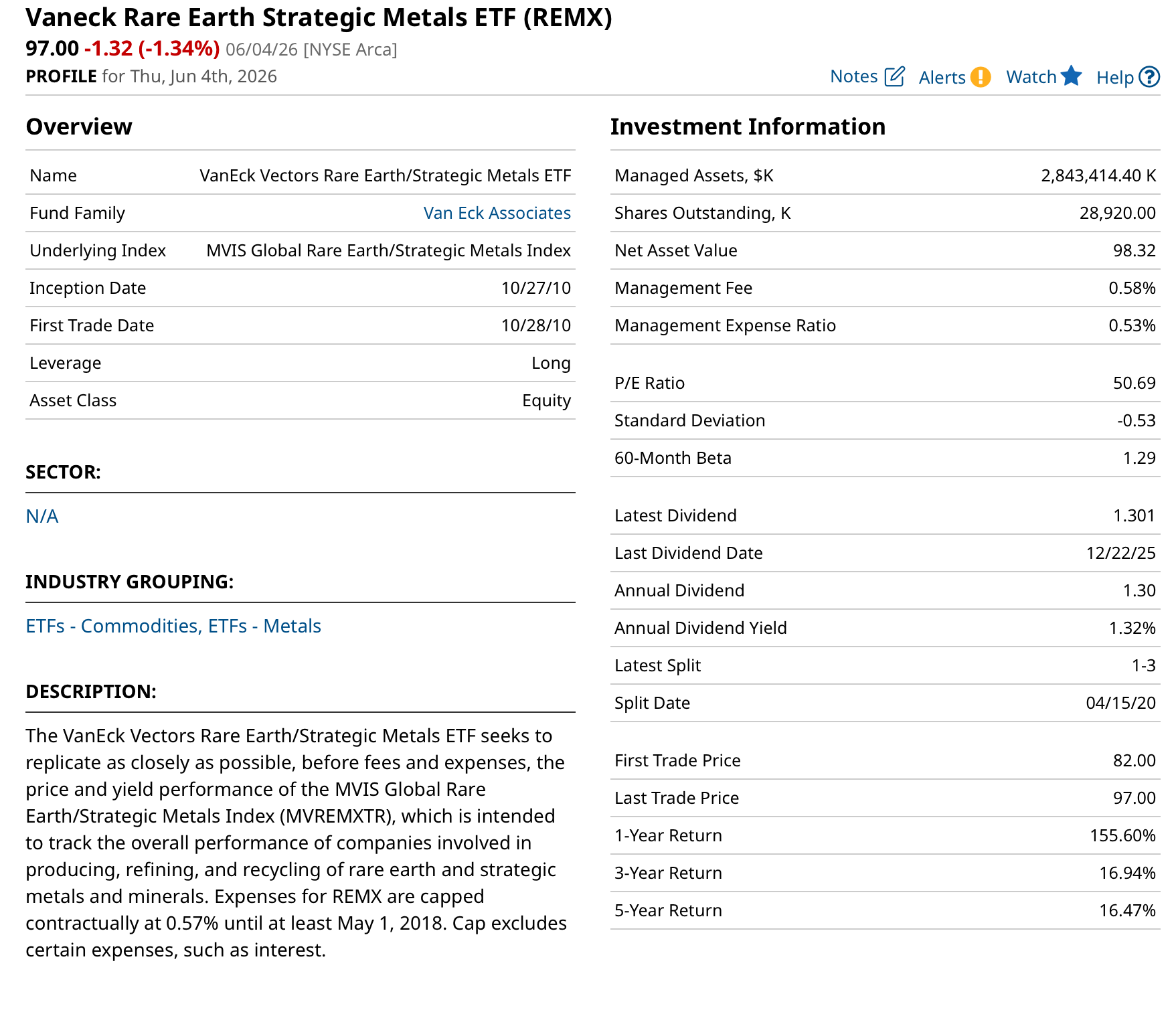
For the past year, the narrative surrounding the VanEck Rare Earth and Strategic Metals ETF (REMX) seemed airtight. Investors were told that as geopolitical fault lines hardened, these critical, non-replaceable minerals, which are essential for everything from EV batteries to fighter jet guidance systems, would become the ultimate weaponized asset class.
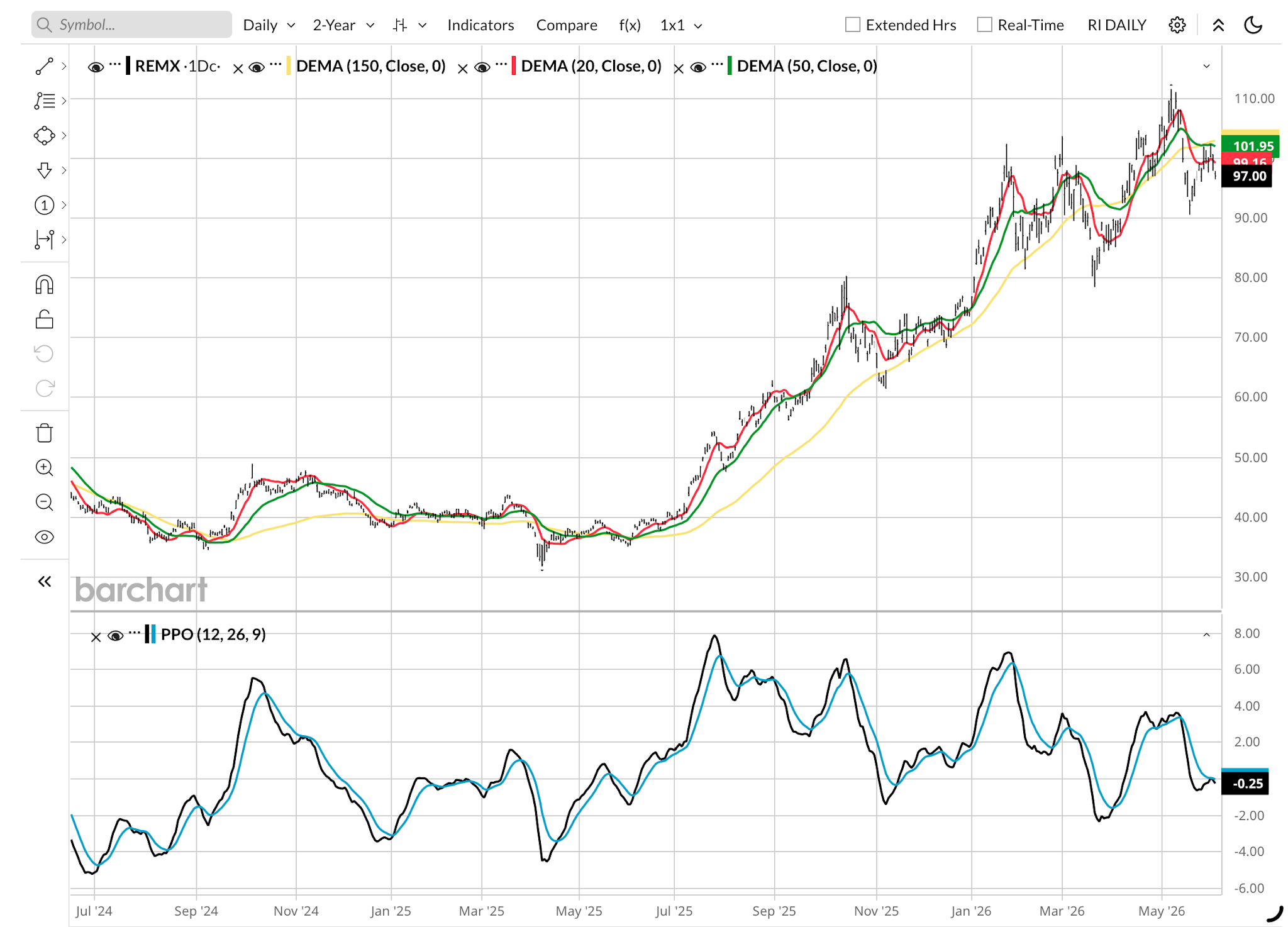
Following a massive, parabolic push that saw REMX squeeze up to a multi-month peak north of $110 a share, the floor has completely dropped out. The fund has rapidly shed more than 10% of its value in a matter of weeks, careening back into the $97 zone with intensifying downside momentum.
We see it in this daily chart of REMX. To me the most important figure is the recent failed attempt for the percentage price oscillator (PPO) momentum indicator at the bottom of the chart to rally. Recent price action signals falling demand versus supply here.
To the mainstream financial press, this abrupt unwinding is being diagnosed as a standard commodity cooling phase or a temporary inventory correction. But that surface-level analysis completely misses a profound, cold hard truth about modern market psychology.
The rapid disintegration of the rare earth trade is the ultimate confirmation that the stock market truly does not care about the Iran War. And may not until something really dramatic happens.
And of course, by then, most defensive measures will be too late. This is why I am a big proponent of proactive hedging throughout the market cycle. If nothing else, it emboldens me to trade more aggressively, knowing I have my “behind” covered.
On paper, a widening regional war involving Iran should be the absolute, undeniable launchpad for weaponized critical minerals. If supply chains are under threat and sovereign tensions are boiling over, strategic assets should be locked in a permanent, high-velocity bid.
Yet, the broader equity market is treating the conflict with complete and utter apathy. While headlines scream about escalating regional strikes and geopolitical instability, major stock averages continue to hover near multi-year highs, entirely unbothered.
Why? Because modern algorithms and institutional desks do not trade on abstract geopolitical noise or human tragedy, They trade strictly on real-time liquidity and immediate physical supply metrics. Right now, despite the intensifying headlines, the physical supply lines for rare earths and major commodities are still moving.
China still controls the overwhelming bottleneck of processing infrastructure, and they are continuing to export. The market has effectively calculated that unless a war actively puts a physical chokehold on current day corporate earnings, it is nothing more than background noise.
The market’s current apathy is setting a massive, dangerous trap. This numbness will persist, and Wall Street will continue to yawn at the geopolitics, until something vastly more dramatic happens to shatter the illusion. That catalyst will not be a diplomatic breakdown or a new legislative sanction. The only language the market truly understands is a severe, vertical spike in the price of crude oil (CLN26) driven by an impossible-to-ignore physical supply shortage.
If the conflict escalates to the point where critical maritime chokepoints are physically obstructed, or core energy infrastructure faces direct, structural disruption, global oil will violently gap higher. That is the exact moment the market’s psychological dam breaks. These are risks, not a destiny. However, the time to account for their possibility is now. While it is still relatively quiet.
But here is the ultimate, brutal twist for commodity bulls trying to time this trade: by the time an oil shock finally forces the market to care, we will likely already be tilting into a severe economic recession.
An energy-driven supply shock doesn’t just create inflation; it fundamentally breaks consumer demand. When gas and industrial operational costs skyrocket in a sticky, high-interest-rate environment, economic velocity hits a brick wall.
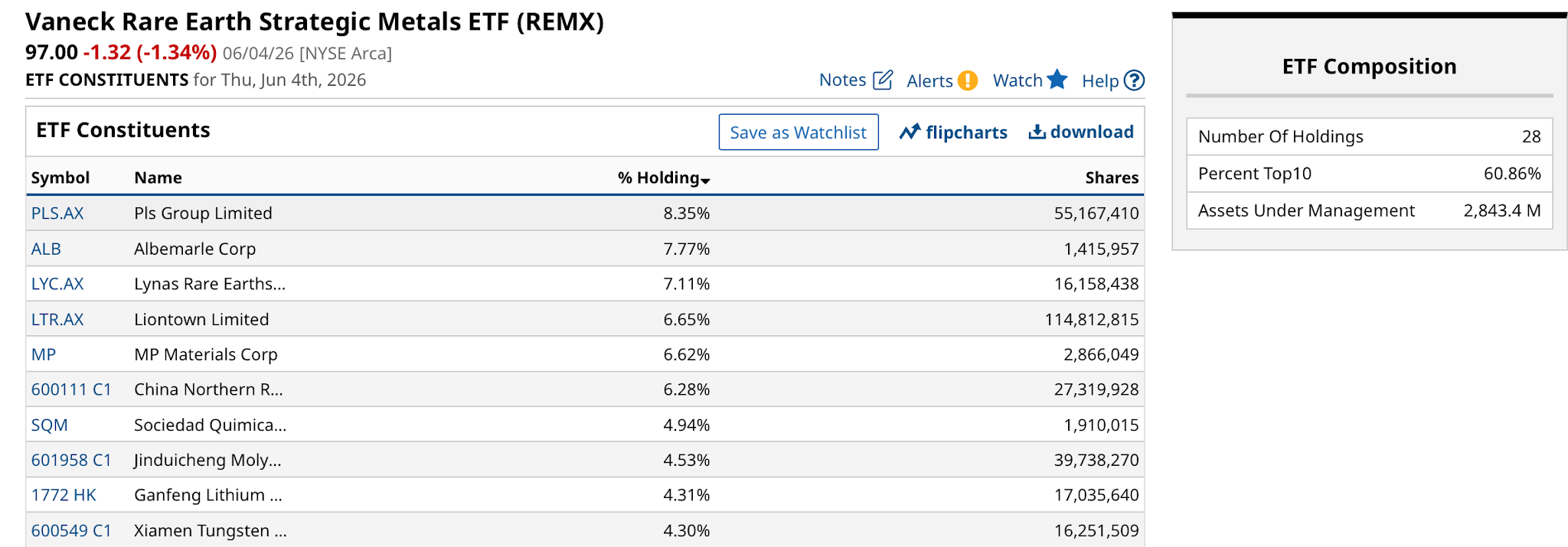
The path of least resistance for REMX remains lower as speculative air continues to escape the balloon. I’m keeping my capital hyper-liquid, and favoring principal protection above all else. I take “big shots with small amounts of money” by way of trading accounts that own stocks, ETFs and options. REMX is not on my radar at this time.
Rob Isbitts created the ROAR Score, based on his 40+ years of technical analysis experience. ROAR helps DIY investors manage risk and create their own portfolios. For Rob’s written research, check out ETFYourself.com.