Iran and the U.S. traded fresh strikes over the past hours in a new test of the ceasefire as talks remain stalled.
One person was killed in Kuwait after a barrage involving drones and missiles. Flights were suspended in the country after the airport was struck.
The U.S. military also said it shot down Iranian drones near the Strait of Hormuz and targeted Iran's Qeshm Island.
Officials involved in the negotiations to end the war continue giving contrasting statements about the current scenario.
A top Iranian official said on Tuesday that a resumption of the war seems "inevitable" as Washington "demands our total surrender, and the Iranian nation will never surrender."
"When surrender is not an option, war lies ahead. Therefore, we are prepared and have no issue with war," said Mohammad Jafar Asadi, deputy head of Iran's central military command, Khatam al-Anbiya, according to state TV.
The official went on to say that the country has yet to play all of its "trump cards." "There are many capabilities that, if necessary, we will use."
Elsewhere, Mehr News agency reported that officials are still reviewing the U.S.'s latest proposal to end the war and have not provided an answer.
"Based on previous experiences, Iran is seeking tangible and real benefits," a source told the outlet. "The United States is concerned about war; we are concerned about an agreement."
Another report noted that Iran is seeking economic relief from the U.S. without making major nuclear concessions.
Reuters cited three Iranian sources close to decision-makers to describe the situation in Tehran, noting that its leadership usually seeks to avoid making large compromises and keep negotiations alive but avoid making key commitments.
The outlet went on to note that while Iranian leadership behaves like it could maintain the current scenario indefinitely, seeking to exert pressure on the global economy by maintaining the blockade of the Strait of Hormuz, internal conditions are also deteriorating.
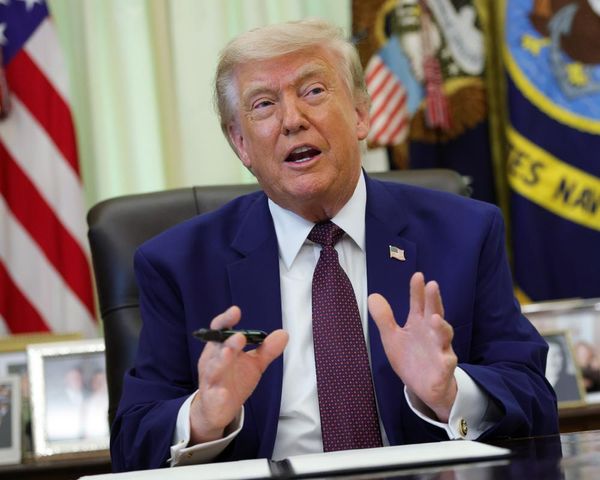
President Donald Trump, on his end, said he thinks it's "unlikely" the U.S.'s blockade of the Strait of Hormuz will be in place by Labor Day, in September. "I think that we'll have it — I think this will resolve itself fairly quickly," he said in an interview on the New York Post's Pod Force One podcast.