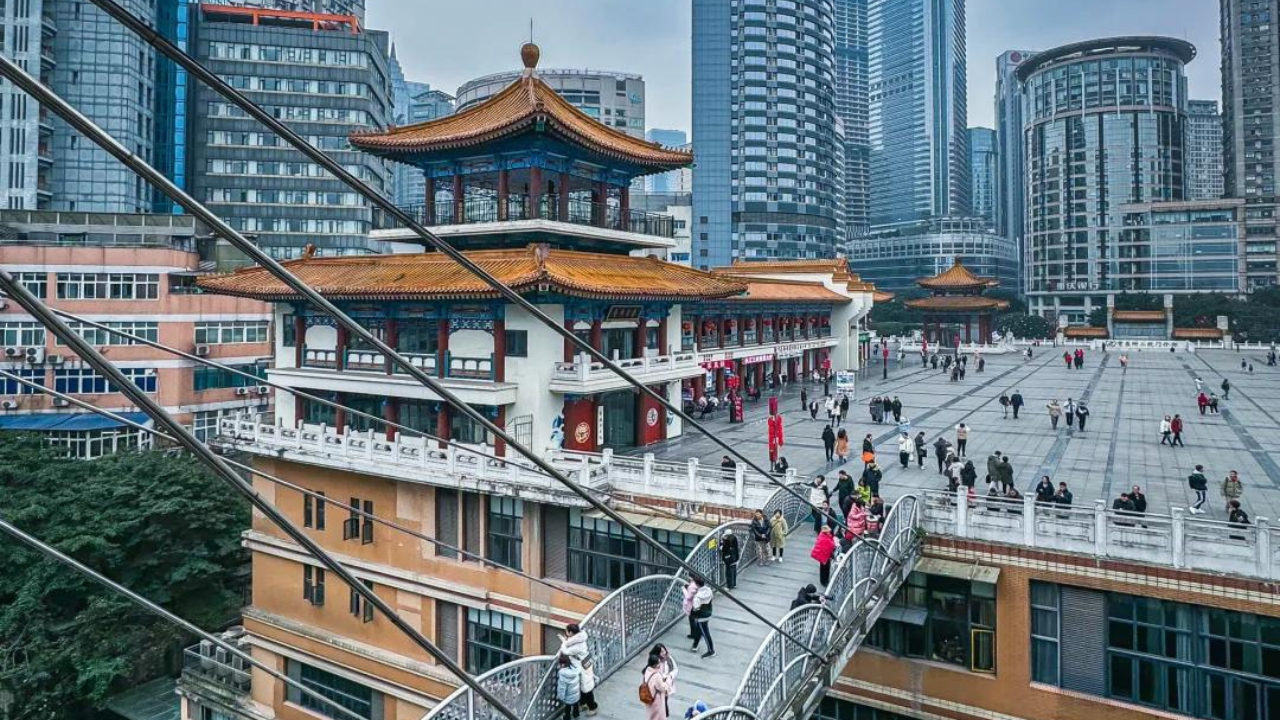
A visitor exits a shopping centre in Chongqing and steps onto what appears to be an ordinary street. Cars pass by. Pedestrians weave through the crowd. Restaurants and convenience stores line the pavement. Everything feels exactly as it should. Then comes the surprise. Leaning over a railing nearby reveals a dizzying drop to another road far below. The street that seemed to sit at ground level is actually perched dozens of metres above the city beneath it. For many first-time visitors, this moment of disorientation is their introduction to Chongqing, the sprawling Chinese metropolis that has earned an unusual nickname online: the '8D Magic City'.
Get breaking news anytime, anywhere. Download the TOI app now!
The geography behind China's '8D Magic City'
Videos of Chongqing have become a staple of social media. Some show trains disappearing into apartment blocks. Others capture labyrinths of elevated roads twisting between skyscrapers. A few feature bewildered tourists trying to work out whether they need to go up, down or across to reach a destination that appears tantalisingly close.
The confusion is understandable.
In most cities, people navigate using a relatively simple mental map. Streets intersect on a flat plane. Buildings rise from the same ground level. Directions are measured in two dimensions. Chongqing largely ignores those expectations.
Here, a building may have entrances on several different floors, each connecting to a different street. A pedestrian can leave a shopping centre and emerge on what appears to be the ground floor, while another person enters the same structure from a road many storeys below. Addresses make sense to locals. Visitors often need time to adjust.
The city's reputation as an "8D" landscape is less about technology than perception. The terrain creates an urban environment that can feel almost impossible to comprehend at first glance.