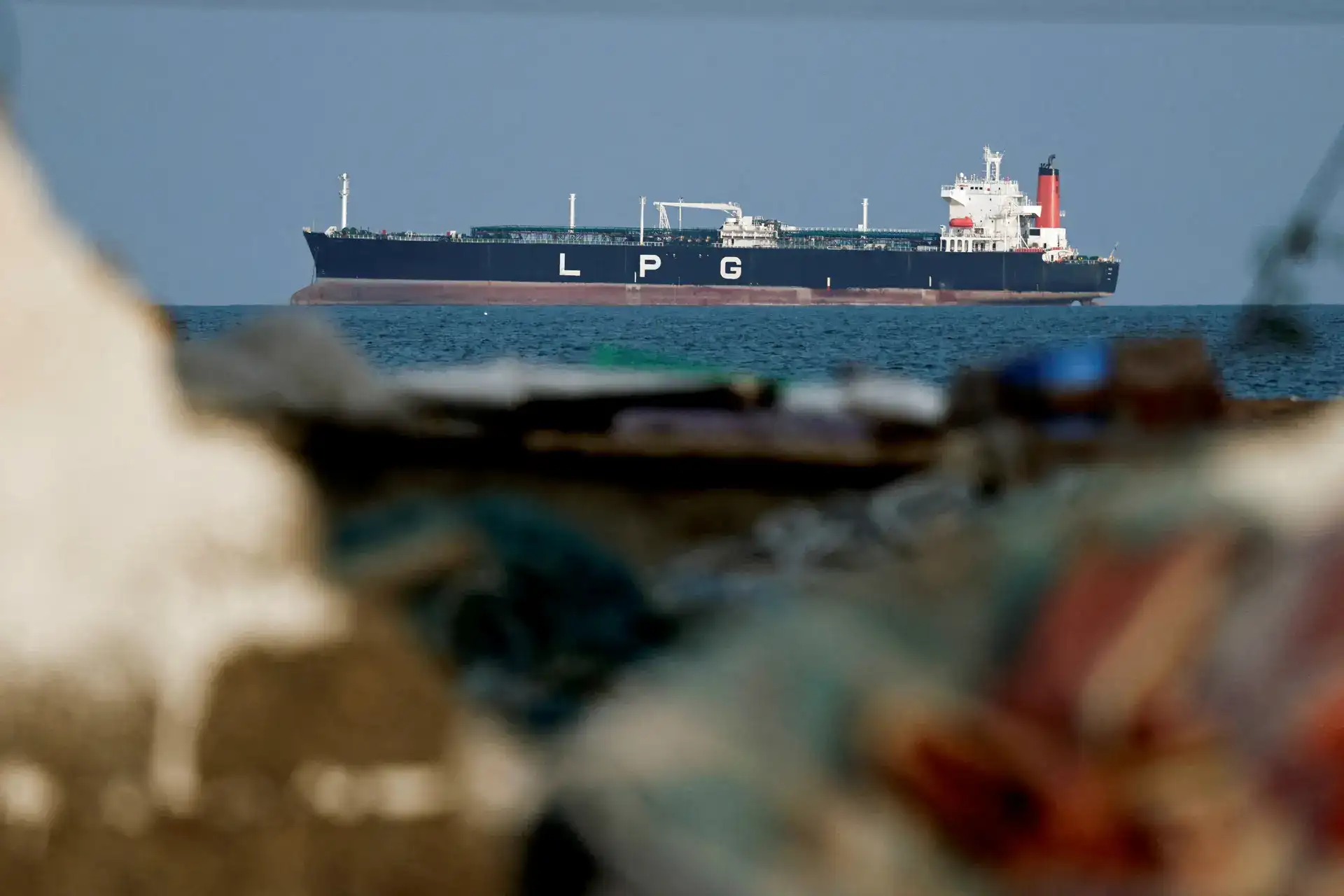
A liquefied natural gas (LNG) tanker chartered by India's Petronet LNG crossed the Strait of Hormuz on Monday, becoming one of the first visible signs of shipping resuming through the critical waterway after the United States and Iran reached a peace agreement aimed at reopening the route.
Ship-tracking data from Kpler and LSEG showed that the vessel, Disha, was heading east to exit the strait. A source familiar with the matter said the cargo is bound for Petronet's Dahej terminal in Gujarat.
Also read: Crude slips 4% as US, Iran reach peace deal to reopen Strait of Hormuz
The development comes days after Washington and Tehran announced a provisional agreement to halt hostilities and reopen the Strait of Hormuz, a vital chokepoint through which roughly a fifth of the world's oil and significant volumes of liquefied natural gas pass.
The tanker had loaded its cargo at Qatar's Ras Laffan export facility on March 1-2 and had remained west of the strait for more than three months amid heightened tensions in the region, according to ship-tracking data.
The vessel's movement is being closely watched by traders and shipowners as they assess whether commercial traffic can safely resume through the corridor after months of disruption triggered by US and Israeli strikes earlier this year.
The reopening of Hormuz could bring relief to energy importers such as India, which relies heavily on LNG imports from Qatar. Resumption of cargo flows through the route is also expected to ease supply concerns that had pushed up gas prices in Europe and Asia since March.
Markets reacted positively to the prospect of the waterway reopening. European natural gas prices fell as much as 5.8% in early Asian trading on Monday, while Brent crude dropped more than 4%.
However, uncertainty remains over how quickly shipping activity will normalise. Details of the US-Iran agreement are yet to be released, and analysts caution that implementation may face hurdles given Iran's strategic leverage over the narrow waterway.
Also read: Nukes, crude sanctions & frozen assets: Inside the 14-point US-Iran peace agreement
Shipowners are also grappling with challenges in monitoring traffic in the region, with some vessels switching off transponders or using spoofing techniques that make real-time tracking difficult.
The agreement between Washington and Tehran is expected to be formally signed later this week, though negotiations on broader issues including Iran's nuclear programme and sanctions relief are set to continue over the coming weeks.
(With inputs from agencies)