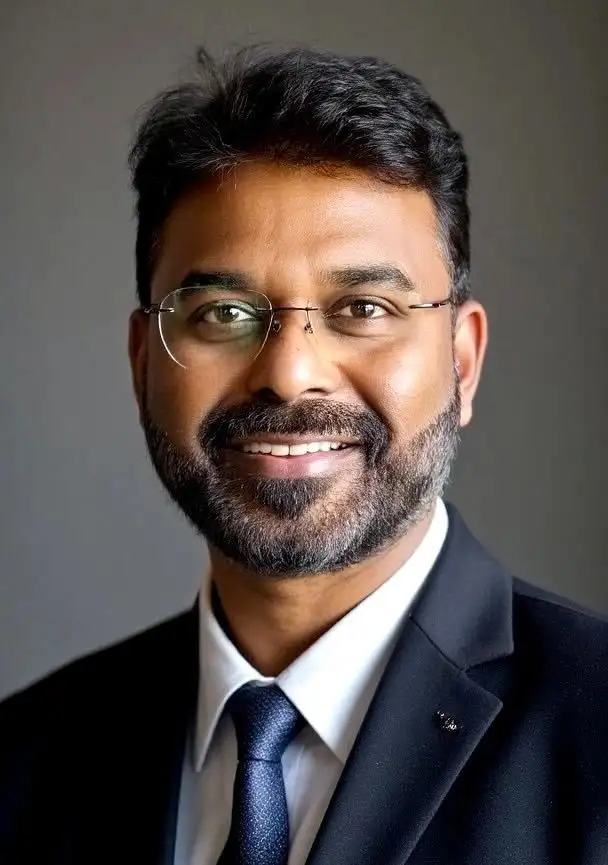
India’s next phase of economic growth is being shaped less by headline-grabbing startups and more by disciplined, founder-led MSMEs building steadily across sectors and geographies, says Harish Arnezath, Regional Director at Stanford Seed South Asia.
Stanford Seed is a global initiative by the Stanford Graduate School of Business, which aims to end poverty by collaborating with entrepreneurs in emerging markets. Through its Stanford Seed Transformation Program, it offers founders and CEOs of established companies in Africa, South Asia, and Indonesia a 10-month leadership programme to scale their businesses. In an interview with The Economic Times Digital, Arnezath explains why leadership transitions, governance clarity, and peer networks are emerging as critical levers of scale. Edited excerpts:
ET: Having worked closely with 800+ growth-stage companies across India and Africa, what recurring leadership patterns or decision bottlenecks do you see most often limiting scale in emerging markets?
Harish Arnezath (HA): Over the past decade, we have worked closely with more than 1,500 SMEs across South Asia, Africa and Indonesia. One belief has only grown stronger through these interactions: SMEs are not a side story in economic development; they are the backbone of it. These businesses create jobs, strengthen supply chains and steadily transform communities.
As companies reach the scaling stage, founders often begin to sense the forces holding them back. More often than not, the constraint is decision centralisation, with too many choices still flowing through one person. Being the “Chief Everything Officer” works in the early years when instinct and speed matter most. As the business grows, however, a gap appears between what the founder sees and what the organisation can execute.
The difficult moment lies in crossing key lines of delegation, letting go of sales leadership, handing over financial control or allowing others to make calls the founder once owned. Though uncomfortable, these choices are essential for growth beyond the founder’s bandwidth.
ET: In your experience at Stanford Seed South Asia, what does it truly take for a founder to transition from being an operator to becoming a strategic, institution-building leader?
HA: In the early years, founders succeed because they are deeply connected to the problem they are solving and are often the best problem-solvers present. They understand the customer, the pain points and the opportunity, and move the organisation forward through quick decisions and determination.
As the business scales, the role shifts from problem solver to architect. The founder must build a leadership team, clarify the “why” and decision rights, and create focus for consistent execution. This means translating instinct into systems and teams that can operate independently. The transition becomes easier when founders maintain a learner’s mindset, share dilemmas, seek feedback and remain open to different approaches.
ET: Why does operational discipline and governance clarity often matter more than access to capital when building a sustainable and scalable enterprise?
HA : Access to capital is important, but capital amplifies what already exists. If strategy is unclear or execution systems are weak, capital alone cannot solve that.
What investors ultimately look for is clarity of business model, financial discipline, and leadership capability. Governance in this sense is not bureaucracy. It simply means clarity on how decisions are made, how they are challenged, who owns what, and how accountability works within the organisation.
That same clarity helps founders build a stronger second line of leadership and deploy capital more effectively for sustained outcomes. In many cases growth slows not because capital is unavailable, but because execution capacity cannot keep pace with opportunity. When operational discipline strengthens, capital tends to follow and is far better utilised.
ET: We are seeing the rise of disciplined MSMEs in Tier-2 and sector-focused markets. What differentiates these companies from hyper-growth, valuation-driven enterprises?
HA: The most interesting companies in India right now are not in the headlines. They are in Tier-2 cities, running disciplined businesses, and quietly compounding value year after year.
Instead of chasing short-term growth optics, these MSMEs focus on profitability and long-term relationships with customers, employees, and partners. Their growth is customer-driven rather than valuation-driven. They stay closely connected to their markets and supply chains and carry a deep sense of responsibility toward the livelihoods their businesses support.
Supportive policy, incentives, and funding programs are gradually strengthening these ecosystems, encouraging more founders to build closer to markets they understand best. In many ways, these firms represent the real strength of India's economic engine.
ET: How do structured peer networks like the Stanford Seed Transformation Network drive long-term enterprise impact beyond traditional executive education, and what key capabilities do participants develop through the Seed Transformation Program?
HA: Entrepreneurship can often be a lonely journey, with founders carrying the weight of difficult decisions, employee livelihoods, market uncertainty and growth pressures largely on their own. What helps is having a tribe of entrepreneurs navigating similar challenges. Conversations become honest and practical, with people sharing what has worked, what has not and what they are still figuring out.
The Stanford Seed Transformation Network is such a community. 42% of its members actively do business together, and founders regularly seek and offer help across the network.
A powerful outcome of the program is leadership mindset transformation through structured peer learning labs. In many cases, members build deep trust and become the 2 AM call buddies well beyond the program.
The program offers such a community, where many members actively collaborate and support each other. A key outcome of the program is leadership mindset transformation through structured peer learning. It works with the entire senior management team, helping organisations align on strategy, strengthen financial discipline and build clear decision frameworks and a practical 3–5 year business plan, supported by dedicated business advisors.
ET: From a global perspective across Africa and South Asia, what ecosystem elements are most critical to scaling entrepreneurship in a way that drives both economic growth and social transformation?
HA: Strong ecosystems emerge when several elements work together to support founders through different stages of their journey. Access to patient capital remains important, but capital alone is rarely the main constraint. Equally critical, and often overlooked, is capable mid-level management talent. A founder may have a clear strategy, but without strong execution from the layer below, growth slows.
Learning networks, investors, advisors and institutions must interact so entrepreneurs are not navigating key decisions alone. Access to practical learning and experienced practitioners helps founders implement change with confidence. Exposure to peers scaling ambitious enterprises also expands vision. Encouragingly, India’s digital infrastructure and growing entrepreneurial base are creating new possibilities for SME-led development.