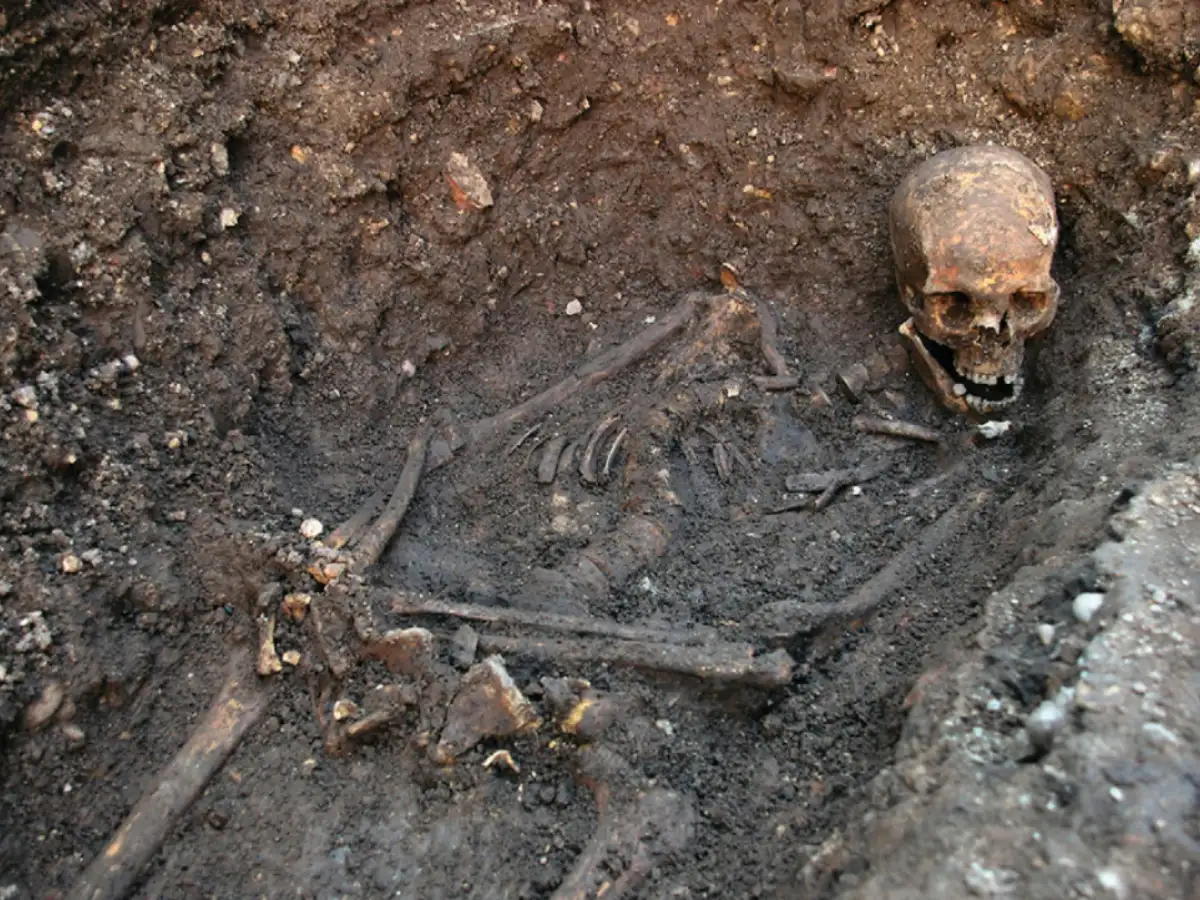
Few archaeological discoveries have captured public attention quite like the skeleton uncovered beneath a Leicester city-center parking lot in 2012. Archaeologists from the University of Leicester began work in August 2012 with a specific objective: locating the lost Grey Friars church, where historical records suggested Richard III had been buried after his death at the Battle of Bosworth in 1485. Beneath layers of modern asphalt, they found a medieval skeleton buried in the choir area of the former church. The location alone was intriguing, but what truly caught researchers’ attention were the physical characteristics of the remains: a curved spine, a male skeleton of the right age, and injuries that appeared consistent with a violent death in battle.
Within months, the excavation would grow from an archaeological discovery into a scientific effort involving historians, geneticists, forensic specialists, and archaeologists. Their goal was to answer a question that had lingered for centuries: had they found the remains of King Richard III, the last Plantagenet king of England?