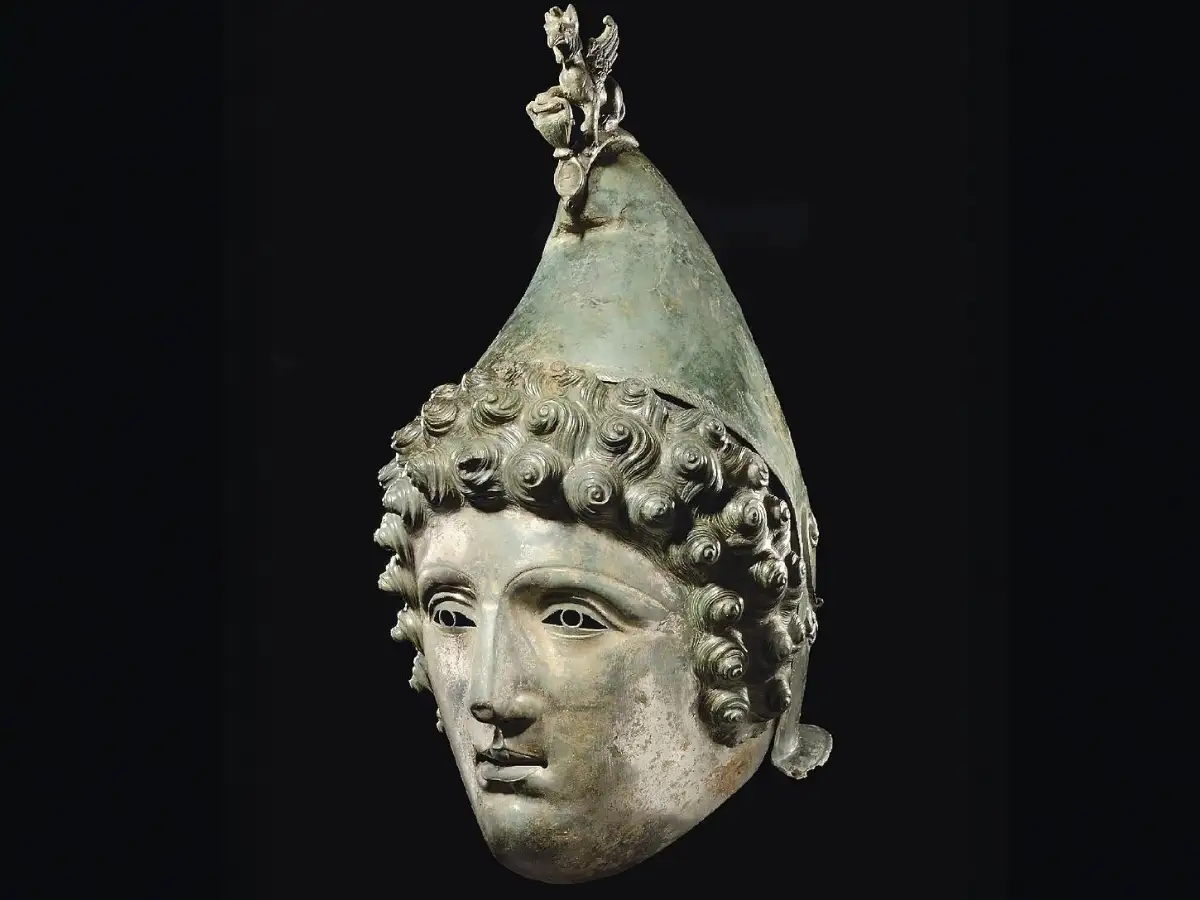
Picture this: it’s 2010, and someone is walking around a field in Cumbria, England with a metal detector. What they find in the ground looks like a pile of bent, dirty bronze scrap. Nothing out of the ordinary, right? That's exactly what made this one of the most surprising archaeological discoveries in recent years.
The crumpled metal fragments were the Crosby Garrett Helmet, a Roman cavalry parade helmet dating back almost 2,000 years. When the experts cleaned it up and put it back together, it looked like something out of a Game of Thrones prop room: a gleaming bronze face mask, an elaborate griffin perched on top, and craftsmanship that screamed wealth and power.
But here’s where the story gets complicated, in the best and worst possible ways.
This wasn't just war gear
Most of us think of Roman soldiers in simple metal helmets, marching in formation. The Crosby Garrett Helmet upends that image. This was not designed to protect someone in battle. It's meant to be looked at.
Historians refer to it as a parade helmet, the type worn during ceremonies and public spectacles. These were the occasions when Roman cavalry units would strut their stuff, riding in formation, performing maneuvers, basically telling everyone watching: we are the best of the best. Think less football helmet and more Super Bowl halftime gear.