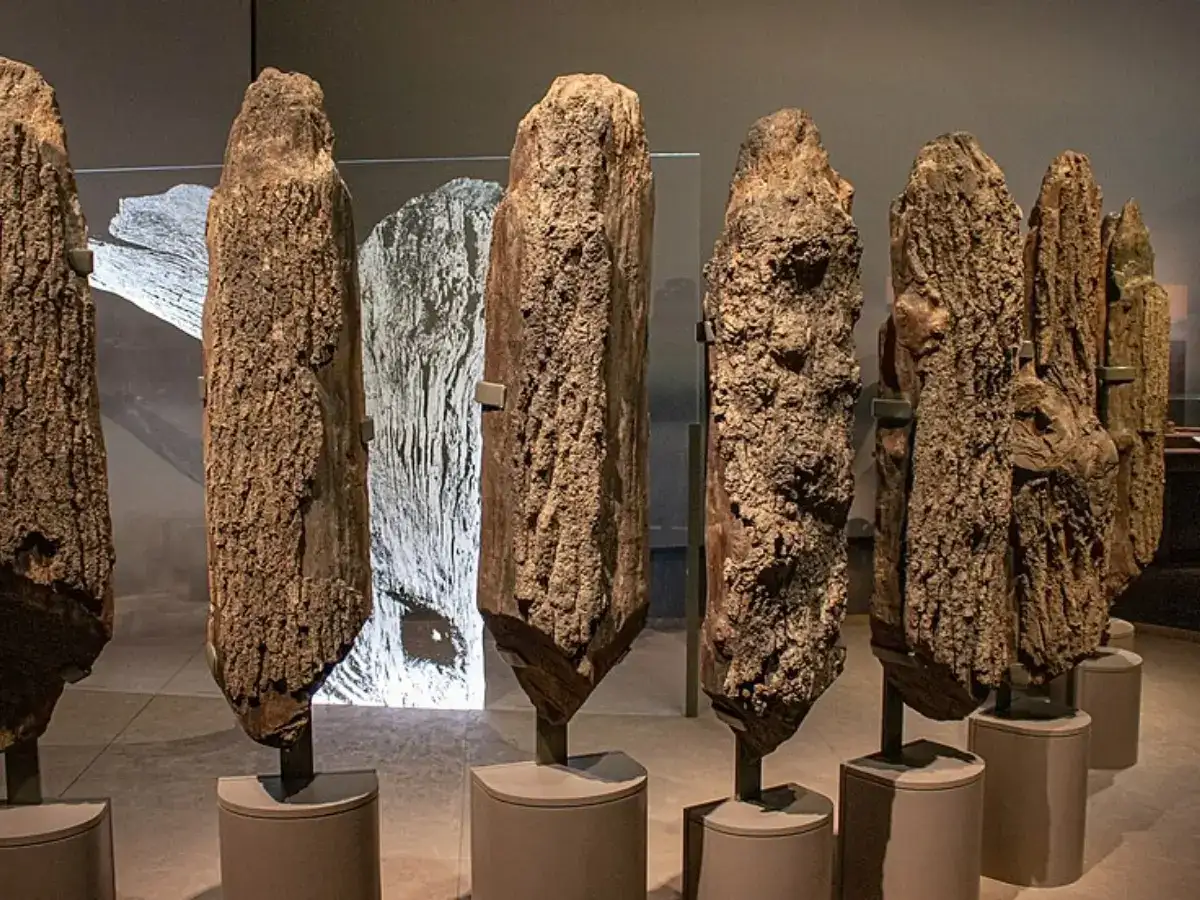
In 1998, workers on the Norfolk coast in eastern England observed something peculiar emerging through the mud during the low tide. A ring of ancient timber posts had begun to emerge from the coast. From the first observation, it seemed that little, ancient timbers eroded out of the land, but the importance of the site was not immediately apparent.
According to the findings of the University of Oxford, the discovery of Seahenge rapidly changed discussions of Bronze Age ritual landscapes in Britain. The timber construction demonstrated that there might be a much deeper connection between prehistoric ritual landscape features and the environment than had previously been suspected. That is to say, ritual constructions could have been located in working landscapes and near coastlines.
A timber circle buried under the coastline
The discovery of Seahenge occurred in the area known as Holme-next-the-Sea. The site comprised a ring of oak timbers surrounding a single upturned oak trunk. The site has since been dated to approximately 2049 BC, which corresponds to the Early Bronze Age period. It attracted immediate interest due to the relatively rare preservation of timber sites.
The mud and moist environment ensured the preservation of the wood for centuries until changes in tides caused its exposure. As per the findings of archaeological research conducted by the University of Oxford, there is increasing interest in Bronze Age monuments in the context of landscapes, which is a departure from earlier views of them as isolated sacred sites. In this case, the importance of Seahenge lies in its contribution to this trend. There was increased curiosity about the connection between rituals, farming, movements, and life.
Reasons behind archaeologists' interest in ritual landscapes
“Ritual landscapes” are places where rituals were interwoven with everyday lives. Today’s humans divide their religious activities from daily chores, but that is not what the Bronze Age community may have done. Research conducted by the University of Oxford suggests that agricultural areas, burial grounds, gathering areas, and monuments were co-located with each other in the environment of Bronze Age Britain.
Seahenge played an instrumental role in confirming this idea through its location near a coastal area. Rather than building holy buildings at distant sites, Bronze Age societies might have incorporated significance directly into the landscapes they inhabited. Scientists have observed regarding prehistoric Britain that the conflation of ritual and settlement is becoming more significant in Bronze Age archaeology.