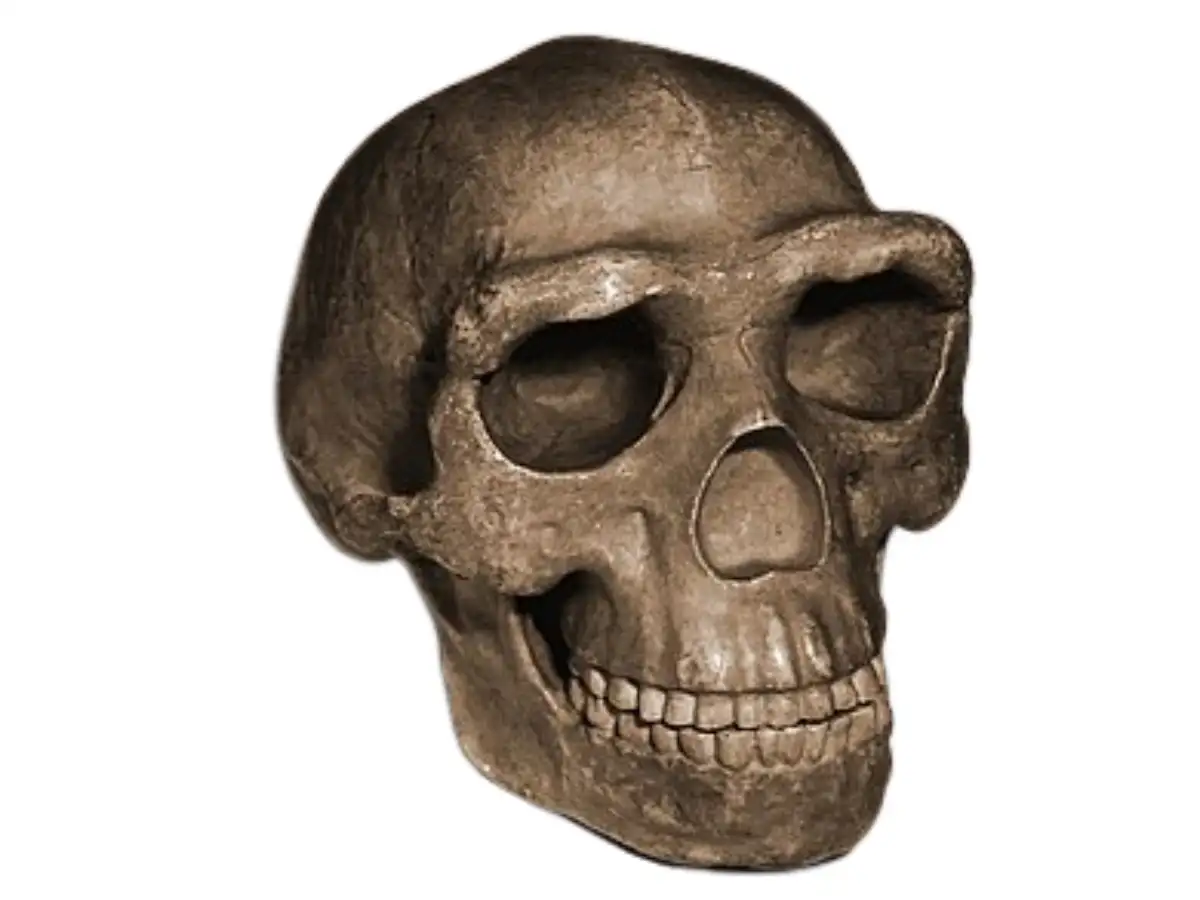
In the winter of 1929, a young Chinese archaeologist made a discovery that reshaped the study of human evolution. Working inside a cold cave at Zhoukoudian, about 50 kilometers southwest of Beijing, 25-year-old Pei Wenzhong uncovered an ancient human skullcap buried beneath layers of sediment. The fossil later became known as Peking Man, one of the most famous prehistoric human discoveries ever made.
Nearly a century later, the find remains a cornerstone of research into early human history and continues to influence debates about how our ancestors lived, evolved, and spread across the world, reports Times of India.
A discovery that put Asia on the human evolution map
When Pei Wenzhong unearthed the skullcap in December 1929, scientists were still struggling to piece together humanity's evolutionary story. At the time, much of the fossil evidence for early humans had come from Europe and Africa. Very little was known about ancient human populations in mainland Asia.
The Zhoukoudian discovery changed that. The fossil was later identified as belonging to Homo erectus, an extinct human ancestor that lived hundreds of thousands of years before modern humans.
According to the Smithsonian Institution's Human Origins Program, the discovery provided crucial fossil evidence showing that early humans had occupied East Asia far earlier than many researchers had believed. The find quickly attracted international attention and pushed Asia into the center of scientific discussions about human origins.
ALSO READ: Sanchita Ugale death reason
Why Peking Man was such a big deal
In the early 20th century, scientists had only a limited number of ancient human fossils to study and Peking Man helped fill an important gap.
Researchers examining the Zhoukoudian fossils noted that the remains displayed characteristics that appeared intermediate between earlier ape-like ancestors and modern humans. This made the discovery especially important in understanding the evolutionary journey of the human species.
The fossils became some of the most recognizable examples of Homo erectus ever found and provided valuable clues about how ancient humans evolved over time.
As more skull fragments and skeletal remains were uncovered at the site, Zhoukoudian emerged as one of the world's most significant prehistoric locations.
What did Peking Man look like?
The fossils revealed a human ancestor that looked very different from people today. Homo erectus had a lower, thicker skull, prominent brow ridges, and a smaller brain than modern humans. However, they also walked upright and possessed many physical traits associated with later human species.
Over the years, scientists used the Zhoukoudian fossils as a key reference for understanding the anatomy of Asian Homo erectus populations.
Studies of arm bones, skull fragments, teeth, and other remains helped researchers build a clearer picture of how these ancient humans lived and adapted to their environment. Even today, the fossils continue to serve as a benchmark for comparing newly discovered human ancestors.
Solving the mystery of when Peking Man lived
For decades, one of the biggest questions surrounding Peking Man was age. Early estimates varied widely, leaving uncertainty about when Homo erectus occupied northern China.
Advances in dating technology eventually provided clearer answers. Scientists now estimate that the lower layers of Zhoukoudian Locality 1 date to between approximately 780,000 and 400,000 years ago.
This timeline has helped researchers better understand the migration patterns of early humans and how Homo erectus spread across different parts of Asia. The dates also show that ancient humans were able to survive in northern environments much earlier than previously thought.
Did Peking Man use fire?
One of the most debated questions surrounding the Zhoukoudian site involves fire. Excavations uncovered evidence that some researchers interpreted as signs of controlled fire use, including burned materials and ash deposits.
If confirmed, this would suggest that Homo erectus had learned to manage fire hundreds of thousands of years ago—an important milestone in human evolution. However, scientists continue to debate whether the evidence represents intentional fire use by humans or natural processes.
While opinions differ, the discussion has made Zhoukoudian one of the most studied archaeological sites in the world.
More discoveries followed at Zhoukoudian
The importance of Zhoukoudian did not end with Peking Man. Further excavations in the area uncovered fossils from much later human populations.
One of the most significant discoveries came from Tianyuan Cave, where researchers found the remains of an early modern human dating back roughly 40,000 years.
The find showed that different human groups occupied the broader Zhoukoudian region across vast stretches of time. This makes the area a rare window into multiple chapters of human history.
Why Peking Man still matters today
Almost 100 years after its discovery, Peking Man remains one of the most influential fossils ever found.
The skullcap uncovered by Pei Wenzhong helped establish Asia as an important region in the story of human evolution. It provided evidence that Homo erectus thrived in East Asia for hundreds of thousands of years and offered researchers valuable insights into ancient anatomy, migration, and behavior.
Today, scientists continue to study the Zhoukoudian fossils using modern techniques, uncovering new details about our distant ancestors.
What began as a single skullcap emerging from a cave floor in 1929 has become one of the defining discoveries in the quest to understand where humans came from—and how we became who we are today.