The groundbreaking discovery, which would ultimately revolutionize the historians' perspective on ancient China, did not occur in the course of digging through an imperial burial ground or an iconic landmark. Rather, it occurred in the mud.
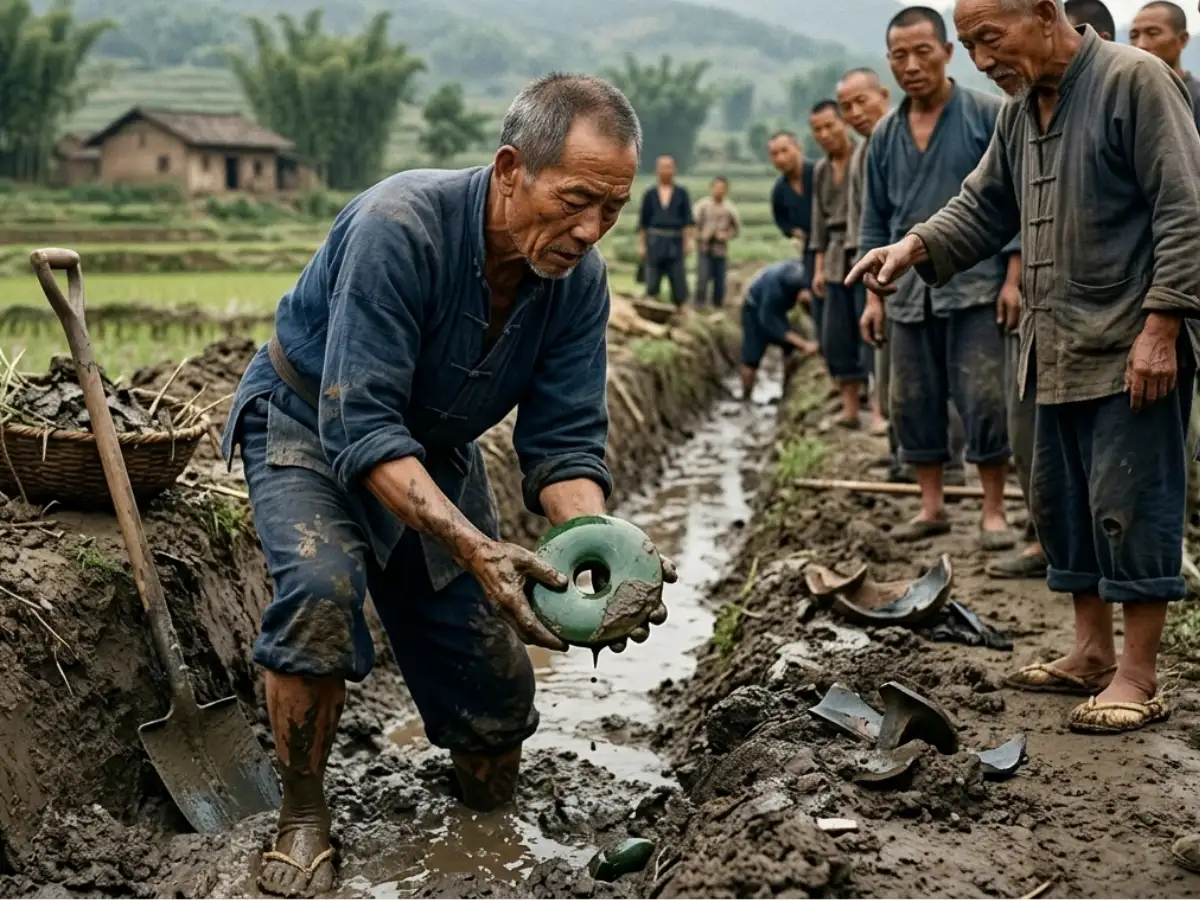
In 1929, a farmer excavating a ditch for irrigation purposes in Sichuan Province unearthed jade items, buried in the earth. While such items appeared interesting enough to those who found them at that time, no one could have imagined how these pieces were going to lead archaeologists to one of the most astounding archaeological discoveries in the region: Sanxingdui.
The discovery grew from an event to an epiphany about the sophistication of ancient Chinese civilization.
The jade hidden beneath the ditch
According to Britannica, the first artifact discovered at the site of Sanxingdui appeared during the process of clearing an irrigation ditch in Sichuan in 1929. As such discoveries go, this did not lead to a sudden archaeological awakening in the place. The artifacts had been determined to be ancient, but their significance would only become apparent many years later.
This is typically how these things happen. The first piece is uncovered, isolated from the rest of the mystery below the ground. Years later, archeologists would realize they had uncovered just one small part of something much greater.
Researchers continued coming back to the place over time. They began uncovering artifacts that indicated a large Bronze Age settlement inhabited by the Shu civilization. As described by UNESCO, this ancient civilization established a significant urban and ritual complex in the Sichuan Basin.
The discovery that shocked archaeologists
It wasn't until many years after that that this real turning point occurred. In 1986, construction workers unearthed two pits that contained amazing ritual offerings, such as bronze masks, jade, sculptures, and other ceremonial objects. As per Britannica, these findings made Sanxingdui one of the greatest archaeological sites in the history of China.
What was so shocking about these objects wasn't their age, but rather their appearance, which was different from many other artifacts typical of early Chinese Bronze Age civilization.
The discovery of massive bronze masks with large eyes, ritual objects, and highly advanced techniques indicated that there existed an advanced civilization that had its distinct identity and rituals.
As per The Metropolitan Museum of Art, these findings showed a high degree of artistic and technological achievement of the Shu culture in Sichuan.
Sanxingdui became world-famous overnight since it challenged pre-existing theories on the formation of early Chinese civilization.
Why Sanxingdui changed history
Indeed, for decades, histories of ancient China have been predicated on the existence of a central civilization core concentrated around the Yellow River Valley.
The basis of such claims cannot be dismissed entirely. According to UNESCO, a large part of early written records and excavated sites in the Central Plains area led researchers to conclude that this region was overwhelmingly the core of early Chinese civilization.
However, the findings at Sanxingdui challenged long-held assumptions about such a neat model.
This archeological site brought to light the fact that there had been other civilizations of great importance operating beyond the core area. The Sanxingdui site implied that ancient China could be characterized by a network of multiple regional civilizations that had existed in interaction with each other.
As Nature reports, the discoveries at Sanxingdui played a role in bringing a new understanding to the debate surrounding the diversity and connectivity of Bronze Age civilizations.
It was not that the former narrative was incorrect; however, its incomplete nature was illuminated by the findings at Sanxingdui.
More than masks and bronzes
This significance is not limited to the impressive artifacts found.
As per Britannica and UNESCO, researchers have also found signs of a city settlement, walls made of compacted earth, workshops, and religious places that prove that Sanxingdui was a genuine political and religious hub rather than just a repository of valuable objects.
These findings were essential in defining Sanxingdui’s significance. Although the impressive bronzes fascinated people, the other archaeological artifacts proved that this site was a significant political and cultural centre of its period.
The findings kept capturing worldwide attention even in recent times. Sources like BBC News and Smithsonian Magazine have reported fresh excavations leading to the discovery of new masks, bronzes, and religious objects in Sanxingdui.
The accident that still defines the story
However, even after the incredible pits, gargantuan masks, and global attention, there is one aspect of the Sanxingdui story that remains remarkably mundane. It was a farmer who was digging out mud from an irrigation canal that uncovered jade hidden deep underground.
This seemingly insignificant event marked the first step in cracking open the secrets of a long-forgotten Bronze Age world unknown to historians.
And today, almost a century later, Sanxingdui continues to serve as a testament to the fact that sometimes the most incredible historical discoveries can come out of the most unassuming circumstances.