Key Takeaways
- The shift to autonomy: Anthropic’s new Claude Fable 5 marks a massive industry transition from conversational chatbots to autonomous "agents."
- Long-horizon tasks: Unlike ChatGPT, which requires step-by-step prompting, Fable 5 can run complex multi-stage projects independently over several days.
- The tech race amplifies: Tech giants are quietly moving away from simple chat interfaces, signaling a major shift in how consumers will interact with AI.
Millions of people use AI everyday with a certain rhythm. They type a prompt, gen an answer, maybe refine it a little, ask another and so on. It's clear that even with a free tier of ChatGPT, many have become dependent on AI for answers, summarizing research and organizing their thoughts.
And, for the past three years, that interaction has defined the AI era. ChatGPT, Gemini, Claude and Copilot may have different strengths, but they've all revolved around the concept of "chatbot."
That's why Anthropic's newly announced Claude Fable 5 caught my attention. After trying it, I can honestly say the future looks like chatbots aren't the main character anymore.
And that's when it hit me: the chatbot era may already be ending.
The biggest AI shift is autonomy
When people talk about AI progress, they usually focus on intelligence. I've personally tested models for their ability to reason, code and write — and how quickly they do it.
But increasingly, I've noticed with each new launch, the biggest breakthroughs aren't about intelligence anymore, but more about autonomy.
According to Anthropic, Claude Fable 5 is designed for what it calls "long-horizon" work. Rather than answering a single prompt, it can plan across multiple stages, monitor its own progress, adapt when problems arise and continue working toward a goal with minimal supervision.
In other words, the goal is no longer helping you do the work,, but to do the work for you. That's why the industry's biggest AI companies are no longer racing to build chatbots but racing to build the world's most capable digital worker. From what I've seen Claude Fable 5 is the closest yet.
The chat window is becoming a control panel
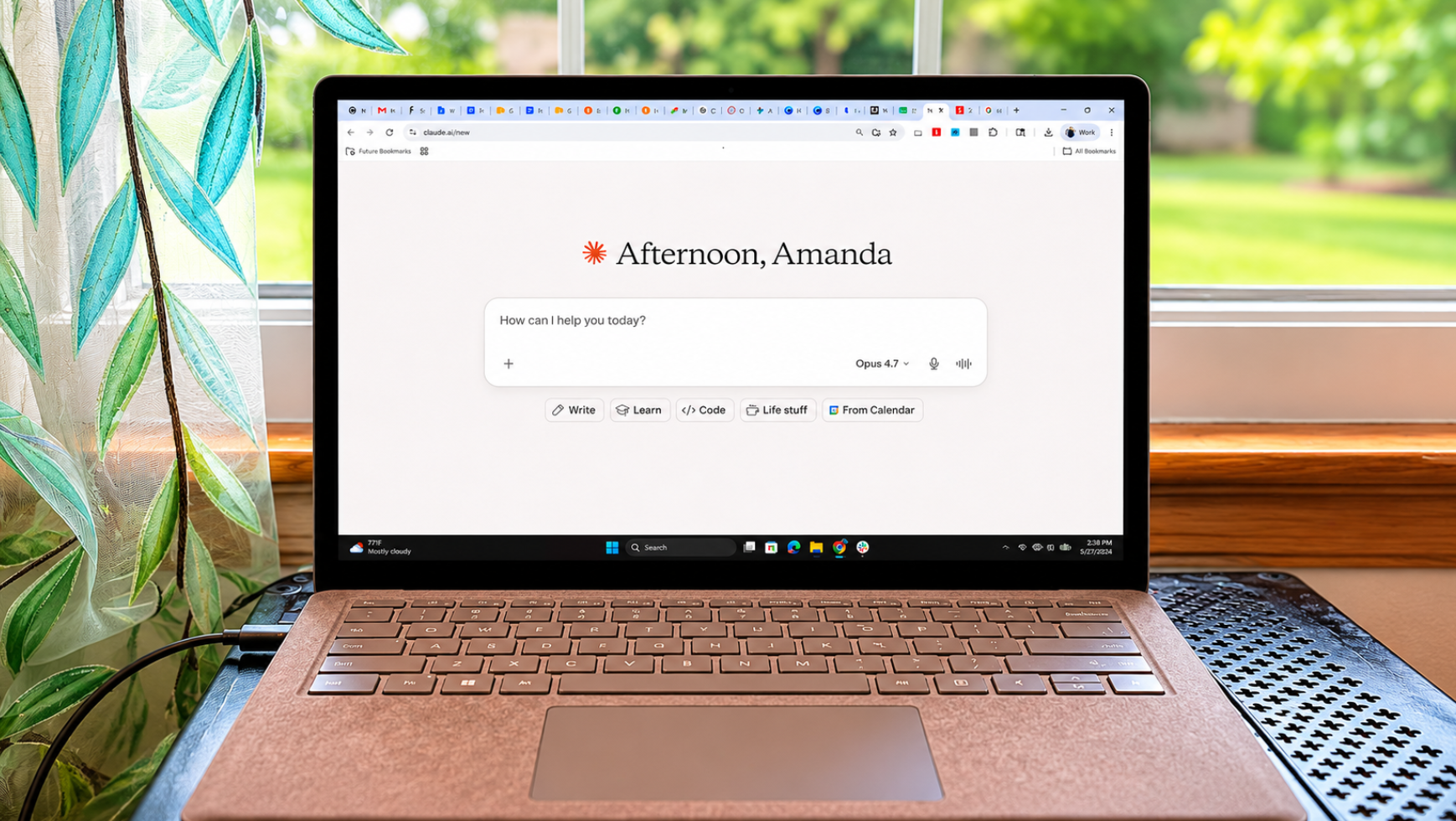
The easiest way to understand this shift is to think about how we use software. The simple way to wrap your head around this new way of using AI is think about how you open Spotify or Google Maps for a specific reason.
The interface is simply a way to access a larger system. Now, AI companies increasingly seem to view chat in the same way. The chat window is essentially the control panel where users are not asking AI how to do something, but increasingly asking AI to actually do it.
Need a vacation itinerary? The AI gathers flights, hotels and recommendations and books it all.
Need a presentation? The AI builds the first draft and can even add the meeting to your calendar. Need information spread across dozens of documents? The AI reviews everything and surfaces what matters then emails it out to your coworkers. And even when we need code written or tested, the AI handles the entire process including building the app.
What this means for ordinary users
This really isn't just about Anthropic, although Claude Fable 5 seems to be leading the charge at the moment.
But OpenAI is increasingly focused on agents that can complete tasks rather than simply answer questions and Google is building systems that can navigate websites and take actions on a user's behalf.
The difference here is chatbots are reactive, agents are proactive. While one waits for instructions, the other pursues objectives. But right now, most people aren't migrating enterprise codebases or running autonomous software projects. However, that underlying technology will eventually reshape everyday digital work.
Imagine handing off repetitive administrative tasks and coming back to a finished project. Or, assigning ongoing research, price tracking or competitive monitoring and receiving a fully sourced report without ever touching a search box. That's the future the major AI companies are building toward.
So should you cancel ChatGPT?
I'm sticking with it for now. ChatGPT remains one of the most useful AI tools available, and for most tasks, a traditional chat interface is still the easiest way to work with AI. But Claude Fable 5 forced me to reconsider a foundational assumption.
For years, we've assumed the future of AI would look like an increasingly sophisticated chat window. Yet, that's completely change as the chat window is simply the keys to the vehicle moving us forward.
Follow Amanda Caswell and stay ahead of the AI curve