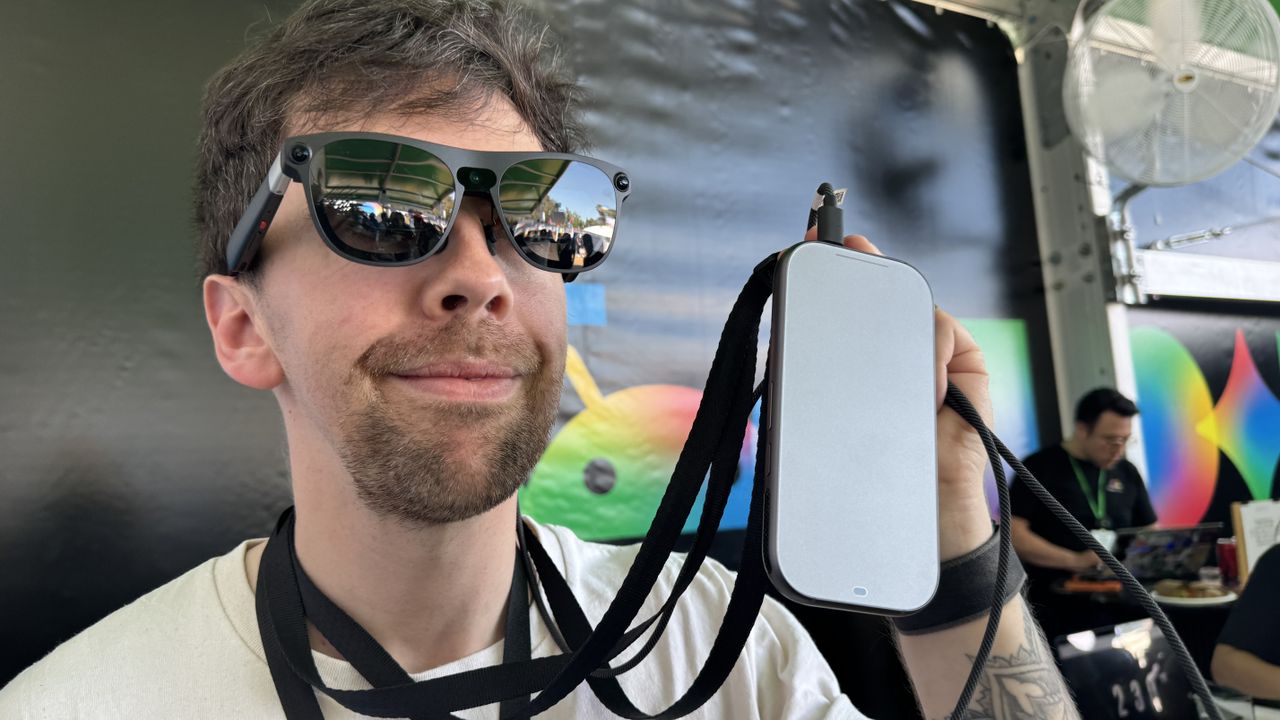
Alongside AI glasses made with Samsung, Gentle Monster and Warby Parker, Google is also tying up with Xreal on Project Aura. We’ve been seeing small glimpses of them for the past year and finally, I was able to go fully hands-on (and eyes-on) at Google I/O. And in three words: it’s the future.
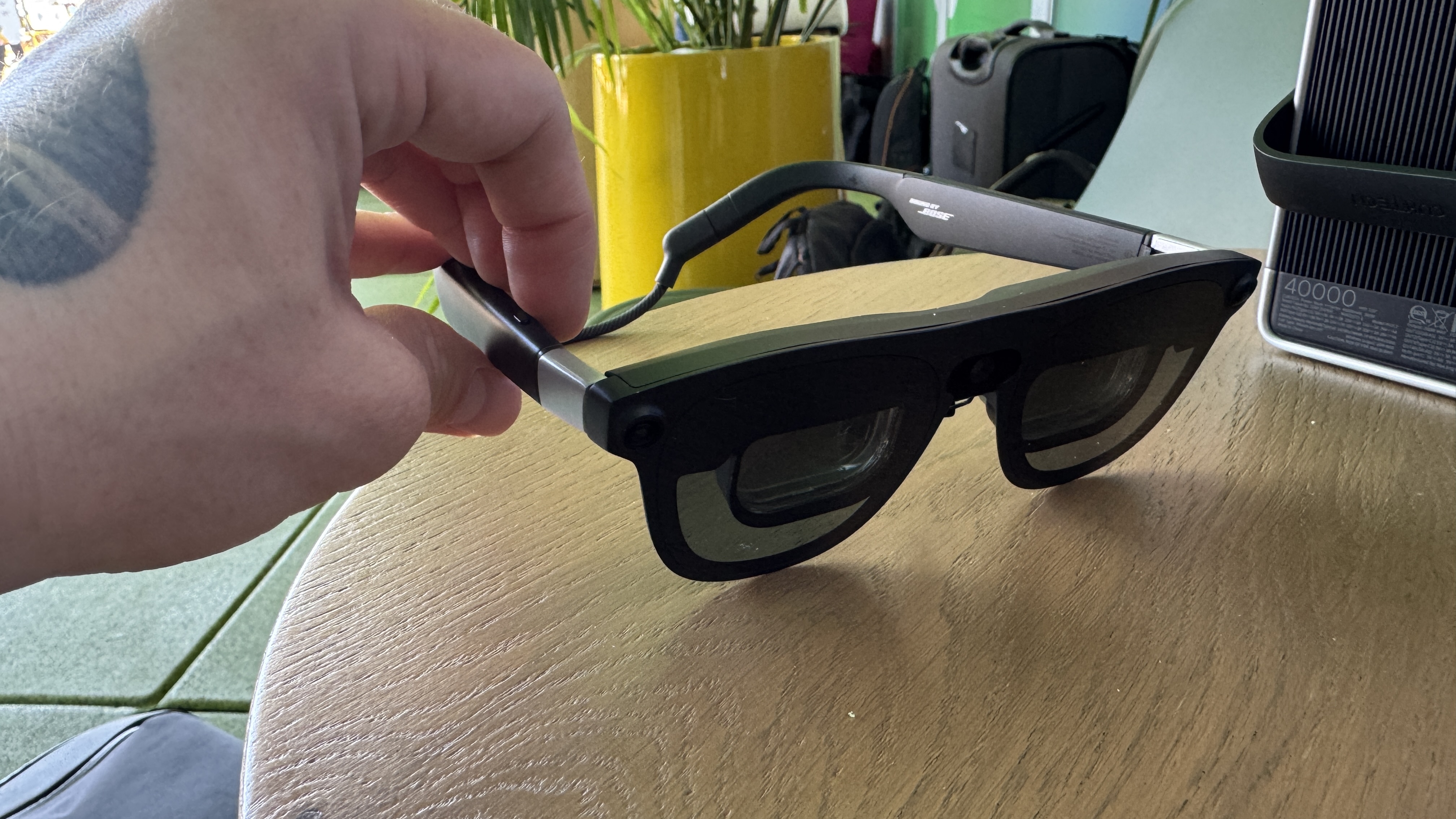
For those uninitiated, Project Aura is Xreal’s best pair of AR glasses connected to a compute puck with Qualcomm silicon inside — taking on Meta’s Project Orion from a while back and figuring out how to stuff the experience of a full-blown VR headset like the Samsung Galaxy XR or Apple Vision Pro into something the size of a slightly oversized pair of specs.
As the smart glasses guy on the team, it’s been my dream to watch the worlds of the best smart glasses and best VR headsets come together. And while they’re definitely not all the way there (you won’t be taking these outside in public without getting second looks), it’s a damn good starting point.
A new window
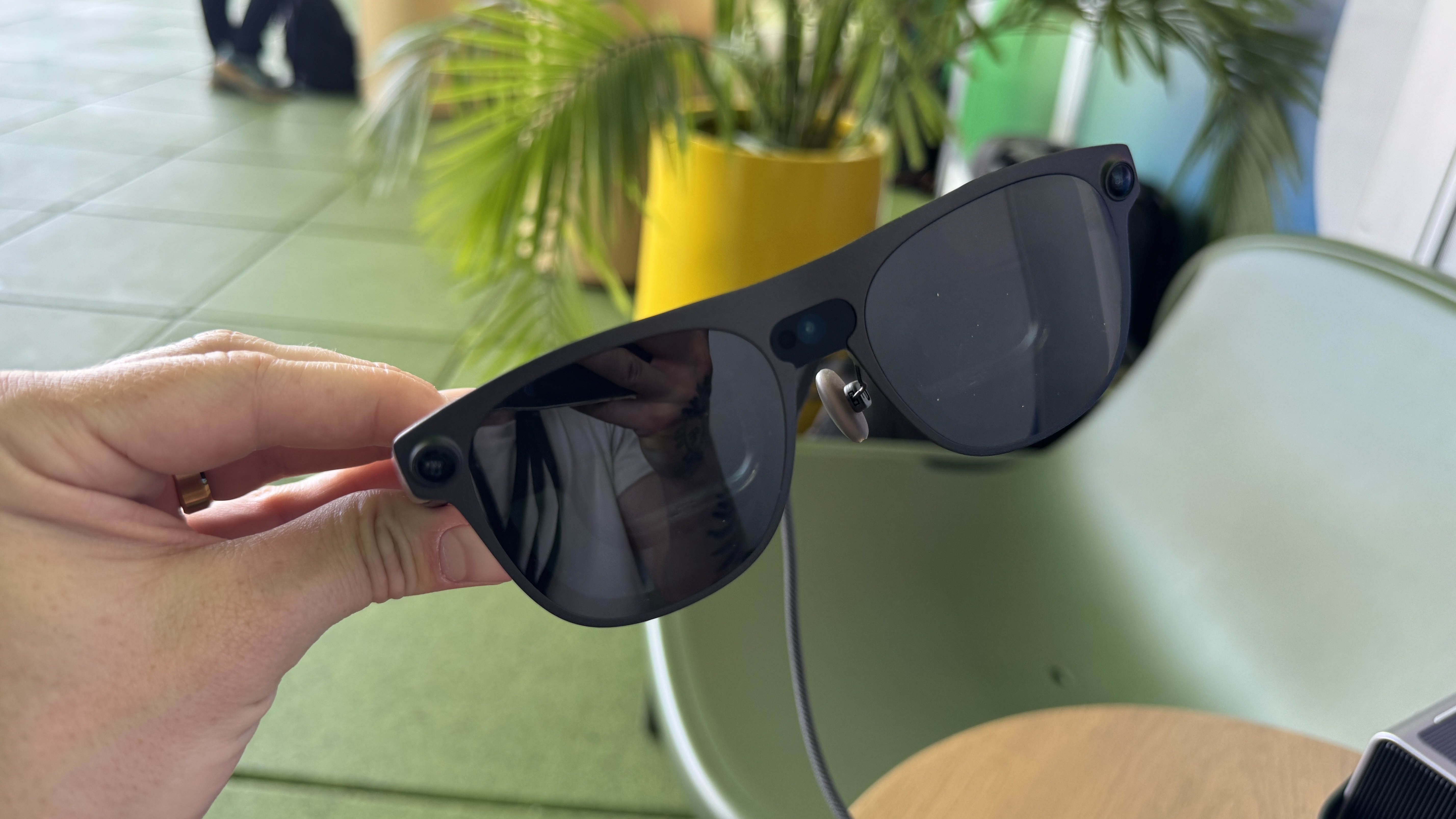
The field-of-view battle has been ongoing between the likes of Xreal and Viture, and so far that ceiling has been 58 degrees in the Viture Beast. When Xreal’s CEO came out and announced a 70-degree field of view for Project Aura, I was very much in the “I’ll believe it when I see it” camp…
Well, I saw it and yes, it’s a true generational leap for immersion. The prisms are massive and while you can definitely see some edge blurring, the fact that said blurring is kind of moving off to your peripheral vision masks it nicely.
It’s that missing link between just being a nice big screen for your phone or laptop on your face and becoming that stepping stone into being a VR experience to boot. On the sides, you’ve got two cameras along with a centrally-placed lens for full 6 DoF tracking, and the whole thing is tethered to a compute puck (with a strap to shoulder it) that’s roughly the same size as my iPhone 15 Pro.
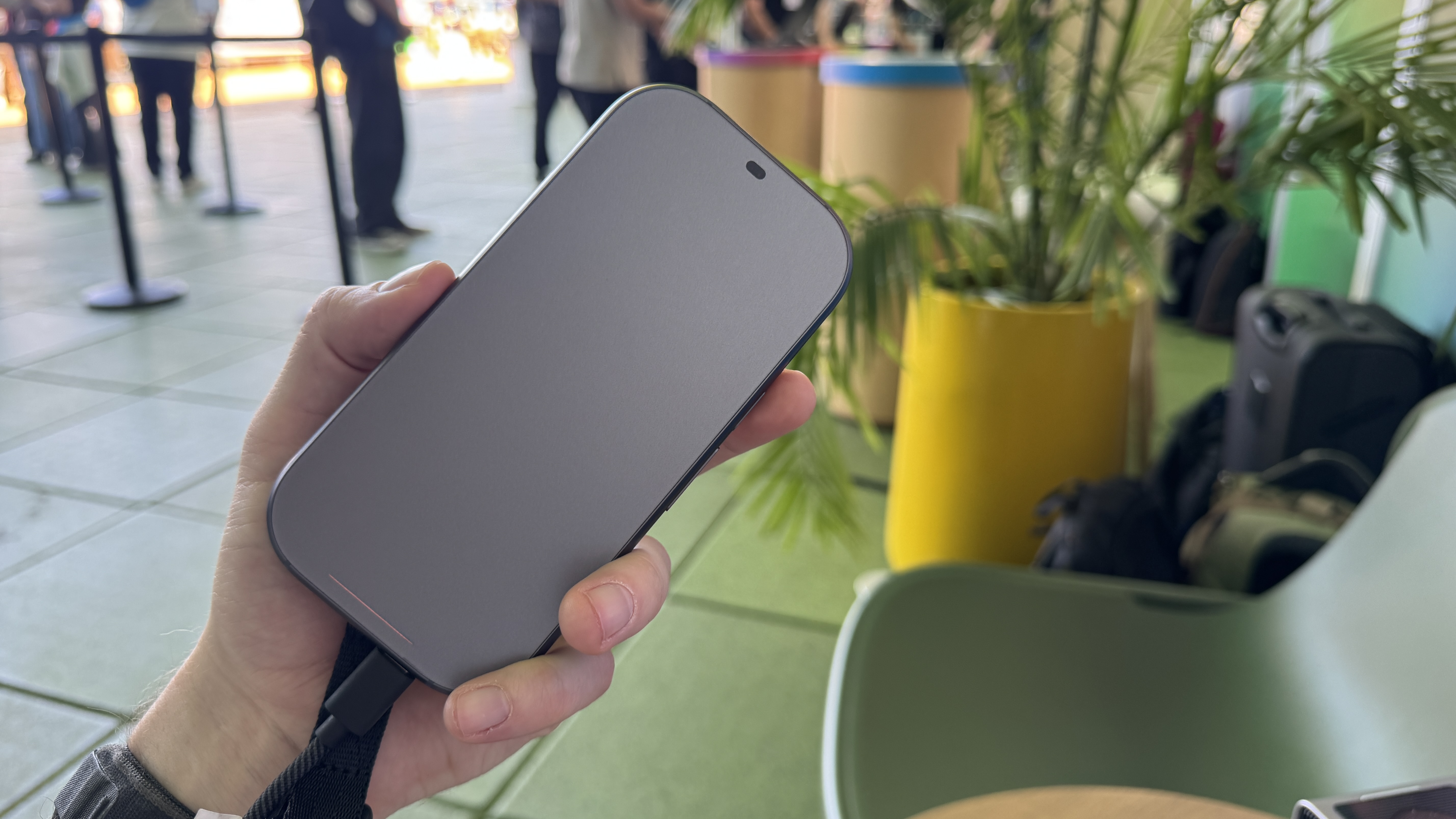
We don’t know anything about what’s inside the puck except for a 4455mAh battery (probably good for 2-3 hours of heavy use), and some unnamed Snapdragon chip inside.
My guess is an XR2 Gen 2 or something maybe newer (Gen 3? Couldn’t be sure). But the end result is mostly accurate hand tracking and impressively fixed windows in place — to the point that you can walk around them a la VR headsets.
Getting to use them
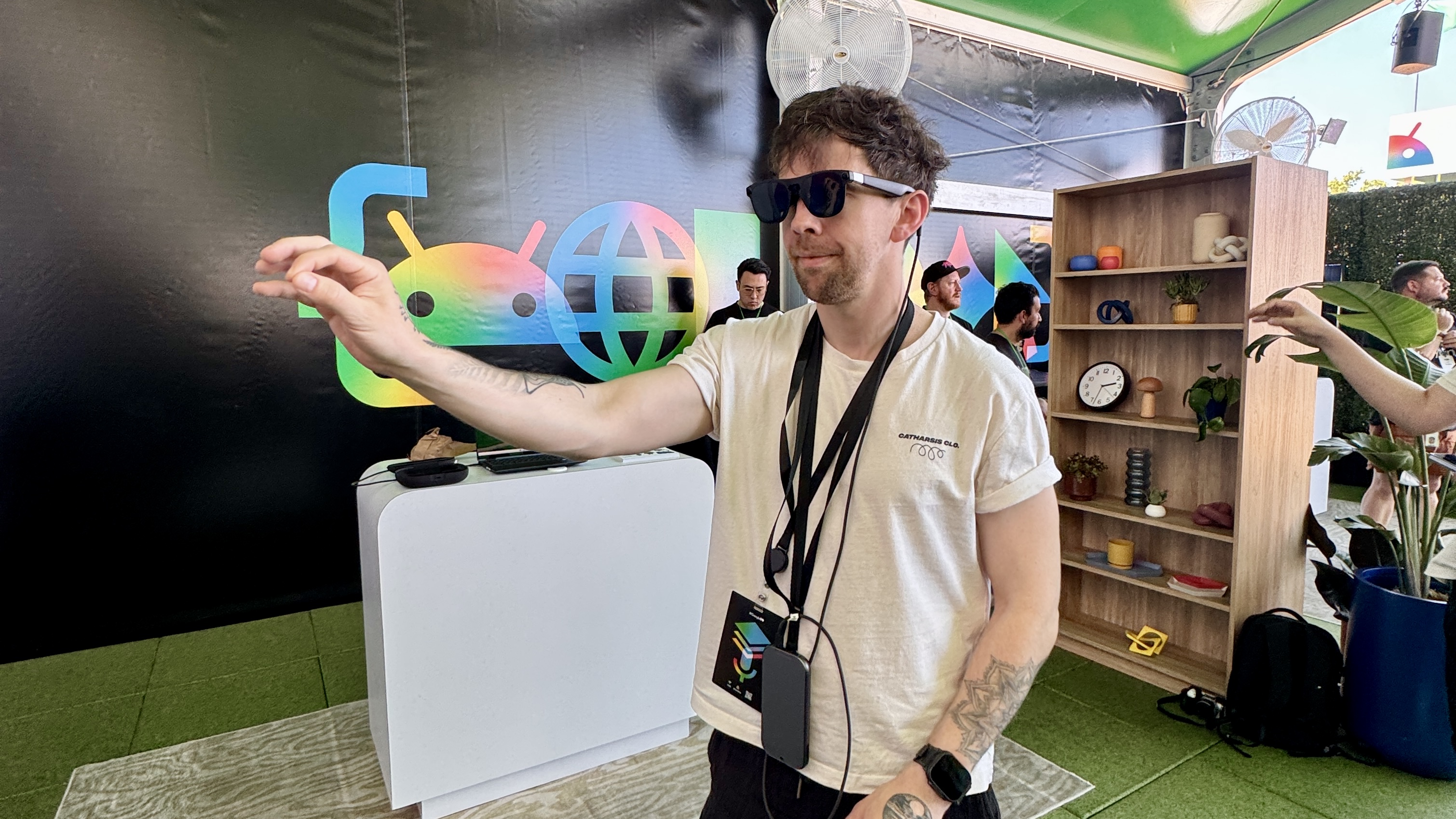
So what can you do on them? Well, spatial computing stuff of course — this is Android XR after all! If you’ve used the Galaxy XR, you’ll feel right at home with the pinches and drags. But the transparency of glasses adds a new dimension of layering to the whole thing. This is not you seeing the world through cameras, it’s seeing the real world with your content laid over it.
I got to multitask without any noticeable hitches, messed around with a music creation app that merges drawing in the air with Gemini’s music creation, and even played Demeo — a D&D-style tabletop game that almost feels purpose-built for a device like this.
Ultimately, it does hit those same barriers that any spatial computing interface faces: namely that it’s slower to do things than on an actual computer. But I can’t deny that these are so much fun to use! And Gemini brings it all together nicely with voice prompts to make your way around.
Also shout-out to the auto electrochromic dimming of the lenses, which means that if someone is getting my attention, I can look away and the lenses immediately become fully transparent so I can maintain eye contact.
Outlook
OK, so how much are they going to cost and when will they come out? On the latter, they’re set for later this year but everyone’s staying super tight lipped on price. So all I can do is guess, and while I’d love for these to be sub-$1,000, I don’t see a world where this happens. I mean the Galaxy XR headset is nearly two grand, and this is a lot of compute that has been ruthlessly shrunk down into a pair of glasses.
However, doesn’t take away from one simple truth: these are a glimpse into the exciting future of AR glasses — specs that are no longer just a display on your face, but a whole platform to do things on. It’ll take time to get that compute puck outta there, to make them a true must-buy. But as they are now, these are the next generation to look forward to.
More from Tom's Guide
- I switched my Ray-Ban Metas for L’Atitude 52°N for a month, and while there’s cool features for explorers, it’s no contest
- I put Viture Beast and Xreal One Pro head-to-head for a week: Here's the one pair I'm actually keeping in my bag
- I traveled 5,000 miles with Rokid Glasses — this Meta Ray-Ban Display rival impressed me