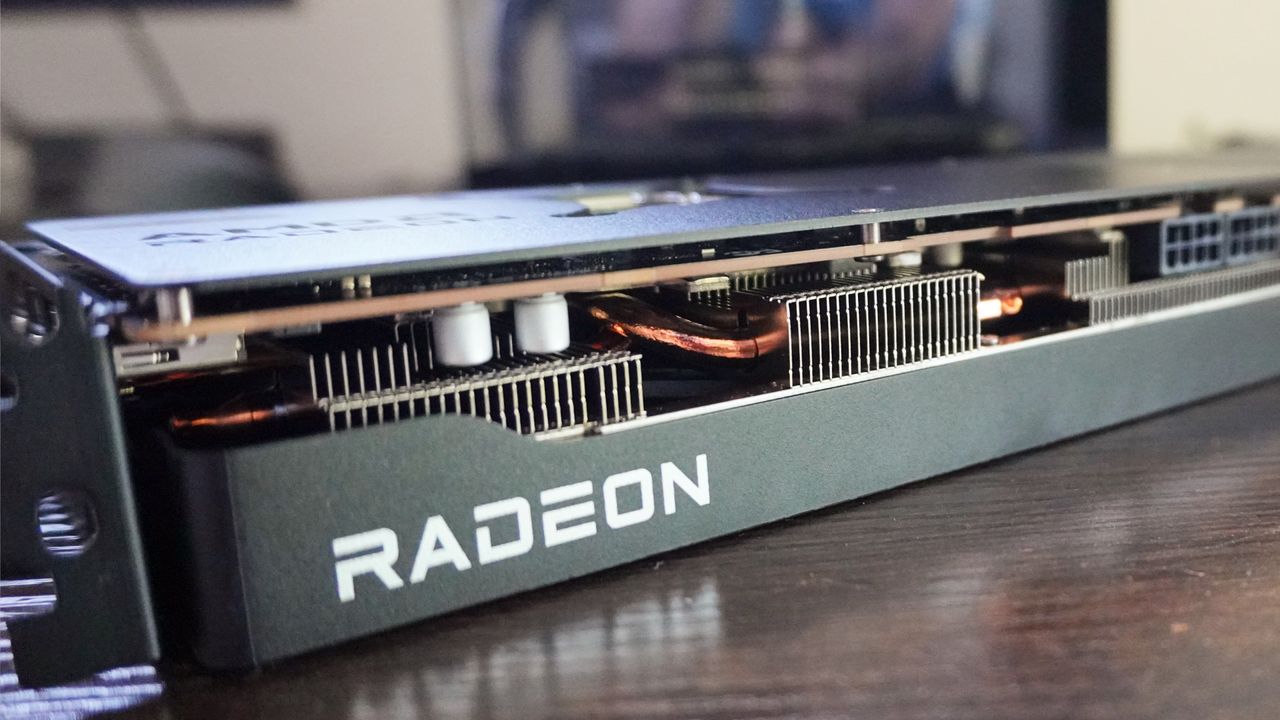
I get it. One read of my Best GPUs buying guide is enough to make your bank account weep. RAMageddon has sent graphics card prices into a crisis, but AMD is fighting back with the Radeon RX 9070 GRE.
Eagle-eyed PC gamers may have already seen these out in the wild over the past year, and they're readily available in China over the past year and starting to leak from retailers across the U.S. Now, I can confirm it’s official, and I’ve been testing one for the past few weeks. In short, if they can keep to their $549 promise, this could be a rare value win in GPUs in 2026.
In raw gaming performance, this closely matches Nvidia’s RTX 5070 (which is around $150 more on average) and comfortably breezes past the 16GB RTX 5060 Ti ($20 more on average). For that out-of-the-box, ray-traced gaming performance without any AI trickery, the RX 9070 GRE is a winning 1440p formula.
Not to say it’s the perfect formula, and you’ll have to decide what matters most for you here. It doesn’t have the same productivity chops as an Nvidia card (in both creator workloads or AI). And while FSR Redstone support is starting to expand, and it’s a great AI-infused game performance booster, Nvidia’s DLSS 4.5 continues to have a clear lead in feature set and game support.
But with all that being said, provided this suggested price of $549 holds true (AMD did confirm to Tom’s Guide that a lot of stock has been produced), if your sole focus is gaming bang for your buck, this is a top option that challenges the extortionate GPU prices found elsewhere.
AMD Radeon RX 9070 GRE: Cheat Sheet
- What is it? This is a mid-range PC graphics card.
- Who is it for? This is for people who are looking for great 1440p gaming performance at maxed-out settings.
- What does it cost? The SEP is $549, and I’m praying it stays that way.
- What do I like? For $549, this is an impressively performant card for 1440p gameplay, with FSR 4 unlocking some 4K experiences. It's a great bang-for-your-buck pick!
- What don’t I like? I’m suspicious of that price tag (hopefully I’m proven wrong), and, much like the RX 9070 XT, while it’s a great raw performer, FSR 4 support doesn’t match Nvidia’s DLSS 4 game compatibility, and AI and productivity aren't as strong here.
AMD Radeon RX 9070 GRE: Specs
Specification |
RX 9070 GRE |
RTX 5060 Ti |
|---|---|---|
GPU Architecture |
Navi 48 |
Blackwell (GB206) |
Cores |
3,072 |
4,608 |
Base Clock |
1,420 MHz |
2,407 MHz |
Boost Clock |
2,790 MHz |
2,572 MHz |
Memory Type |
GDDR6 |
GDDR7 |
Memory Size |
12 GB |
8 GB or 16 GB |
Memory Bus Width |
192-bit |
128-bit |
Memory Bandwidth |
432 GB/s |
448 GB/s |
Matix/Tensor Cores |
96 4th Gen cores |
144 5th Gen cores |
RT Cores |
48 3rd Gen cores |
36 4th Gen cores |
Power Consumption (TDP) |
220W |
180W |
PCIe Interface |
PCIe 5.0 |
PCIe 5.0 |
Display Outputs |
1x HDMI 2.1b, 3x DisplayPort 2.1a |
1x HDMI 2.1b, 3x DisplayPort 2.1b |
Launch Date |
June 1, 2026 |
April 16, 2025 |
Starting Price |
$549 (SEP) |
$459 retail average (8 GB), $569 retail average (16 GB) |
AMD Radeon RX 9070 GRE: 3DMark tests
AMD Radeon RX 9070 GRE: The ups
So let’s tuck in. For transparency, I tested the RX 9070 GRE in my build with AMD Ryzen 7 7800X3D CPU and 32GB DDR5 RAM. And as I started tweaking settings, playing and testing, I quickly realized the raw capabilities that lie under the hood.
Challenging the gaming throne
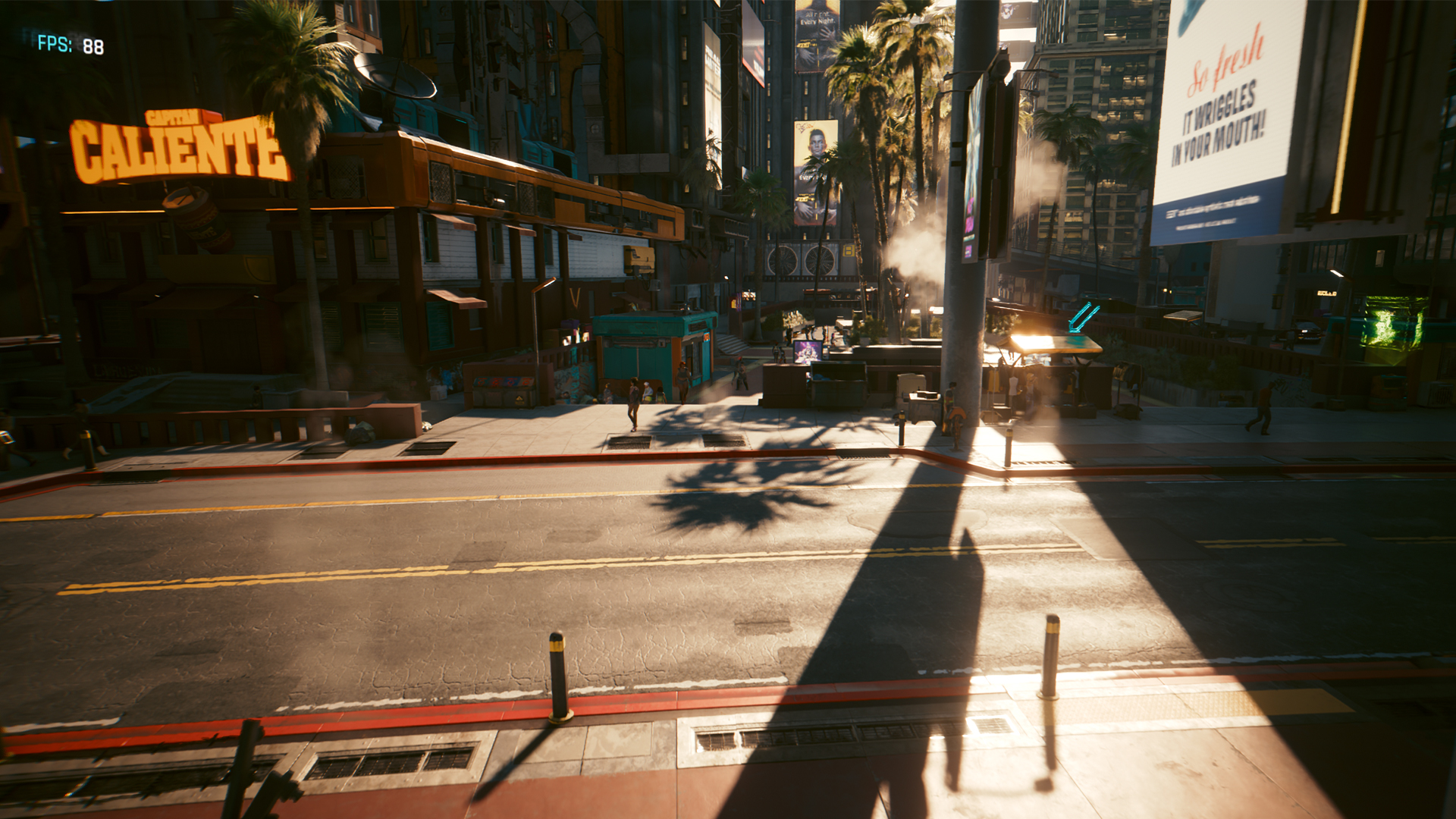
The price of Nvidia’s GPUs has been going crazy in the U.S. Now that the Radeon RX 9070 GRE is here on sale for $549 (for now), I can only anticipate a market correction given how much more this offers for less.
GPU |
Cyberpunk 2077 ray tracing ultra 1440p |
Forza Horizon 5 max settings 1440p |
Call of Duty max settings no frame gen 1440p |
Black Myth: Wukong Cinematic 1440p |
|---|---|---|---|---|
RX 9070 GRE |
36.6 FPS |
142 FPS |
136 FPS |
81 FPS |
RX 9070 XT |
30.2 FPS |
190.8 FPS |
173 FPS |
62 FPS |
RTX 5070 |
38.2 FPS |
158 FPS |
139 FPS |
84 FPS |
RTX 5060 Ti |
32.8 FPS |
121 FPS |
80 FPS |
45 FPS |
This is coming close to the far more expensive RTX 5070, while pulling comfortably ahead of the 5060 Ti. With those improved ray tracing cores, you’re starting to see AMD get more comfortable with shiny surfaces and reflective windows.
At 1440p, there’s enough headroom in that 12GB of video memory, and it forms a better value for money option than the RX 9070, and is frankly miles ahead of Nvidia’s RTX 50-series lineage in performance-per-dollar.
FSR Redstone is getting better
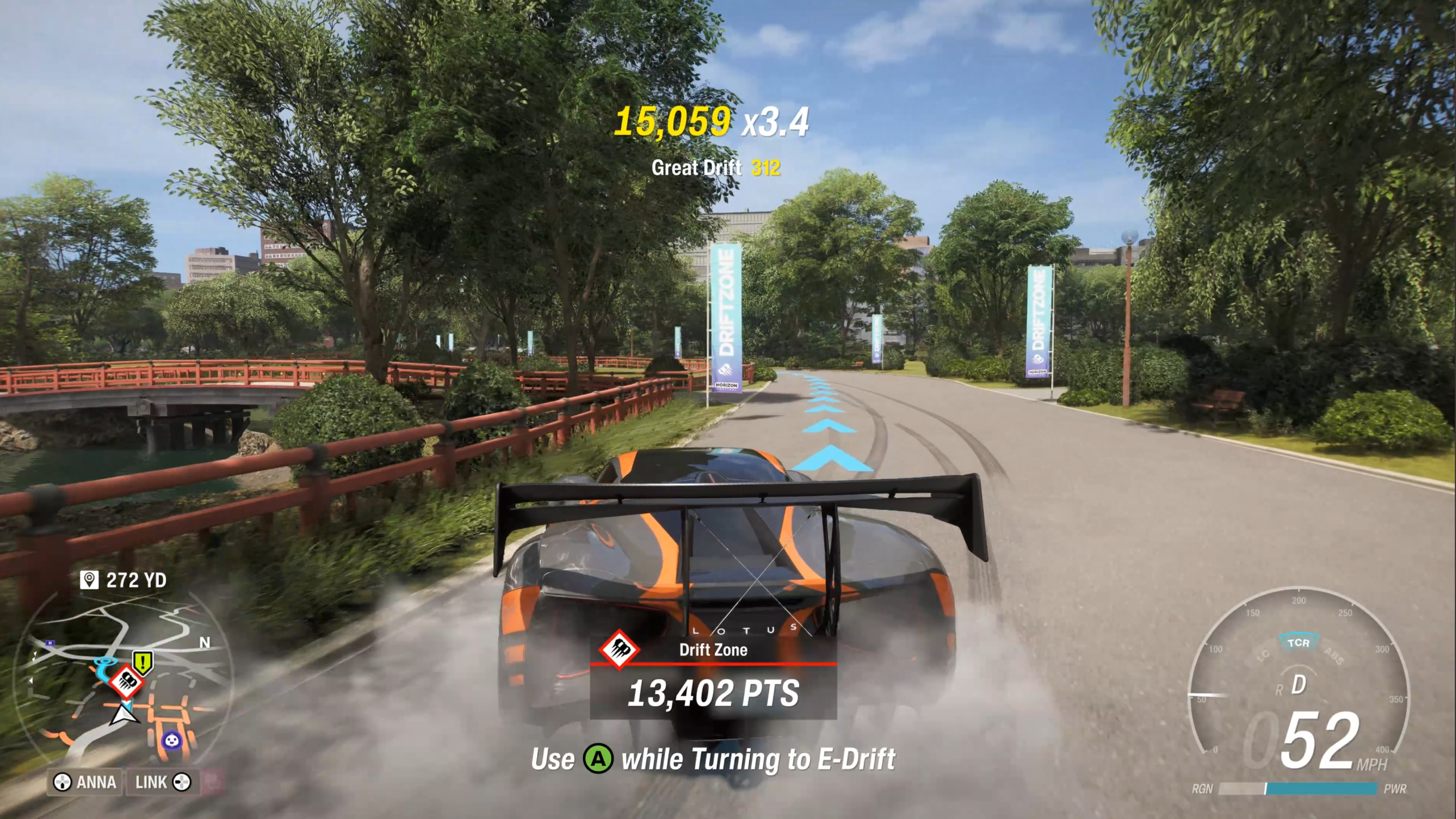
When I reviewed the RX 9070 XT, the idea of FSR Redstone was only a glimmer in AMD’s eye, and the broader support for its upscaling/frame generation tech was left reeling. Now, over 200 games support it, and the AI trickery looks great here with extremely minimal ghosting around fast-moving objects and impressive detail even on a character’s hair.
Of course, one key difference here from the likes of Nvidia’s DLSS 4 is how it handles frame generation. With Team Green, you’re getting multi-frame generation where it can stuff up to six AI-generated frames in between two GPU-generated ones. With FSR Redstone, you’re only getting one.
But I have a counterpoint to that. With the frame rates you see in these games, does a couple of hundred frames per second even matter? In my gameplay time, I can honestly say it didn’t.
And the second point, the latency is actually a few milliseconds lower without the additional frames. Food for thought!
AMD Radeon RX 9070 GRE: The downs
That doesn’t mean the RX 9070 GRE is an all-around Nvidia beater. There are two clear places where this mid-ranger does falter — one comes down to Nvidia being in the AI game for longer, and the other is a side effect of when you throw all your eggs in the gaming basket.
Nvidia keeps the compatibility advantage
Chances are, you’ve seen a whole lot of AAA games in 2026 come with an Nvidia logo in their opening credits. Team Green has been busy building relationships across the board, and while AMD is catching up, Nvidia still has an advantage in this space.
Not only in-game compatibility, but also in the number of tools available. Team Red is offering the core tools needed to make all this work well (and it does), but whether you think they’re controversial or not, Nvidia’s AI trickery is evolving quickly as more games come under its umbrella.
Productivity performance is lacking
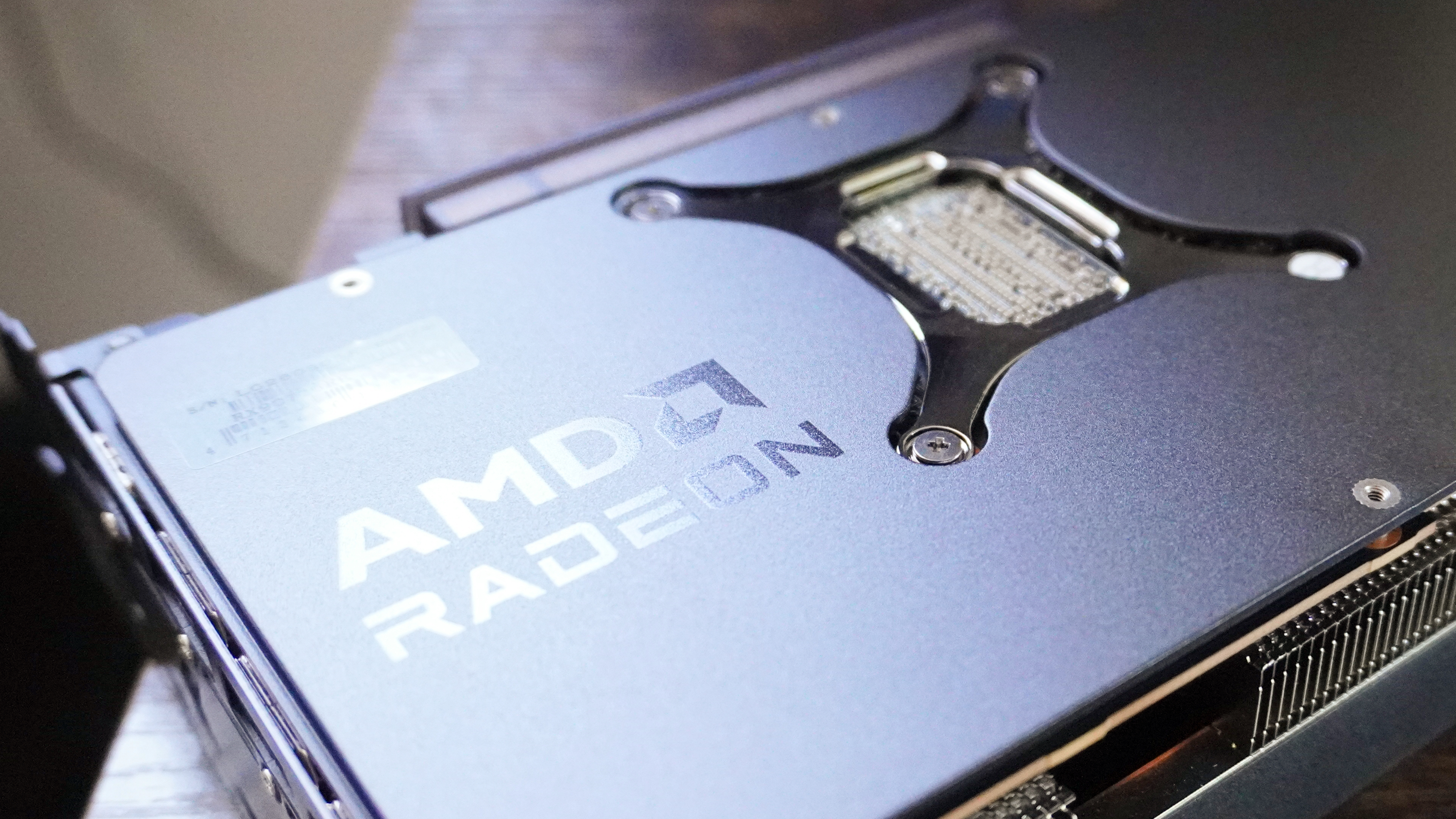
Gaming’s all good and everything — definitely the key priority for most of you reading this. However, if you need something more multipurpose, it’s clear that AMD is focusing on gaming here. You can see that in the Blender and AI benchmark results.
GPU |
Blender combined score (higher is better) |
Procyon AI image gen Stable Diffusion XL |
|---|---|---|
RX 9070 GRE |
975 |
1516 |
RTX 5070 |
2390 |
2438 |
RTX 5060 Ti |
1127 |
1811 |
While Nvidia has the drivers and capabilities of doing more across the board, Team Red is focusing in. No such problem for most of you looking at this, of course, as chances are you just wanna play games fast here. But just a heads up to the creators and AI workers out there.
AMD Radeon RX 9070 GRE: Verdict
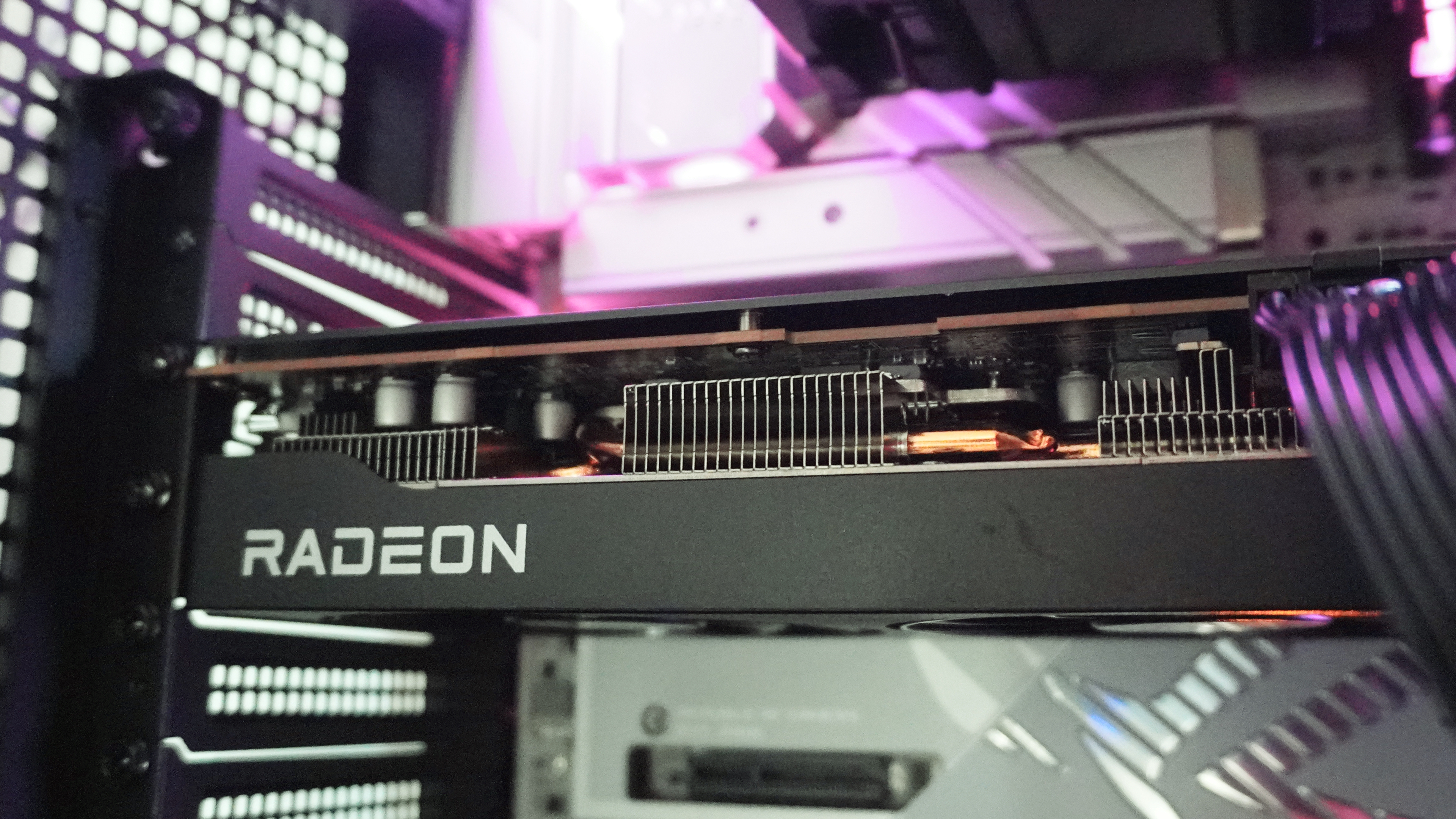
So, to answer the fundamental question, yes, the RX 9070 GRE is a great 1440p GPU with better rasterized performance than its similarly priced competitors. Productivity performance is underwhelming compared to Nvidia, but if gaming is your main thing, this is a stellar pick.
But as the hours continued to melt by in all my favorite games, one thing became clear. I look at the grim backdrop of GPU pricing and can only pray that the RX 9070 GRE holds true to its $549 retail price. Because if it does, it could move the needle and encourage price drops across the board.