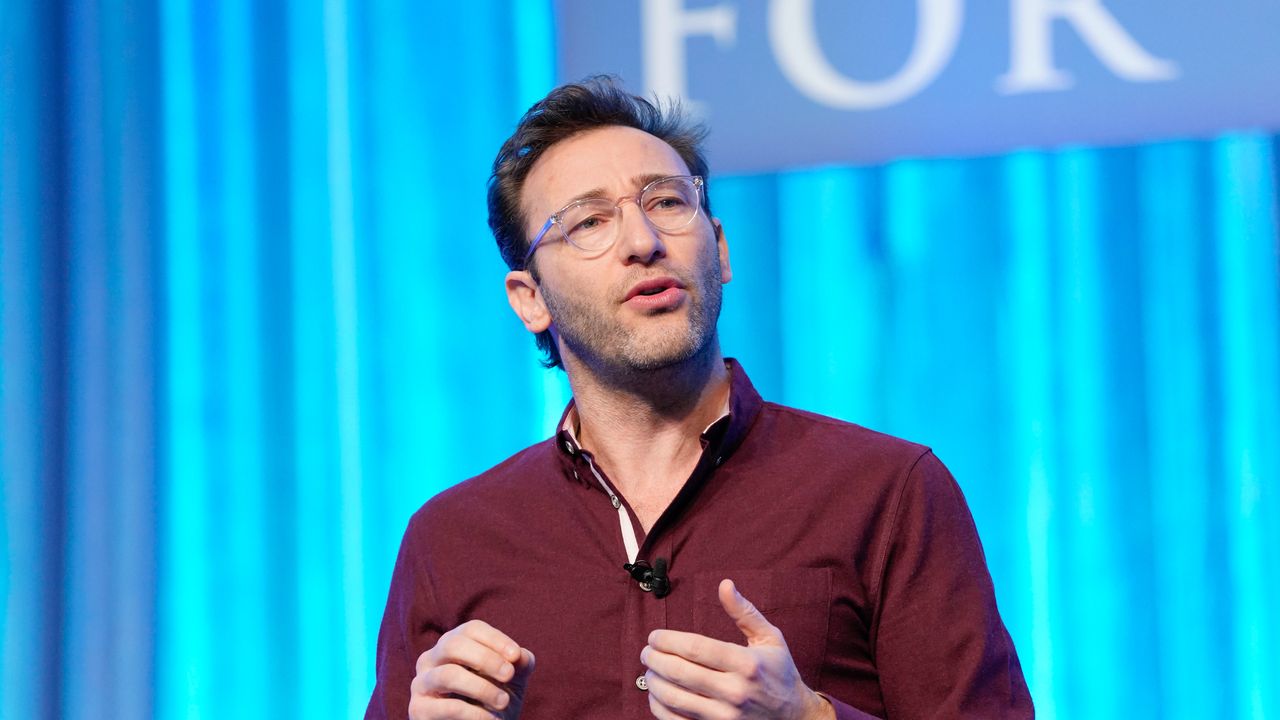
Over the long Memorial Day weekend, I decided to make the most of a very rainy day off. With a little extra time to look at my very busy week ahead, I wondered whether I was ruthlessly optimizing the wrong things. So, I decided to try a weird experiment. I opened ChatGPT and asked it to channel the philosophy made famous by leadership expert Simon Sinek.
Sinek's philosophy is essentially this: rather than focusing on what you do or how you do it, you have to start with why. For me, that meant instead of asking AI to help me work faster, I asked it to help me undersatnd why I was working the way I was in the first place. Essentially, giving AI permission to audit the way I work.
The results were surprisingly uncomfortable — and it completely rewired how I approach my workday.
The exact prompt I used

If you want to try this yourself, here is the exact prompt I gave ChatGPT:
"Analyze my current workload, habits, and daily responsibilities through the lens of Simon Sinek’s ‘Start With Why’ philosophy. Identify where my work feels disconnected from purpose, where I may be chasing productivity instead of meaning, and which tasks align most closely with my deeper motivations, strengths, and long-term goals. Then suggest ways to restructure my workflow around clarity, impact, and fulfillment instead of pure output."
Because I keep Memory mode enable, within seconds, ChatGPT spotted a weird blind spot I was ignoring. It's a harsh truth that I don't think I would have recognized on my own: I spend a massive amount of mental energy reacting instead of creating. I really wanted to share a screenshot, but it was so personal (and harsh!), you're going to have to take my word for it. Give it a try for yourself and you'll see what I mean.
But I can share that ChatGPT analyzed my daily routine and flagged several dangerous patterns:
- Context-switching: I'm constantly jumping between tasks and breaking my own focus.
- Urgency trap: Prioritizing whatever notification popped up first, rather than finishing the current task first.
- Metric fallacy: Measuring success in only one way.
- Inbox creep: Checking emails during focus times.
It was clear that I had built an unsustainable workflow optimized around avoiding stress, not creating meaningful work.
But, I have to admit, the most useful part of this prompt was how ChatGPT ruthlessly forced me back to one single question: "Why does this task matter?"
I realized my brain usually asks defensive questions: Will this take five minutes? Can I finish this quickly?
But once you start filtering your daily workload through the lens of "Why am I doing this?" a lot of what we call "productive behavior" suddenly looks like total noise. Some of my tasks genuinely supported my long-term goals, but many others created the illusion of moving forward.
ChatGPT helped me identify 'false productivity'

ChatGPT helped me give a name to my worst working habits. The "false productivity" tasks are the ones that feel incredible to cross off because they’re visible, fast and easy to complete, but lack much more. For me, this type of false productivity looked like: obsessively checking real-time analytics on my stories, over-editing or being ultra-picky about the wrong edits, answering non-urgent messages the second they arrive in my inbox, multitasking during deep focus projects as a way to procrastinate.
The AI suggested a radical restructure. It told me to stop looking for micro-habits and instead replace the noise with deep, uninterrupted focus sessions, strict communication boundaries and a commitment to spending more time creating than reacting.
I'll admit, I've heard this advice plenty of times. Yet, seeing it under the lens of Simon Sinek's philosophy, helped me reflect on them through a framework centered on human purpose.
What surprised me most about letting AI apply Simon Sinek's framework to my life is that it didn't make me want to work harder, but rather more intentionally. I now audit my energy by asking myself questions like, which projects actually matter to my long-term growth and which tasks energize me and which drain me of my energy?
Ironically, this shift made me significantly more productively because I stopped wasting premium cognitive energy on tasks that didn't deserve it.
A few final thoughts
Leaning on ChatGPT in this way underscored an underrated use case for generative AI: reflection. Because, when you pair the LLM with a proven philosophical framework like "Start With Why," it becomes a mirror for your blind spots.
So if your workday feels exhausting but you aren't actually getting anything major done, stop looking for a better calendar app. Open ChatGPT and invoke a framework that focuses on purpose. Let me know in the comments if you give it a try.