What happens when our joyful activities become another way to make money? In an era defined by hustle culture and rising living costs, many people feel pressured to turn their hobbies into side-hustles.
The gig economy has made this monetization easier than ever. A growing share of work now takes place through short-term, flexible, remote and freelance contracts. Digital platforms like Uber, TaskRabbit, Rover, Skip The Dishes and Etsy make it simple for people to monetize their hobbies.
For some, these opportunities offer flexibility or a way to supplement income in an expensive economy. But they can also turn activities that once provided relaxation into yet another source of productivity.
Hobbies can bring joy, well-being and focus to our busy lives, but so many of us don’t have one. If you’re ready to replace scrolling with stitching, or hustle with horticulture, The Hobby Starter Kit (a new series from Quarter Life) will help you get going.
When a hobby becomes a job
I learned this first-hand when a hobby I loved became part of my livelihood. During graduate school, when I was barely making ends meet, I became a certified fitness instructor to earn money from activities I loved: yoga, running and weightlifting.
What I didn’t realize was that the joy I once found would quickly turn into burnout. I no longer exercised for fun; instead, it was a means to an end and my body grew exhausted. I was precariously employed by multiple employers and was driving across town at any hour of the day.
My experience reflects a broader cultural pressure to treat hyper-productivity as a virtue. Hustle culture celebrates long working hours, limited work-life balance and a relentless pursuit of money, job advancement and prestige.
Social media has amplified these norms.
Popularized hashtags like #Grindset, #ThankGodItsMonday and #HustleHard promote the idea that every skill or spare moment should be monetized — an outlook endorsed by billionaires like Elon Musk and Kim Kardashian.
Why hobbies matter for well-being
Hobbies play an important role in well-being because they provide repeated and ongoing joyful activity not tied to professional or financial incentives.
The COVID-19 pandemic illuminated how essential hobbies are for our health and well-being. During lockdowns and periods of social isolation, many people turned to hobbies to cope with stress, boredom and uncertainty.
There is no shortage of evidence about how hobbies contribute to personal development as well as mental and physical health.
Activities that involve any type of exercise like powerlifting, for example, can improve blood pressure and reduce the risk of cardiovascular disease. Creative hobbies like crocheting, knitting, photography, music and scrapbooking can similarly boost health and well-being.
When passion turns into work
Many hobbies naturally lead to skill development. Over time, people gain expertise, build communities and develop transferable skills.
Because hobbies often generate valuable skills, it can be tempting to monetize them. Sociologist Robert A. Stebbins coined the term “serious leisure” to describe the pursuit of recreation, hobby or volunteer activities to find career satisfaction.
Serious leisure is distinct from “casual leisure,” which involves intrinsically rewarding short-lived joyful and pleasurable activity.
Turning a passion into income can sometimes be rewarding. But in today’s gig economy, monetizing hobbies is less about following one’s passion and more about financial growth or necessity.
Read more: Gig platform workers need better health and well-being protections
Many people — particularly those in low- and middle-income brackets — are forced to string together multiple gigs to make ends meet. These jobs often come without permanence, benefits, paid leave or pension, and income is unpredictable.
Research also shows that racialized workers are over-represented in this type of precarious work, indicative of the many racial disparities that exist in labour.
As a result, for many people, monetizing hobbies is about economic survival amid endless structural barriers.
Rest as resistance to hustle culture
Growing awareness of these pressures and systemic injustices has sparked movements that challenge the expectation to constantly produce and perform.
One example is America performance artist Tricia Hersey’s Nap Ministry, which promotes rest as a form of resistance to grind culture, capitalism and white supremacy. Hersey argues that rest should be understood not as laziness, but as a fundamental human right that has historically been denied to many people, especially racialized communities.
Since the COVID-19 pandemic, people impacted by hustle culture have increasingly scrutinized the pressures to overwork. People want work-life balance, which includes more time for hobbies.
But maintaining that balance requires resisting the trap of making hobbies your work and sacrificing your joy.
Protecting your joy
Protecting your hobbies today often means setting intentional boundaries in a culture that constantly pushes (hyper)productivity.
If possible, resist the urge to turn your hobbies into work, or keep monetization minimal. Hobbies are sacred. They represent time away from labour, which is essential for well-being.
It is also worth being critical of tropes that promise more working hours will lead to greater financial success. The truth is that a large share of wealth comes from inheritance or structural advantages rather than individual effort. When people are exploited and overworked, it benefits the elite class more than anyone else.
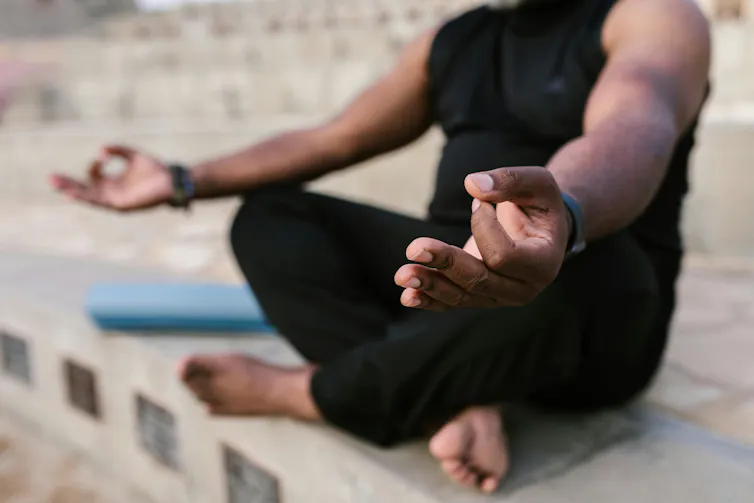
Lastly, lean into rest as resistance. Rest can look different for everyone. For me, yoga has returned to being a respite from work rather than a job. For others it might be knitting, swimming in a lake or simply getting more sleep.
Whatever form it takes, protecting your joy matters in a culture that wants to exploit it.

Aly Bailey does not work for, consult, own shares in or receive funding from any company or organisation that would benefit from this article, and has disclosed no relevant affiliations beyond their academic appointment.
This article was originally published on The Conversation. Read the original article.