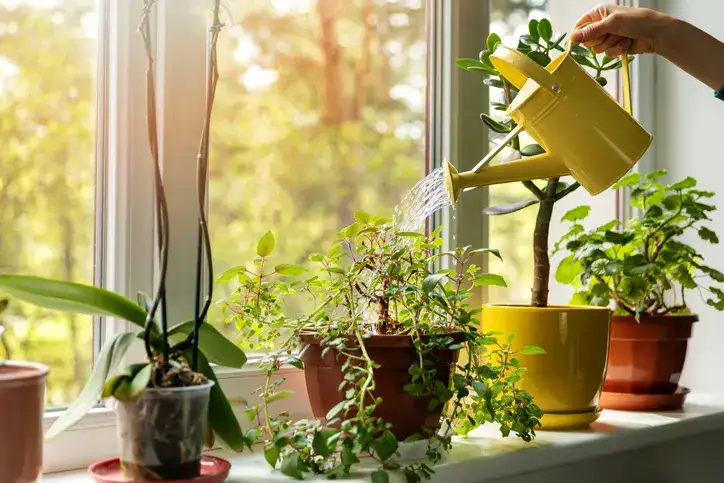
Keeping indoor plants healthy in June (especially with rising heat and humidity) requires a few smart adjustments. Here are the essential tips to help your plants thrive:
1. Adjust Your Watering Routine
During June, rising temperatures can cause indoor plants to dry out faster than usual. However, increasing watering blindly can lead to root rot. It’s important to check the soil moisture before watering, if the top inch feels dry, it’s time to water. Watering early in the morning or evening helps reduce evaporation and allows plants to absorb moisture effectively.
2. Manage Sunlight Exposure
While plants need sunlight to grow, the intense June sun can sometimes be too harsh, especially for indoor varieties. Placing plants in bright but indirect light or using sheer curtains to filter sunlight helps protect them while still providing enough light for healthy growth.
3. Maintain humidity levels
Indoor environments, especially with air conditioning, can become dry and affect plant health. Many houseplants thrive in humid conditions, so maintaining humidity is essential in June.
4. Keep Leaves Clean
Dust accumulation on leaves can block sunlight and reduce a plant’s ability to photosynthesize. Regularly wiping leaves with a soft cloth keeps them clean and healthy.
5. Control indoor temperature
Indoor plants are sensitive to sudden temperature changes. In June, air conditioners and fans are used more often, which can create dry drafts or uneven temperatures.
6. Repot is needed
June is a good time to check whether your plants have outgrown their pots. If roots are tightly packed, repotting into a slightly larger container allows better growth.
Common Mistakes to Avoid While Caring for Indoor Plants
Overwatering your plants
One of the most common mistakes during summer is watering too frequently. While plants do need more hydration in June, soggy soil can suffocate roots and cause root rot. Always check the top layer of soil before watering.
Exposing plants to harsh sunlight
Placing indoor plants in direct sunlight can scorch their leaves, leading to yellow or burnt patches. Most indoor plants prefer bright, indirect light, so filtering sunlight is essential.
Ignoring humidity needs
Air conditioners and heat can dry out indoor air, which negatively affects many houseplants. Low humidity can cause leaf curling and browning, so it’s important to maintain a balanced environment.
Over-fertilizing in heat
Feeding plants too much during hot weather can damage roots and lead to salt buildup in the soil. Use fertilizers in moderation and avoid feeding during peak heat hours.