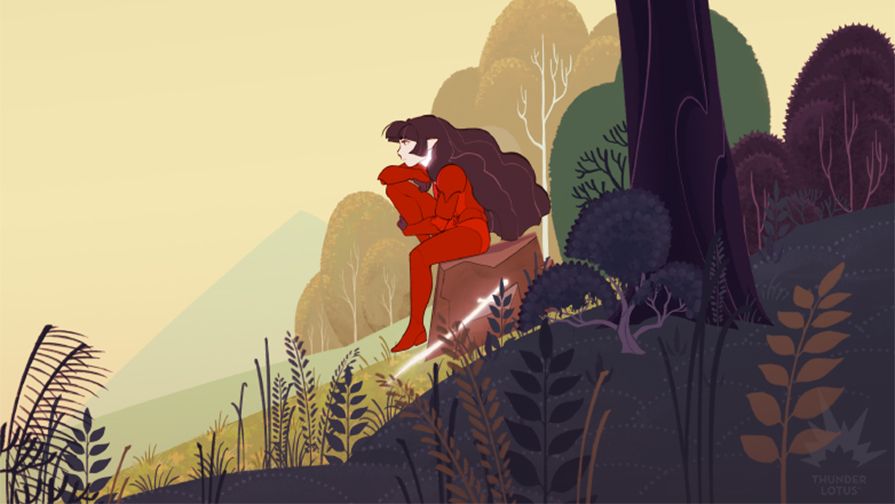
It can be easy to pit 2D against 3D, while different camps can espouse why one is superior to the other, when really you should consider its different strengths or even how one can complement the other. 2D games continue to have a strong appeal in modern indie games, especially those with expressive hand-drawn styles. But for At Fate's End, a fantasy, narrative-driven action-adventure inspired by both Gaulish myth and the art of Eyvind Earle (famous for his contributions to Disney classics, including Sleeping Beauty), there's plenty more going on under the surface to achieve its look.
Speaking to Jo Gauthier, the game's art director, who has also worked on indie studio Thunder Lotus' past games, including Spiritfarer and Jotun, the most important thing about a good game art style is that it is reproducible. "It's very cool to see very pretty pictures, but if you're not able to reproduce their style consistently, then it's not a good style," she says.
This is perhaps why Earle's work, known for simple yet evocative geometry and composition, was an important early influence on At Fate's End's aesthetic, which was also rooted in a medieval setting in its story of succession in a dysfunctional aristocratic family.
Although the studio is notable for its hand-drawn style, this doesn't mean everything is drawn completely by hand from scratch. Reusing assets is important, but it's challenging when they are 2D. "In 3D, if you create a tree, you have essentially 360 trees because you can rotate them, and even if you put four of them side by side, if you rotate them, they're going to look slightly different," Gauthier explains. "But in 2D, if you literally put the tree side by side, it will be obvious. The human eye is very good at picking up patterns, so people immediately clock that, and it becomes an irritant if you have the same organic thing. It looks cheap."
It's not only about establishing a style that can be easily reproduced but also about making it modular so it can be assembled in different ways, like the trunks and branches of a tree. "That's a really fine line to try to walk to have something that is doable in terms of time and workload, but also making it look like it's a continuous original piece all throughout, even though there's a lot of reuse everywhere. It would be impossible to make a game with zero reuse."
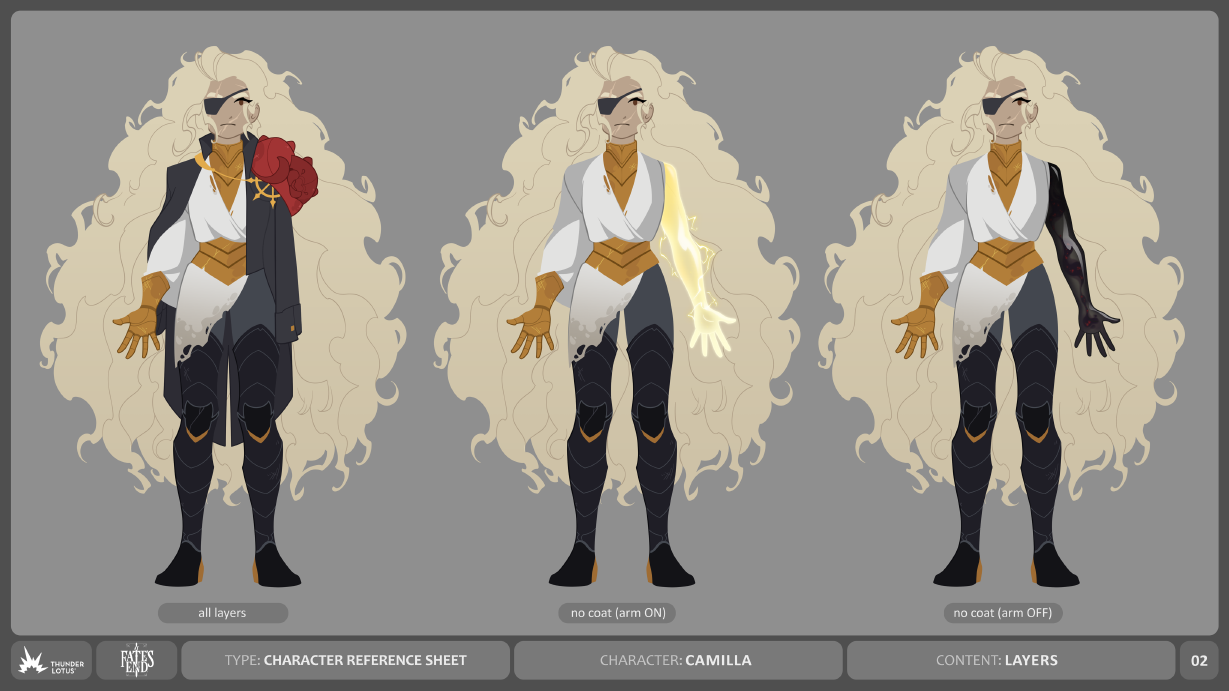
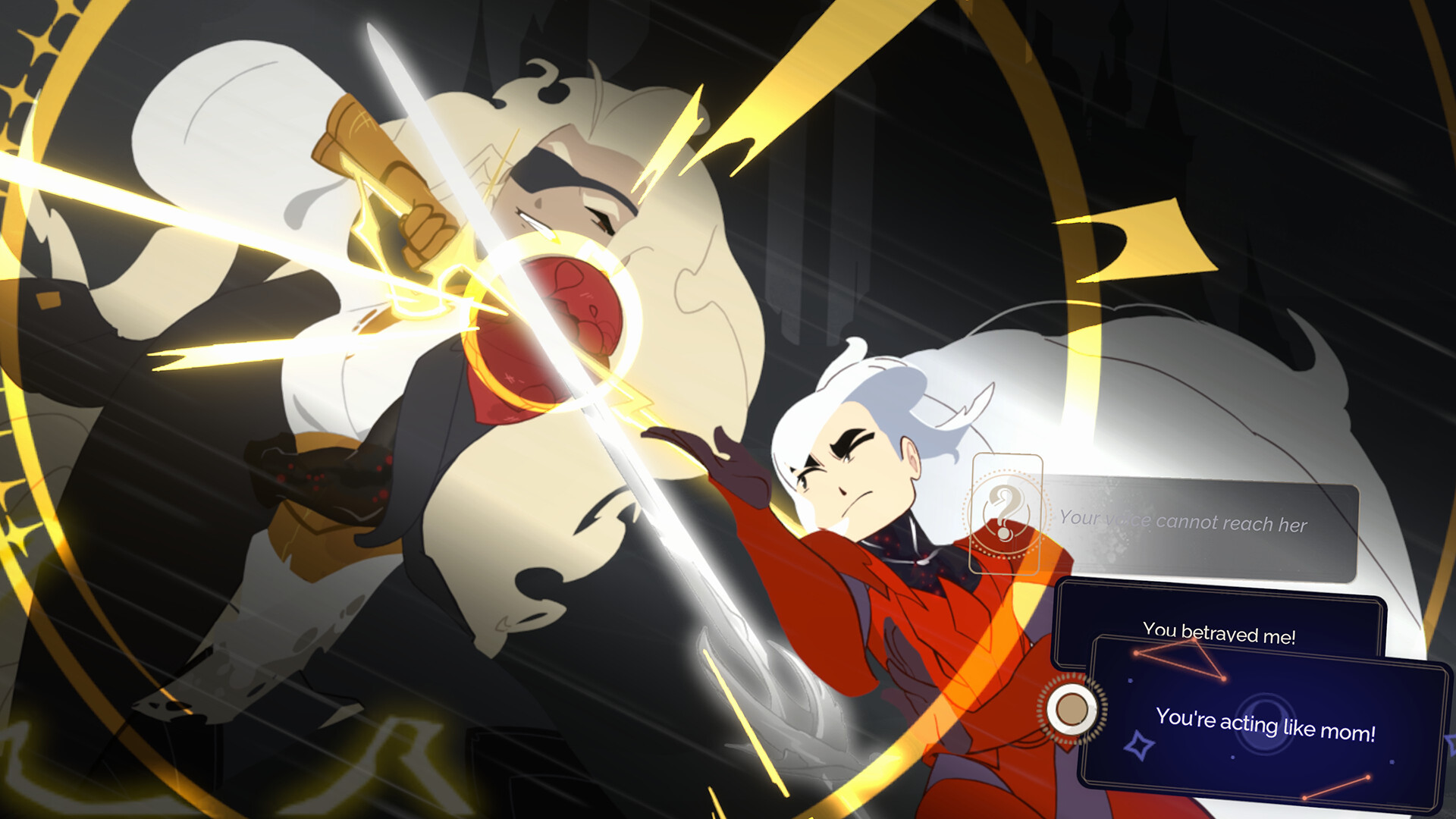
It's similar to how the exquisite hand-animated character animations are handled, especially for high-resolution characters that are essentially the same in gameplay and cutscenes.
"For example, if the character is running, then the running animation is the looping animation," Gauthier explains. "So they'll animate the full loop, and then we can just set it on a loop, and it keeps going. But then they have to account for the fact that the player might turn, so we need a turn animation, we need a slow-to-stop animation, an animation stop, and then a turn. So it's about making a bunch of small animations that can serve as a bridge between all the movements. And it has to be super responsive because there's a lot of fighting."
While At Fate's End is being made with Unity, as with Thunder Lotus's past projects, there was a difference in how the engine was used this time around. Firstly, all the artists were taught how to use Unity so they could confidently place assets in-game without breaking anything else. But a bigger impact was the use of the engine's 3D camera, even though this is still ostensibly a 2D game.
"In interiors, it allows us to have more depth and more control over that," Gauthier explains. "The idea was to just have a 3D plane so that you can put all of your objects like a pop-up book - a bed, a table and everything - you have all of this in the background. It feels a little more real in terms of how the movement of the floor acts versus just having something flat."
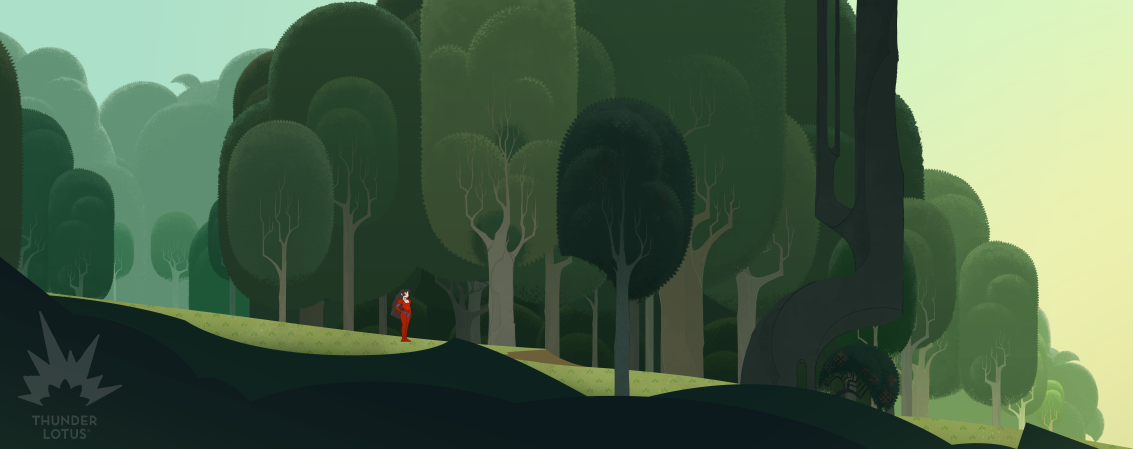
Gauging depth in 2D had actually been a challenge in the studio's last game, Spiritfarer, which featured many wide-open spaces. "Obviously, the further away something is, the smaller it looks, but we noticed in Spiritfarer that setting depth in a 2D camera was basically guesswork - you had to just enter some values and then test it every time to make sure that it didn't look weird," she says. "If my tree or my house is a kilometre away, it has to look like it's a kilometre away, and so switching to a 3D camera really helped."
This depth is especially important given the grandeur of the interiors, like the castle your protagonist, Shan, explores as she confronts each of her estranged siblings. That kind of grandness calls for dynamic imagery rather than being undermined by everything being too static. In other words, 3D needn't be the antithesis of 2D game art but can enhance it, making it better for you to get into the depth of this game's epic family drama.
At Fate's End is coming to PC, PS5, Xbox Series X/S (including Game Pass day one) in 2026. Wishlist it on Steam.