Authorities are intensifying efforts to address foreign-linked crime networks amid growing concerns that transnational criminal activity could threaten national security and public safety.
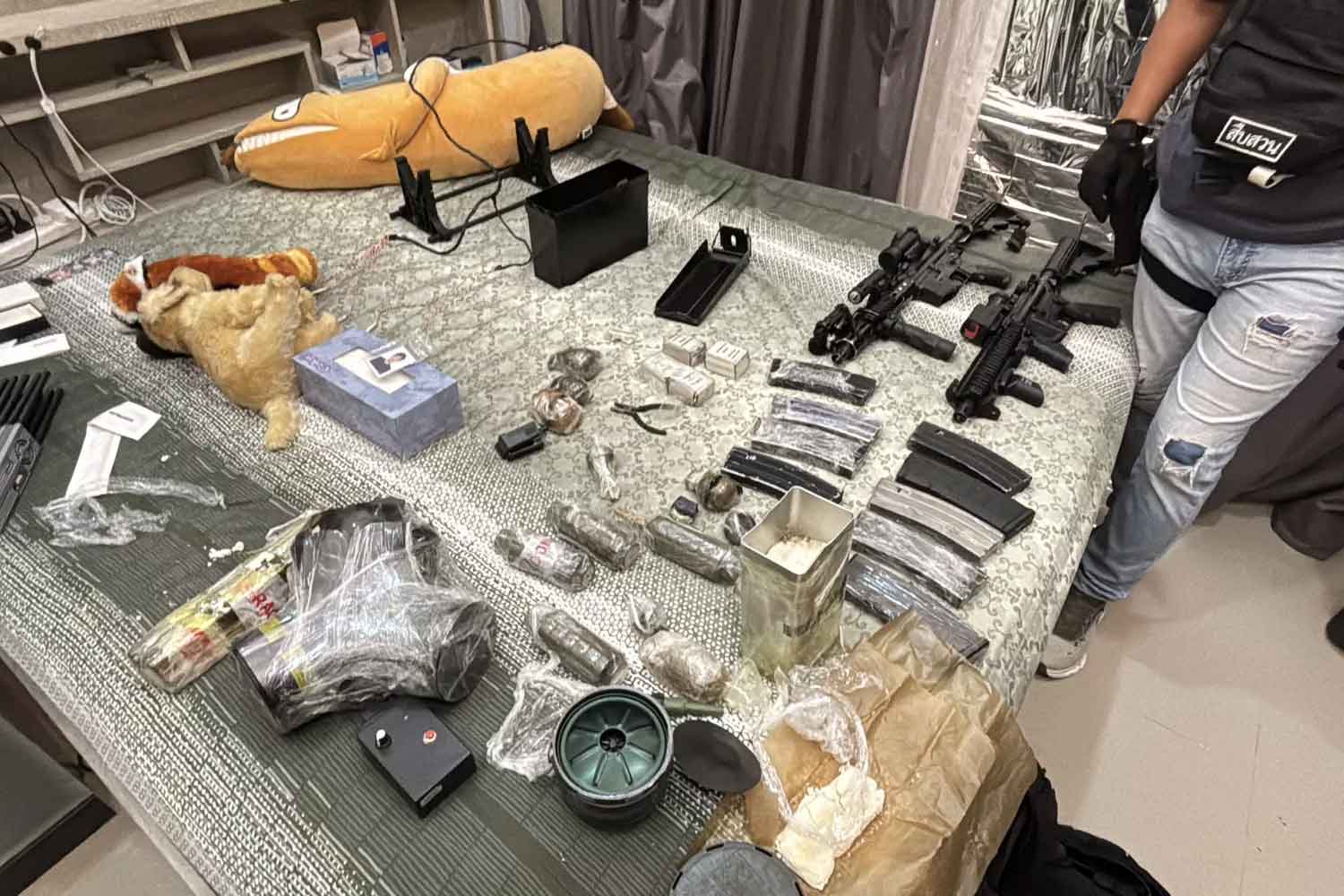
The issue has gained renewed attention following the arrest of suspected cyberscammer Sun Mingchen whose alleged cache of illegal weapons triggered a wider investigation involving organised crime, online scam operations and money laundering networks.
The case prompted Prime Minister Anutin Charnvirakul to summon national police chief Pol Gen Kittharath Punpetch and senior officers for urgent discussions at Government House.
Police said the expanded investigation into Mr Sun, a Chinese national arrested on May 8 in Chon Buri, led to the detention of 10 additional suspects connected to alleged weapons trafficking and scam operations.
Authorities seized assault rifles, grenades, C4 explosives, ammunition and bulletproof vests during the operation.
Five Thai suspects were later accused of supplying weapons to Mr Sun.
Senior police officials say the case reflects broader vulnerabilities linked to Thailand's status as an international tourism and business hub, where large numbers of foreigners from diverse backgrounds can enter and reside relatively easily.
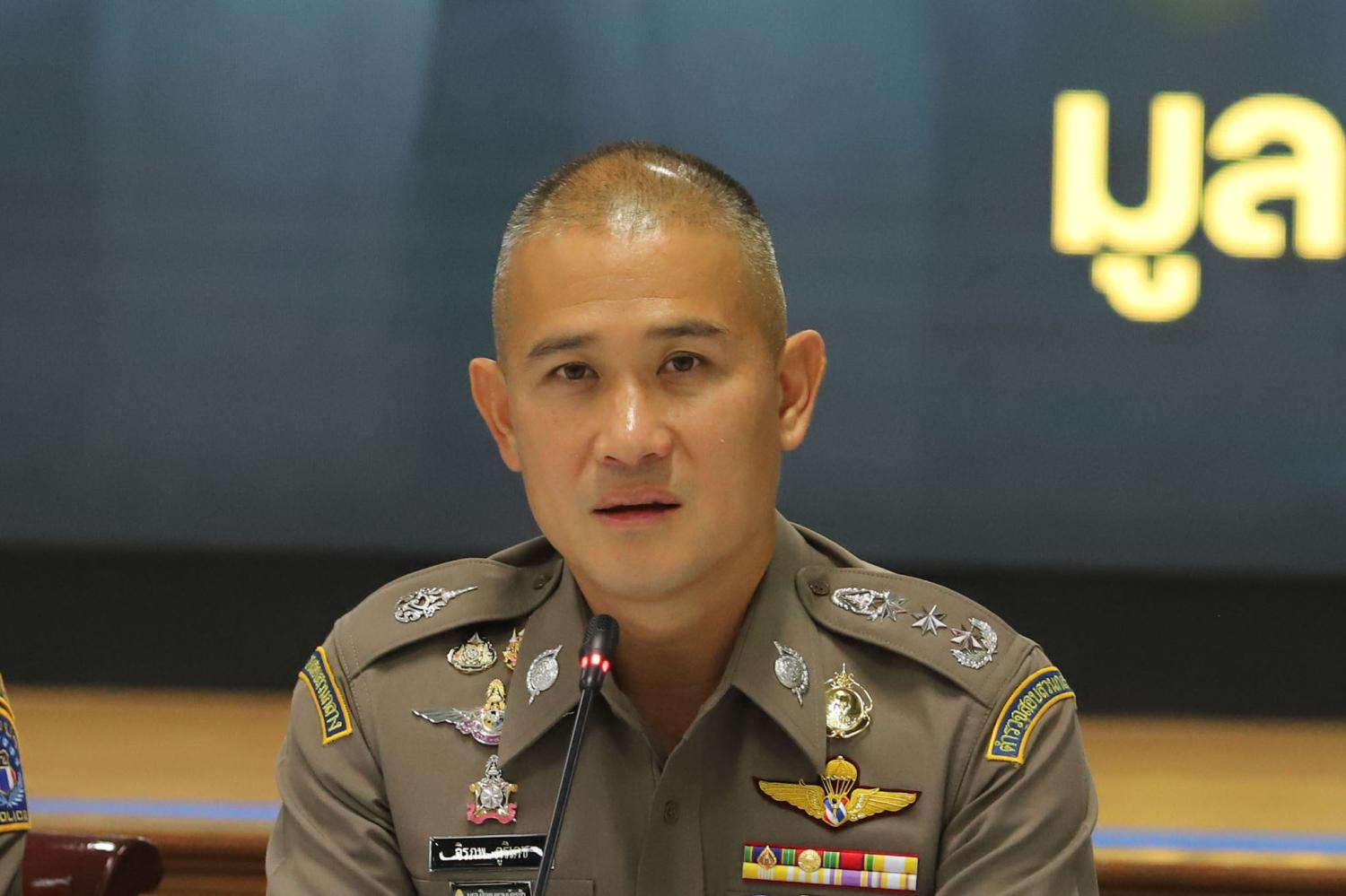
Pol Lt Gen Jirabhop Bhuridej, assistant national police chief, told the Bangkok Post that Thailand's openness presented both strengths and weaknesses from a security perspective.
While the country is generally viewed as neutral and welcoming rather than a geopolitical adversary, making the likelihood of terrorism relatively low, the sheer volume of foreign residents and visitors complicates screening and monitoring efforts, he said.
Pol Lt Gen Jirabhop said Mr Sun's case appeared linked primarily to personal interest in stockpiling firearms and disputes involving scammer groups operating in a neighbouring country, rather than a direct terror plot inside Thailand.
Nevertheless, intelligence, military and police agencies had been instructed to intensify scrutiny of higher-risk nationalities and groups involved in international conflicts.
Tourist hotspots
Police say foreign criminal suspects often concentrate in major tourist destinations, where they can blend more easily into expatriate communities and business networks.
Authorities have expanded surveillance and investigative operations in several areas, including Koh Phangan in Surat Thani, Phuket, Pai in Mae Hong Son and Hua Hin in Prachuap Khiri Khan.
Pol Maj Gen Pattanasak Bupphasuwan, commander of the Crime Suppression Division, said investigators had been examining nominee business structures involving Israeli nationals and Thai associates on Koh Phangan.
He said immigration police recently deported more than 10 Israelis accused of illegally operating businesses on the island.
A second wave of raids conducted on May 23 targeted foreign nominee networks concealing land ownership through Thai shareholders acting on behalf of foreigners.
Police said they identified 32 companies linked to the scheme, involving ownership of 45 land plots covering more than 40 rai and causing estimated damages exceeding 200 million baht.
One company under investigation used Thai nominees to conceal ownership by an Israeli national while operating an unlicensed hotel business and controlling eight land plots, covering about 7 rai, worth more than 60 million baht, he said.
Another group of 32 companies was found to have foreign shareholders holding larger stakes than Thai partners, in apparent violation of business regulations.
Investigators are continuing to gather evidence and question those involved in such schemes.
Despite the increased scrutiny, a police source involved in national security investigations said Israeli nationals had historically attracted less concern from Thai authorities because intelligence agencies did not view them as posing a direct security threat inside Thailand.
The source added Thailand had also exercised caution because of the close relationship between Israel and the United States, although authorities maintained extensive intelligence on foreign communities in the country.
Growing challenges
Pol Lt Gen Jirabhop said one of the biggest obstacles facing law enforcement is language capability, which limits the number of officers able to conduct detailed investigations or penetrate tightly connected foreign networks.
He said Chinese and Russian nationals make up a larger proportion of foreigners living in Thailand than other nationalities, with some having fled criminal charges in their home countries, while others engage in illegal activities after arriving in Thailand.
"Most offences involving Chinese nationals in Thailand are linked to online fraud or scam operations, while Russian suspects are more commonly associated with digital asset crimes and money laundering on behalf of criminal networks," he said.
He said Thai police work closely with Interpol and foreign law enforcement agencies to track fugitives and extradite suspects wanted abroad.
"In recent years, intelligence and security agencies have thwarted potentially dangerous groups or individuals attempting to carry out incidents on several occasions, although such operations were not publicised," Pol Lt Gen Jirabhop said.
The government has also pledged to crack down on corrupt officials accused of facilitating illegal activities involving foreign nationals.
Police are coordinating with the Department of Provincial Administration to review firearms registrations, residency records and nominee ownership structures.
However, security agencies are urging the public to remain vigilant and report suspicious activity, particularly in areas with large foreign populations.
Pol Lt Gen Jirabhop said residents often notice unusual behaviour before authorities do because foreigners living in communities often stand out due to cultural and linguistic differences.
"As citizens, everyone can help observe and report suspicious activity," he said.
"Security is a shared responsibility for society as a whole."