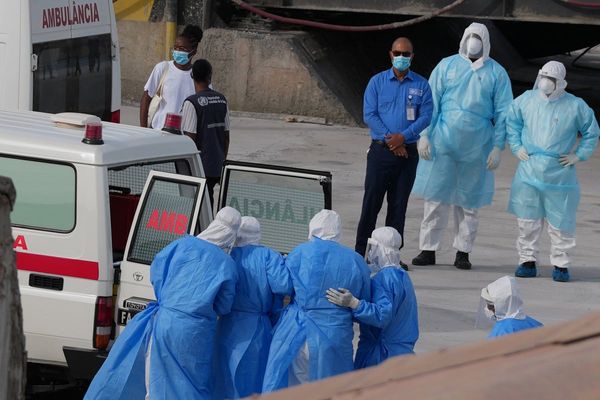
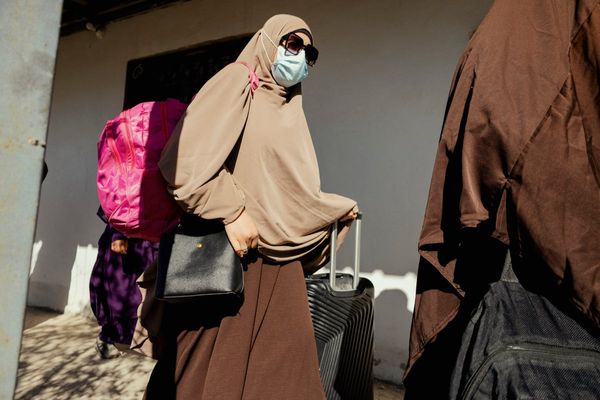
The World Health Organization has identified eight cases of passengers from the vessel, including three deaths, one critically ill patient, and three individuals reporting mild symptoms.
Swiss authorities confirmed on Wednesday a new hantavirus case identified in a passenger from the MV Hondius cruise ship.
While the exact origin of the cases is still being investigated, the WHO has confirmed that this is the Andes hantavirus variant, which is contagious between humans.
"We do believe that there may be some human-to-human transmission that's happening among the really close contacts, the husband and wife, people who have shared cabins, etcetera," said Maria Van Kerkhove, director of Epidemic and Pandemic Preparedness and Prevention at the WHO.
The vessel, affected by a hantavirus outbreak on board, is currently anchored off Praia, the capital of Cabo Verde. The ship is expected to dock in Tenerife in three days.
However, the president of the Canary Islands, Fernando Clavijo, rejected on Wednesday the Spanish government's decision to bring the cruise ship MV Hondius to the archipelago.
The secretary general of the WHO, Tedros Adhanom Ghebreyesus, has stated that based on current information, the international organisation "assesses the risk to the general population is low".
Most hantaviruses do not transmit directly from person to person. The exception is the Andes virus strain, found mainly in parts of South America, which has been shown to spread between people through close and prolonged contact, according to the European Center for Disease Prevention and Control.
What is the hantavirus?
Hantavirus refers to a group of viruses carried by rodents, primarily transmitted to humans through the inhalation of airborne particles from dried rodent droppings.
Contact with infected rodents or their urine, saliva, or droppings — especially when these materials are disturbed and become airborne — is the primary way it spreads.
The infection can lead to hantavirus pulmonary syndrome (HPS), characterised by headaches, dizziness, chills, fever, muscle pain and gastrointestinal problems, followed by the onset of respiratory distress and hypotension.
According to the WHO, symptoms of HPS typically appear two to four weeks after initial exposure to the virus.
However, symptoms may appear as early as one week and as late as eight weeks following exposure.
Where is the ship now?
The cruise ship m/v Hondius, operated by the Dutch company Oceanwide Expeditions, is currently anchored off the coast of Cabo Verde and set off with 149 people on board.
Local health authorities have refused to allow the disembarkation of its passengers.
Spain announced that it will host the ship in the Canary Islands. The WHO appealed to compliance with international law and the "humanitarian spirit" in asking Spain to take in the ship, and stressed that Cabo Verde does not have the necessary capacity to manage an operation of this magnitude.
According to Pedro Sánchez's government, the transfer responds to humanitarian criteria.
However, the Canary Islands' president questioned the decision, saying that it "does not convey peace of mind" to the Canary Islands population.
He also insisted that "the position of the Government of the Canary Islands" is to reject the operation as it has been proposed, considering that the necessary data to guarantee the health safety of the archipelago has not been provided.