Businesses have urged the government not to rush tax changes through parliament, warning Australia's global competitiveness is under threat.
Legislation for controversial changes to the capital gains tax discount and negative gearing is expected to be introduced in the next sitting fortnight, which begins on Monday.
Labor will likely be able to push the legislation through parliament with the support of the Greens, who hold the balance of power in the Senate.
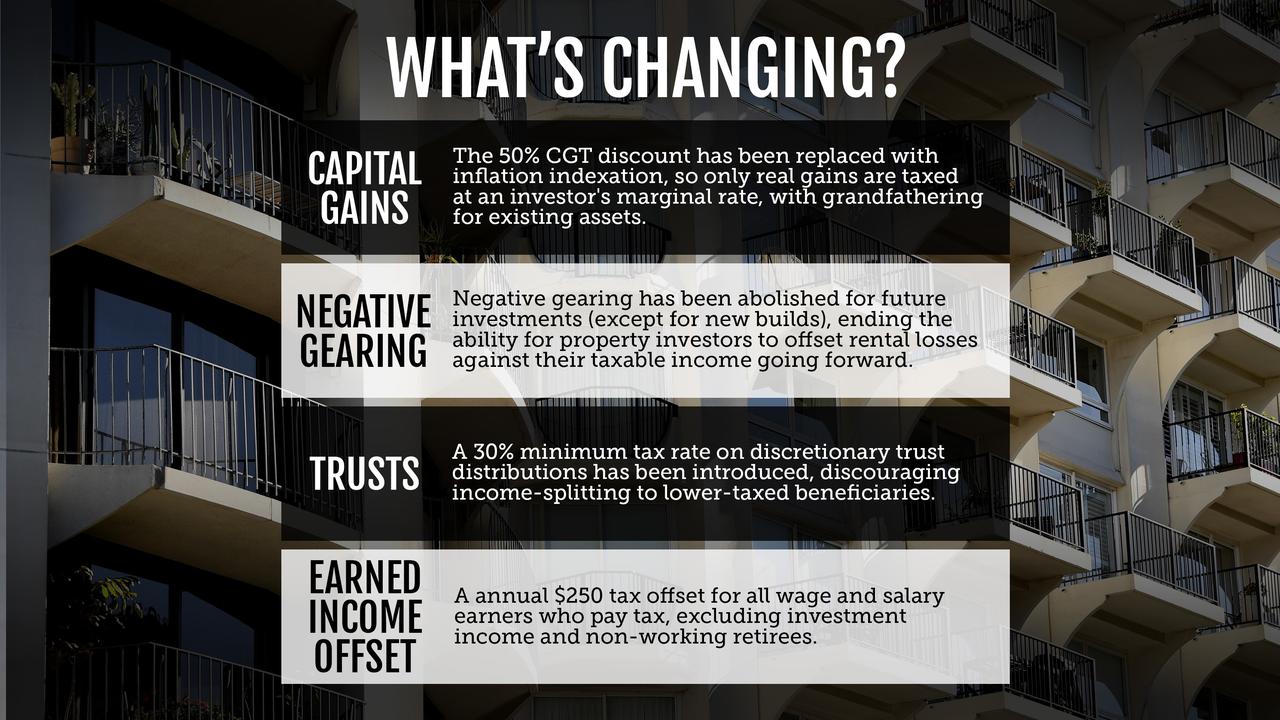
Entrepreneurs and venture capitalists argue the proposal to remove the 50 per cent capital gains discount in favour of a minimum 30 per cent tax and indexation of the cost base would cause talent and capital to flee the nation in search of a more favourable tax regime.
The startup sector had a valid point, conceded Assistant Minister for the Digital Economy and former tech businessman Andrew Charlton.
"That new regime doesn't interact well if you have a really low capital base because you've got nothing to inflate off," he told Nine's Today program on Friday.
"So, there are real concerns out there."

David Alexander, acting CEO of employer group the Australian Chamber of Commerce and Industry, said rushing the legislation through parliament would be irresponsible.
"We think that the consequences of this will be far reaching and multifaceted," he said.
"Already every day we're seeing unintended consequences emerge impacting on entrepreneurs in a number of different sectors.
"Australia's competitive position for business is eroding on a number of fronts: in industrial relations, in red tape, in energy costs, in our company tax rate. This only adds to that erosion."
Greens economics spokesman Nick McKim called the tax changes "a step in the right direction" but criticised the decision to grandfather concessions for existing investors.
"Faced with a once-in-a-generation opportunity to shift more of the tax burden onto super-wealthy people, and in particular super-wealthy property speculators, Labor blinked," Senator McKim told ABC Radio.
By leaving the tax concessions in place for existing property investors, Senator McKim said the government had "pulled up the drawbridge" in front of young people.
"We would claw far more back from super-wealthy property investors, and we would invest that into a genuine tax break for working Australians that would help them at the moment as they're getting smashed as prices are going up everywhere," he said.
But scrapping grandfathering would exacerbate the problem of taxing investment in business and create even deeper problems, Mr Alexander said.
Opposition Leader Angus Taylor said the taxes were "toxic" and the government was scrambling for the exit.
I will fight for small and family businesses. They're working harder for less and Labor's tax grab is an assault on their aspiration. pic.twitter.com/EgGu8YQ6uB
— Angus Taylor MP (@AngusTaylorMP) May 20, 2026
The government has been consulting with the startup sector about a potential carve-out since before the budget was unveiled on May 12, but Prime Minister Anthony Albanese has ruled out substantially amending the tax changes.
He is more open to amending a proposal to impose a 30 per cent tax on discretionary testamentary trusts, which has sparked a campaign branding it a "death tax", according to reports in Nine newspapers.
Discretionary testamentary trusts were used by some wealthy families to divide money in a will while ensuring asset protection, flexibility and control over how wealth was passed on, Chartered Accountants ANZ policy executive Geraldine Magarey said.
"They're typically used by families with substantial assets, often property, investments or small‑business wealth, and are especially valuable where there are children, vulnerable beneficiaries, or a desire to manage wealth across generations," she said.