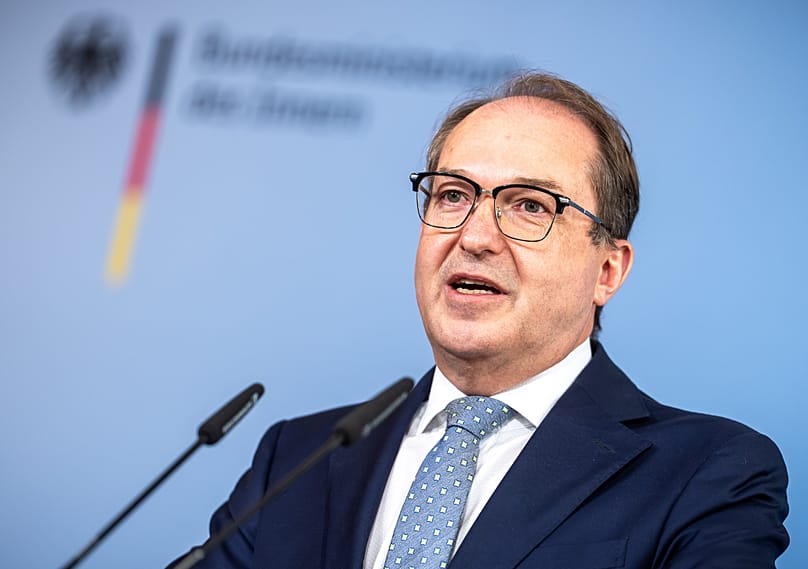
Germany’s Interior Minister Alexander Dobrindt pushed back against an EU request that the country scrap internal border checks, arguing that they remain "necessary."
Speaking as EU interior ministers met in Luxembourg on Thursday to discuss the bloc’s recent migration pact, Dobrindt said his country’s border checks are “working.”
“The significant number of pushback, illegal migration, the seizure of smuggling gangs, all of this shows how effective these border roles are and that is why we want to continue them,” he told journalists.
“We are always flexible, always talking, always adaptable. But yes, we want to further develop border controls, but we will also need these border controls further.”
The Commission says internal border checks are no longer necessary because of sweeping changes to the bloc’s migration policies, including the greenlighting earlier this week of plans to ramp up deportations and ink controversial deals to build detention centres abroad.
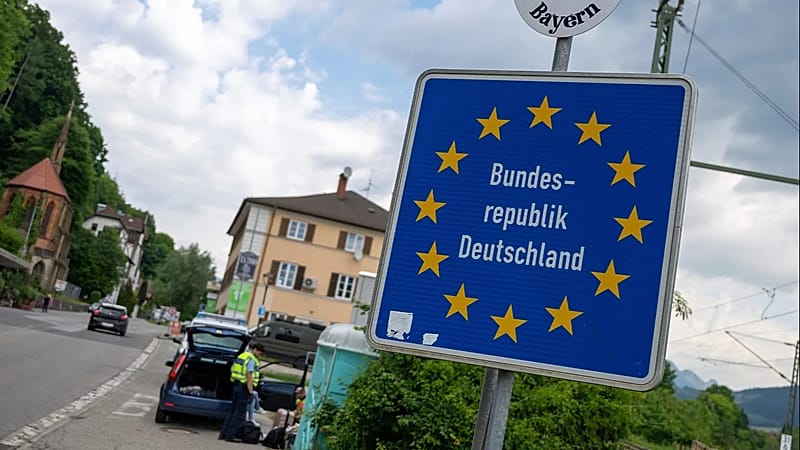
Ten EU countries currently enforce checks on their internal borders and seven of those say migration is the justification for keeping them in place.
The Commission asked Austria, Denmark, France, Germany, Italy, the Netherlands, Slovenia and Sweden to gradually lift border controls. A request was also sent to non-EU member Norway.
Poland is the tenth country with such controls still in place but it was not asked to ease border controls.
The checks were supposed to be temporary but in some countries they have been place for years.
Dobrindt also called for protections at the bloc’s external border to be “significantly improved.”
“The migration turnaround is working in Germany and it is also working at European level, and we are firmly determined that we will continue along this path consistently with our neighboring countries and partner countries,” he said.
“Numbers…are going down. We’re on the right track. The reforms have been done. The external borders are better protected. The returns regulation has been decided,” EU Commissioner for Internal Affairs and Migration Magnus Brunner said.
“It’s the right time to gradually phase out these border controls.”
Tough stance on migration
On Monday, EU countries and European Parliament agreed on a controversial law aimed at speeding up the return of migrants with no legal right to stay in Europe, marking the bloc's toughest migration policy shift in decades.
Policymakers say the so-called Return Regulation is key to accelerating returns and is the cornerstone of the EU's crackdown on irregular migration.
At the heart of the law is a provision allowing EU countries to set up deportation centres outside the bloc, known as return hubs, if they conclude an agreement with a non-EU country.
The hubs can be either places of transit or locations where a person is expected to stay, marking a significant departure from current rules.
According to official figures, only 29% of migrants with no legal right to remain in Europe leave the EU.