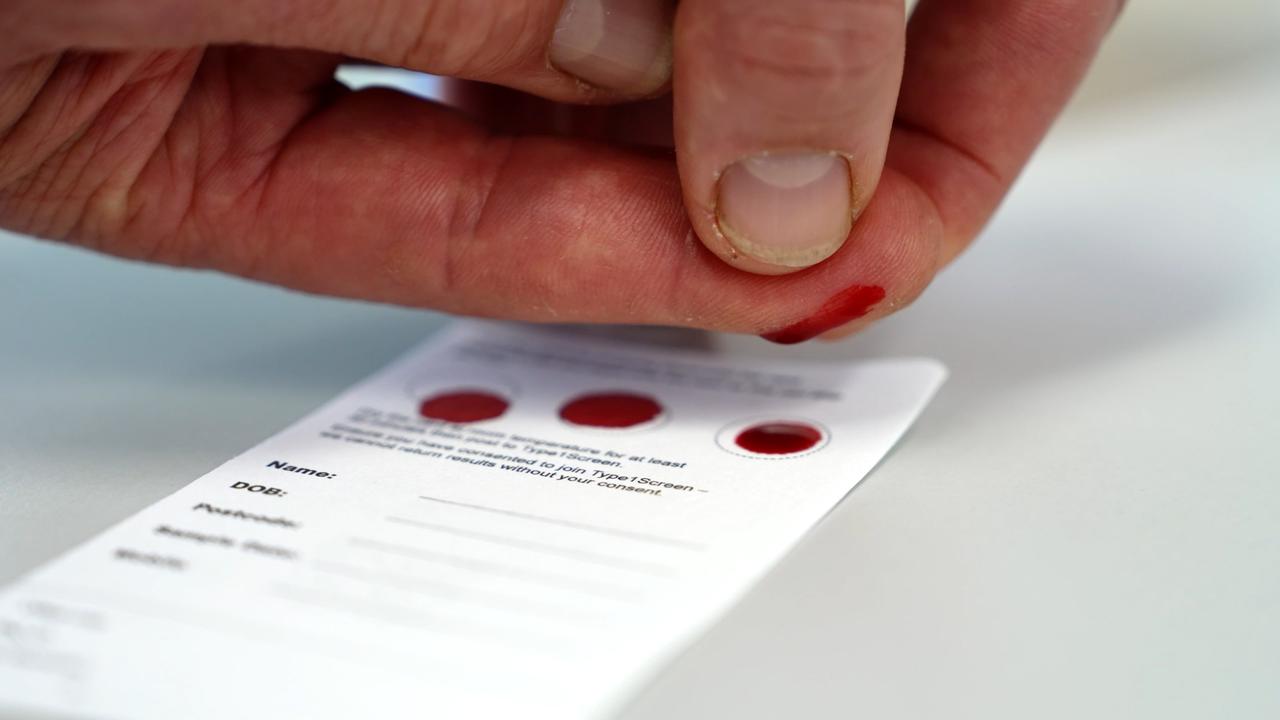
Pricking the skin with insulin syringes could be a thing of the past for more than 145,000 Australians living with type 1 diabetes due to the approval of a breakthrough treatment.
Heralded as the most important innovation since insulin was discovered more than 100 years ago, Tzield (teplizumab) is expected to delay the onset of the autoimmune disease for patients as young as eight.
Developed by pharmaceutical giant Sanofi, the medicine binds to specific immune system cells and stops them from attacking the pancreas, allowing it to continue producing its own insulin.
It has now been approved by the Therapeutic Goods Administration to delay the onset of stage three type 1 diabetes mellitus (T1D) in adult and paediatric patients aged eight and older living with stage 2.
For 19-year-old Jessica Kovacs, accessing the experimental treatment was an opportunity she could not pass up given a family history of type 1 diabetes.
Her sister Annabelle was diagnosed at seven, depriving her of a normal childhood without hospital visits and a constantly beeping insulin pump monitoring her blood sugar levels.
"If we'd known earlier that Annabelle was going to develop T1D and there had been a preventative option available, it would have been absolutely game-changing," Ms Kovacs said.
"Before treatment, I felt like I was just waiting for T1D to strike, but afterwards, I felt like I'd done something proactive.
"I'd given myself the best possible chance to delay it."
She was one of the first people nationwide to participate in the clinical trial at Royal Melbourne Hospital in January.
The teenager documented her two-week journey being infused with the drug on a daily basis through a catheter.
View this post on Instagram
Endocrinologist John Wentworth, who administered Tzield to Ms Kovacs and other participants, was excited about how it would relieve patients of their insulin pumps for two years.
"This is the start of the revolution that has been a century in the making to find better ways to treat type 1 diabetes," he told AAP.
Professor Wentworth described insulin injections as an imperfect treatment and said the two-week treatment was a small price to pay to avoid daily needles.
"It just gives you the freedom and far better health outcomes by delaying and not having to use insulin because your pancreas has been preserved," the St Vincent's Institute of Medical Research clinical fellow said.
Australia has one of the world's highest rates of type 1 diabetes, with around 3000 people diagnosed every year.
An estimated 25,000 Australians unknowingly live with the early pre-symptomatic stages of the disease.