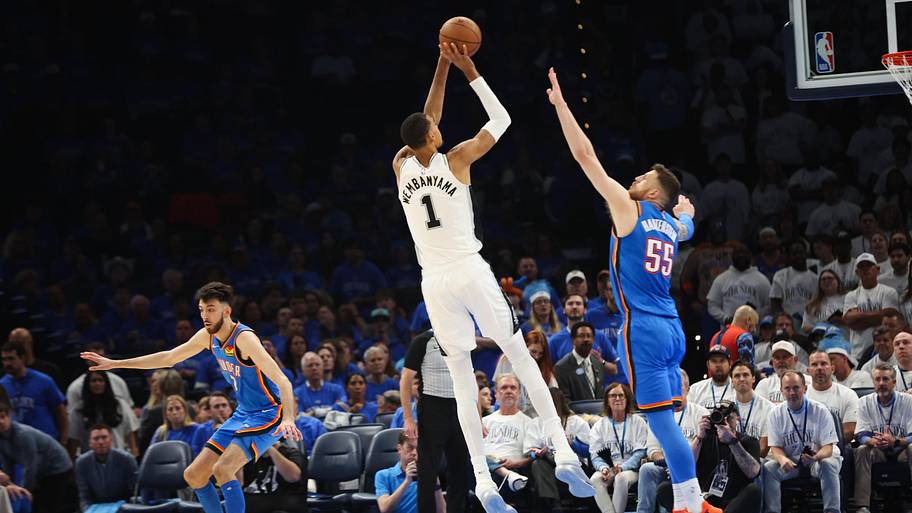
After Victor Wembanyama's brilliant performance in Game 1 of the Western Conference finals, the Thunder had to try something different to defend him. They found their answer in Isaiah Hartenstein.
In Game 1, Wembanyama scored 41 points while grabbing 24 rebounds, dishing out three assists and adding three blocks and a steal in 49 minutes. San Antonio won 122-115 in double overtime with their star leading the way. But Game 2 was a different story.
Hartenstein was physical with Wembanyama from the opening tip in Oklahoma City’s 122-113 win. That changed the game and stifled the 22-year-old’s influence on the game.
Here are the four most telling numbers from Hartenstein’s defensive play vs. Wembanyama.
Hartenstein’s 27 minutes
In the opening game of the series, Hartenstein started but only played 12 minutes. He had two points, two rebounds, two assists, two blocks and a steal. He was a plus-two on the night, but Oklahoma City opted to use Chet Holmgren and a host of wings to defend Wembanyama. It didn't work, as he went on to stuff the stat sheet.
On Wednesday night, Hartenstein was far more involved. He played 27 minutes and, again, was a plus-two, but added so much more. He finished with 10 points, 13 rebounds and three assists. He also was able to stay on the floor, committing only four fouls—despite his physical play—in more than twice the minutes he had in Game 1. Did he get away with a few uncalled fouls? Absolutely. But he was going to continue being physical until the officials began calling the game more closely.
Wembanyama held to just two free throws
In Game 1, Wembanyama had 13 free-throw attempts and made 12. Those 12 points were key to San Antonio’s big road win. The Thunder nearly wiped those free points off the board in Game 2 thanks to Hartenstein’s defense.
Wemby shot just two free throws Wednesday night. He made both, but was not a regular visitor to the charity stripe. A lot of that likely had to do with positioning (more on that later). He wasn’t deep enough that OKC had to foul him to avoid allowing him a clean look.
Wembanyama's five made field goals in the paint
All the evidence you need that Hartenstein had a serious impact on Wembanyama’s Game 2 performance can be seen in his shot chart:
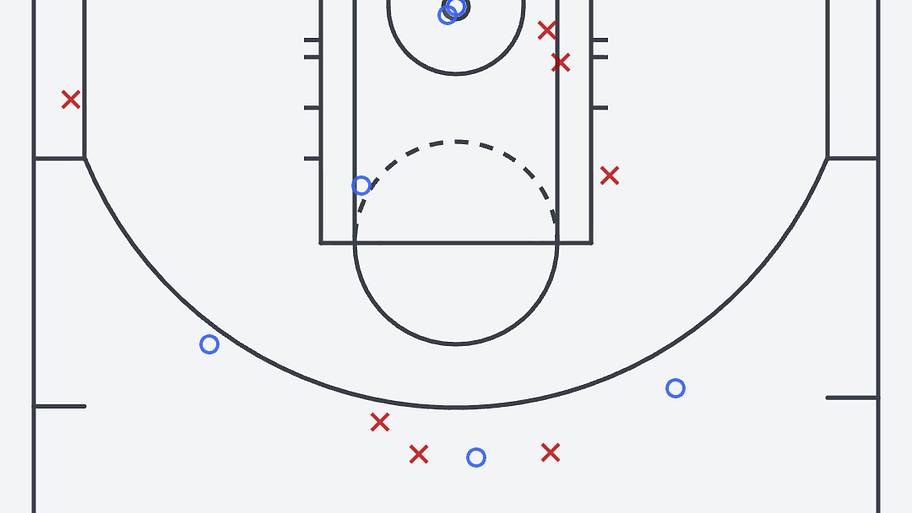
Wembanyama made five of his eight field goal attempts in the paint. He had one shot that qualified as a mid-range jumper and was 3-for-7 from three-point range. That was it for the night.
Now lets compare that to Game 1:
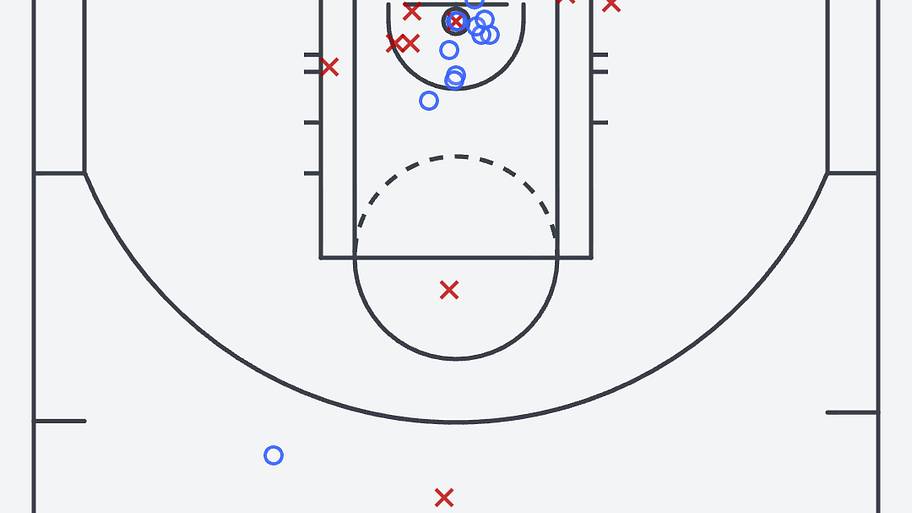
He was 14-for-25 from the field in Game 1, with only four attempts coming outside the paint.
Hartenstein’s presence in Game 2 pushed Wembanyama out of the paint, and his shot chart isn’t the only evidence.
Wembanyama’s five offensive rebounds
The Thunder couldn’t keep Wembanyama off the offensive glass in Game 1, and it was a big reason for their loss. Nine of his 24 rebounds came on the offensive end as the Spurs won the battle on the offensive glass, 15 to nine.
In Game 2, with Hartenstein harassing him on the interior, Wembanyama was held to five offensive rebounds. In turn, the Thunder won the battle on the offensive boards, 17 to 16. It was a huge shift in the state of play for the series.
After the game, Thunder head coach Mark Daigneault discussed Hartenstein’s performance.
"He did what he does. I don’t think it was specific to Wembanyama. He played his game tonight," Daigneault said. "That’s a physical brand that you have to deal with around the basket."
Hartenstein was undoubtedly physical with Wembanyama. There was a lot of grabbing and shoving. That may not last after Wednesday night. The NBA likely won’t be happy about the fact that one of its biggest stars was neutralized by what were likely a lot of uncalled fouls.
But for one night, Hartenstein used his physicality to punish Wembanyama and largely hold him in check.