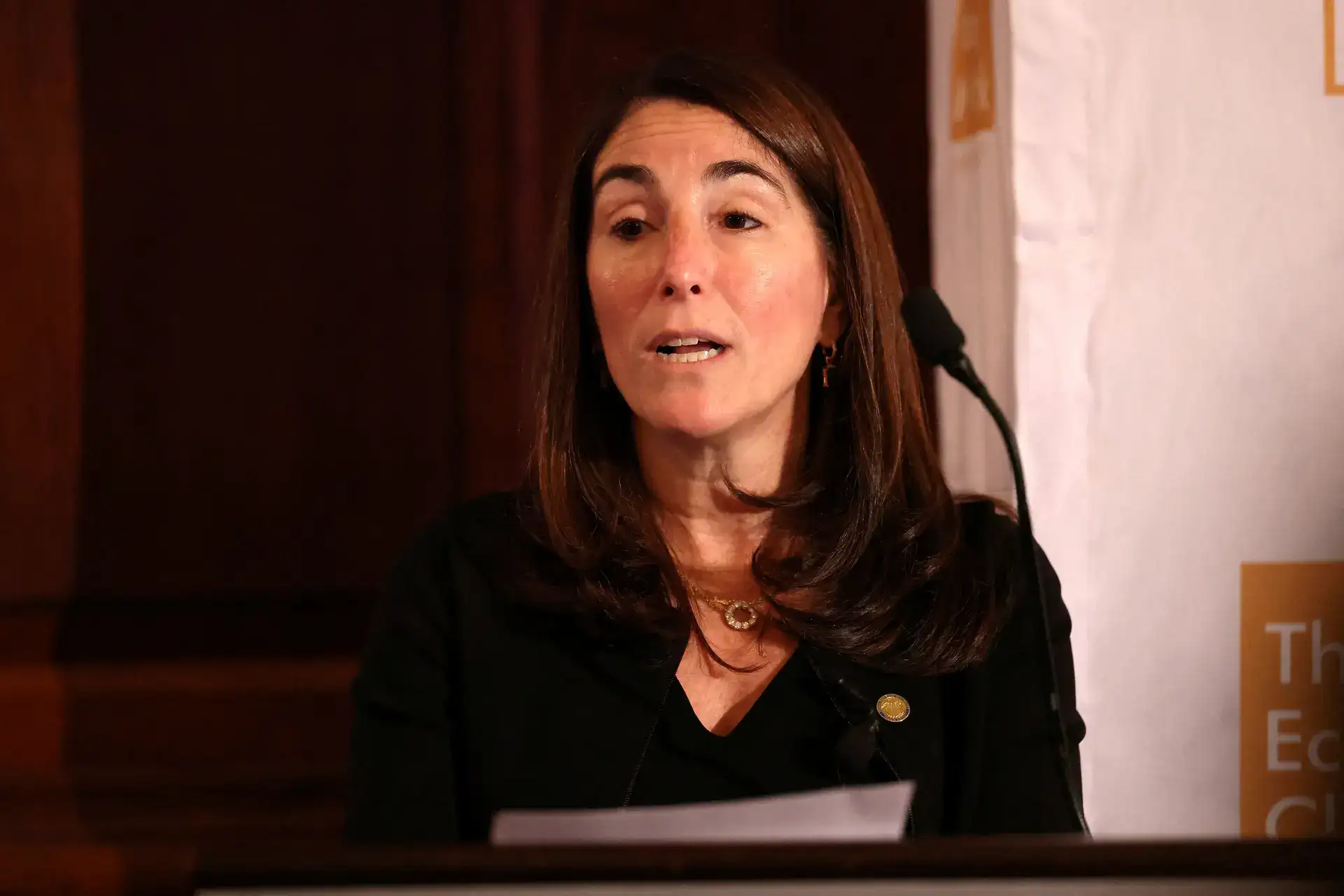
Federal Reserve Bank of Cleveland President Beth Hammack on Tuesday indicated that the U.S. central bank may need to consider raising interest rates in the near future if inflation continues to move higher, underscoring growing concern among policymakers about persistent price pressures, according to Reuters.
Speaking at the City Club of Cleveland, Hammack said the balance of risks has shifted increasingly toward inflation, which remains well above the Federal Reserve's 2% target. According to Reuters, she expressed concern that monetary policy may no longer be restrictive enough to bring inflation back under control and warned against waiting for clearer signs that elevated inflation has become entrenched in the economy.
Her remarks come ahead of the Federal Open Market Committee's June 16-17 meeting, where policymakers are widely expected to leave the benchmark interest rate unchanged at a range of 3.5% to 3.75%. Hammack, who is a voting member of the FOMC this year, suggested that maintaining rates at current levels remains appropriate for now given uncertainty surrounding the economic outlook. However, she believes policymakers may need to act soon if recent inflation trends persist.
The comments reflect a growing debate within the Federal Reserve as inflationary pressures have intensified in recent months. Price growth, which had remained above the Fed's target for several years, has accelerated further amid disruptions to global energy markets linked to the U.S.-Israeli conflict with Iran. Rising energy costs have added to existing inflation pressures, prompting some policymakers to consider whether additional monetary tightening may eventually be required.
Financial markets have also begun to price in the possibility of future rate increases, with interest-rate futures indicating expectations for tighter policy further down the road.
According to Reuters, Hammack described the inflation outlook as increasingly troubling, noting that price pressures are broad-based across both goods and non-housing services. She highlighted energy-related costs as a key concern and pointed to increases in electricity prices, health insurance expenses and software costs as significant contributors to inflation.
At the same time, Hammack said the broader U.S. economy continues to show resilience. The labor market remains stable, with unemployment near levels consistent with full employment, while financial conditions continue to support economic growth rather than restrain it.
Her assessment suggests that, absent a meaningful easing in inflation, the Federal Reserve could face increasing pressure to tighten policy further despite concerns about maintaining economic momentum. Hammack sees the risks from persistent inflation as outweighing current risks to employment, reinforcing the central bank's focus on restoring price stability.