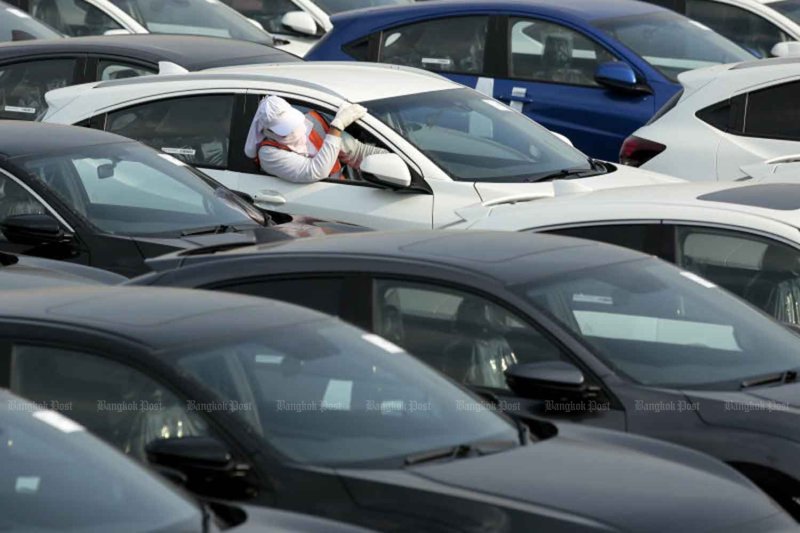
Thailand’s automotive industry is bracing for a potential setback in 2026, with car production expected to miss its target for the first time in five years if the war in the Middle East drags on beyond three months and shipping routes through the Strait of Hormuz remain disrupted, says the Federation of Thai Industries (FTI).
Earlier this year, the FTI’s Automotive Industry Club set a target of 1.5 million vehicles for 2026, including 950,000 units for export and 550,000 for domestic sales.
Surapong Paisitpatanapong, advisor and spokesman for the club, warned that the Middle East conflict is directly damaging Thailand’s automotive exports and domestic economy.
“The Middle East is the third-largest vehicle export market for Thailand, with strong demand for pickups. Delayed shipping and transport disruptions have severely reduced export volumes,” he said.
In April, Thailand’s car exports plunged 8.43% year-on-year to 60,190 units, with shipments to the Middle East collapsing by 91.7% to just 993 units.
Mr Surapong said earlier that the ongoing conflict slowed deliveries to key destinations such as Saudi Arabia, Oman and the United Arab Emirates.
Between January and April, overall exports fell 3.45% year-on-year to 280,184 units. Despite this, exports to Asia, Australia, Oceania, Africa and North Africa showed growth in April, partly offsetting the decline.
Car production in April slipped 0.44% year-on-year to 103,794 units, mainly due to reduced output of oil-fuelled pickups. But from January to April, production rose 4% year-on-year to 473,545 units, driven by increased manufacturing of battery electric vehicles under the government’s EV incentive scheme.
Domestic car sales also surged 15.02% year-on-year to 230,477 units, boosted by EV demand.
The FTI has not revised its production target, preferring to monitor the Israeli-US war with Iran and peace talks between the three countries, which could ease global economic pressures.
Rising crude oil prices have already increased costs for auto parts, prompting the FTI to urge suppliers to freeze prices to support carmakers struggling with weak exports.